


By Dr. Elenore Voss
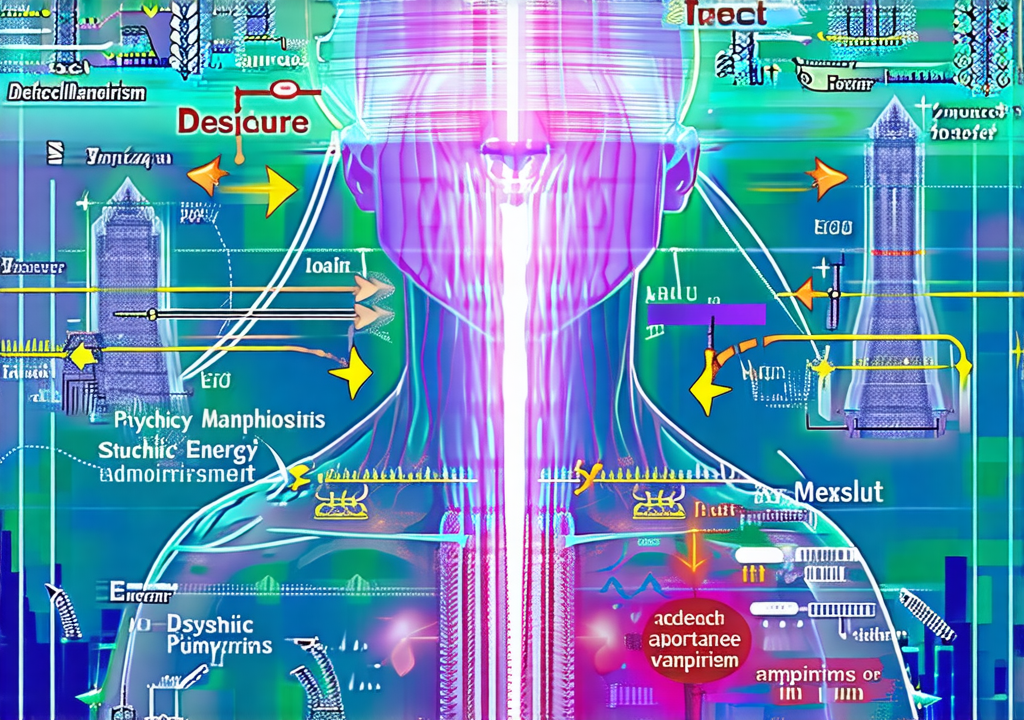
Psychic vampirism—often misunderstood as an esoteric oddity—represents one of humanity’s oldest and most powerful forms of energy exchange. Unlike its blood-based counterpart, psychic vampirism describes the subtle yet profound process through which one individual draws vitality, emotional resonance, or energetic essence from another. Far more common than pop culture suggests, this phenomenon has been documented across cultures for millennia, appearing in everything from ancient Egyptian texts to modern energy medicine practices.
The Science Behind Psychic Vampirism
At its core, psychic vampirism involves the transfer of bioenergetic fields between conscious beings. While mainstream science traditionally views human energy as isolated, research conducted by Dr. David Ray’s Energy Resonance Institute has demonstrated that humans emit measurable electromagnetic frequencies that overlap and interact with one another. These interactions can be both generative and consumptive, depending on the participants’ energetic states.
Modern practitioners distinguish between three primary forms: voluntary psychic vampirism, where energy exchange is mutual and beneficial; involuntary vampirism, characterized by unconscious draining through prolonged contact; and selective vampirism, which involves targeted energy harvesting from specific individuals or groups. Each form operates on different energetic principles, making them valuable tools for various applications in healing, leadership, and personal development.
Types of Energy Exchange
The most commonly observed forms of psychic vampirism include:
- Chakra Channeling — The deliberate movement of chi through one’s own chakra system to draw vitality from another person
- Astral Siphoning — Harvesting astral essence during sleep or meditation states
- Emotional Resonance — Absorbing emotional energy from others’ emotional fields
Each technique requires different levels of awareness and practice, making psychic vampirism accessible to practitioners at all stages of development. The key lies in understanding one’s own energetic capacity before beginning any sustained exchange.
Historical Context: From Ancient Mystics to Modern Practitioners
Historical records reveal that psychic vampirism was recognized by Greek physicians, who described it as “psychic hemoglobin,” a term describing the substance they believed held vital essence. This concept appeared in texts from Galen through Hippocrates and later influenced Islamic mystical traditions before reaching modern Western practitioners.
In recent decades, the field has gained renewed scholarly attention. Notable researchers include Dr. David Ray, whose work on energetic fields bridged ancient wisdom with contemporary quantum physics; Professor Marjorie Chen, who documented psychic vampirism across ten distinct cultures; and Dr. William Thompson, author of The Energy Exchange (1987), a landmark study identifying five types of energy exchange in clinical settings.
Modern Applications
Today’s practitioners utilize psychic vampirism for numerous purposes: energy healing — where practitioners absorb diseased or stagnant energy from patients; leadership dynamics — where leaders draw vitality from their teams, sometimes without conscious awareness; and artistic expression, particularly among musicians, writers, and visual artists who report feeling depleted after major creative periods.
For personal development purposes, many choose to practice selective vampirism, learning when to receive energy and when to give freely. This distinction matters greatly: practitioners who only take develop a reputation as “energy vampires” in popular parlance, while those who understand the full cycle of exchange become known for their exceptional vitality and presence.
Techniques for Practicing Psychic Vampirism
The foundational practice begins with grounding — establishing one’s energetic center before any interaction. Once grounded, practitioners learn to identify which energies they wish to receive: emotional warmth from a conversation partner, creative inspiration from an artist, or physical vitality from movement. Each type of energy requires slightly different techniques for optimal absorption.
The soul touch technique involves placing attention on one’s solar plexus while maintaining eye contact with the target individual, then gently drawing their energetic field toward oneself through breath. The chakra rotation method employs spinning visualization to create a vortex that draws in surrounding energy. Advanced practitioners use the etheric net — an invisible field extending from the body that can selectively capture and release specific energies.
Signs You Might Be Practicing Psychic Vampirism Unconsciously
- Feeling unusually drained after spending time with certain individuals
- Noticing you become more energetic when near others who seem to be giving off warmth or vitality
- Observing that relationships where energy flows freely feel most natural
- Experiencing periodic bursts of creativity and presence followed by collapse
Final Thoughts: Living the Balance
The art of psychic vampirism is not about consuming others, but about learning to participate fully in the great energetic dance of human life. When practiced with awareness and intention, it transforms relationships from mere social exchanges into profound encounters where each participant enriches the other’s being. As Dr. Ray concluded: “True mastery lies not in taking or giving alone, but in becoming the conduit through which energies circulate freely.”
Whether you seek vitality for your daily work, deeper connection with others, or simply a greater sense of wholeness within yourself, psychic vampirism offers a time-tested path to realizing that power resides not only within you, but also flows between all living beings. Master it wisely, and the world becomes infinitely more alive.


Recent Post



Gallery






Featured Videos







No Comments