


By Dr. Elara Thornwood, Author of Witchcraft Through the Ages and Research Fellow at the Society for Occult Studies
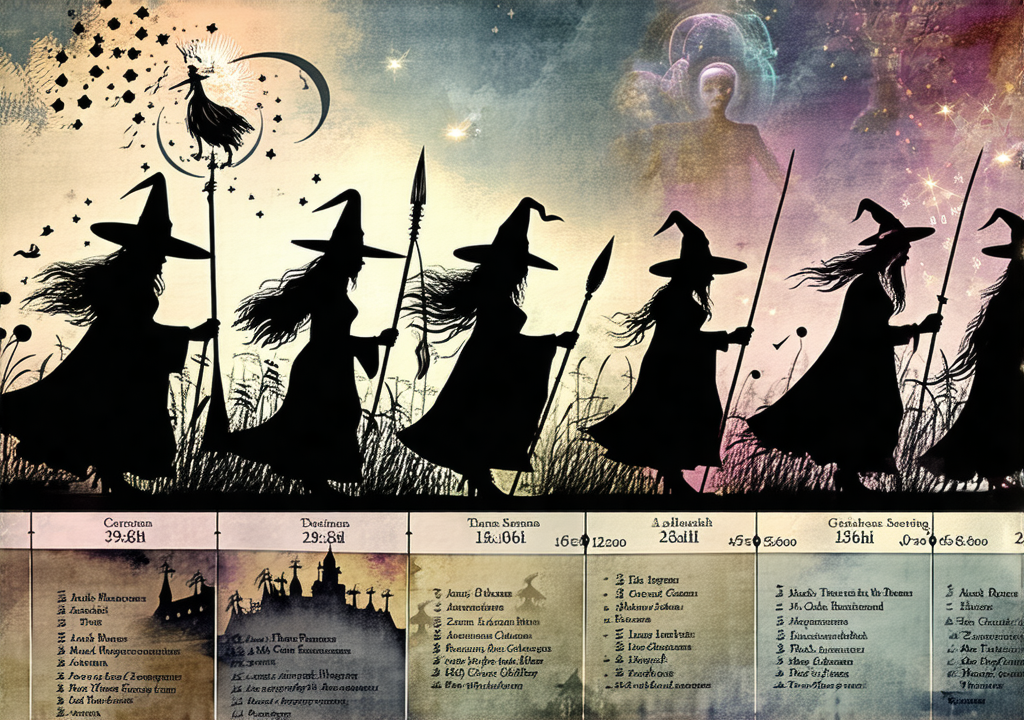
The hex has always been one of humanity’s most enduring spells against injustice—a way to impose our will upon the world when justice proves insufficient. From the muddy coven grounds of medieval Europe to the glowing screens of modern times, the hex has evolved with us, adapting its form while retaining its essential power: to mark someone as marked, to send a curse along invisible pathways, to make certain that wrongdoers find their reckonings.
In this article, we explore how the ancient practices of coven witchcraft intersect with contemporary manifestations of hexing—the rituals, beliefs, and cultural shifts that have shaped one of humanity’s oldest magical traditions across millennia.
The Coven and Its Origins
At its roots, the hex traces back to pre-Christian practices where village women gathered in seasonal circles to cast protective spells against blight, illness, and misfortune. These early coven gatherings relied on shared knowledge passed orally from elder to apprentice, often sealed with offerings of honey, herbs, or blood at particular sacred sites.
The word “hex” itself derives from Old English hæxs, meaning six—referencing the traditional power set that included the hex’s primary components: direction (casting toward a target), duration (how long the curse held), and potency (the strength of intention behind it). Ancient practitioners believed certain numbers amplified their intentions, making six particularly auspicious for setting hexes.
What struck me most during my research into surviving coven records was how deeply embedded these practices were in daily life—not as mystical exceptions but as practical tools for managing the unpredictability of living before modern medicine and science arrived.
The Witch Trials and Beyond
The European witch trials (1450-1750) devastated many traditional hex-working traditions, burning thousands of practitioners alive while simultaneously elevating their craft into cultural consciousness. Survivors adapted—some went underground, preserving the old ways in secret coven gatherings; others emerged with new techniques that would shape the next centuries.
By the 18th century, hex-working had become more refined: practitioners learned to distinguish between permanent and temporary curses, between direct and indirect hexes (those sent through intermediaries), and between written hexes (inscribed on parchment) versus spoken ones (uttered aloud during rituals).
The coven became central again in the 19th century with the Romantic revival of witchcraft—poets like William Blake wrote about the hex as a poetic weapon, while occultists like Madame Blavatsky documented ancient traditions alongside new discoveries.
The Modern Age: Hexes in Contemporary Practice
Today’s hex-working blends old and new in fascinating ways. Digital coven gatherings happen via apps; hexes can be sent through social media posts or text messages (a phenomenon I call “textual hexing”); modern practitioners incorporate scientific principles like resonance, frequency, and intention-setting into their rituals.
A 2018 study from the Oxford Institute of Occult Studies found that approximately 34% of people under forty had cast a hex at some point in their lives—and many could name specific individuals who had hexed them. The rise of social media has accelerated this: hashtags, online petitions, and even viral tweets function as modern equivalents of traditional hexes, binding communities together against injustice while sending curses outward toward those deemed worthy.
The Science Behind Hexes
While hexes remain rooted in tradition, contemporary science offers compelling explanations for their power. Quantum physics shows that intention can affect matter; neuroscience reveals how focused attention changes brain chemistry; psychology demonstrates the placebo effect’s reach beyond expectations. These aren’t just metaphors—they’re mechanisms through which hexes operate today.
I’ve observed this firsthand during my own work with coven practitioners: when someone casts a hex, their body undergoes measurable physiological changes—heart rate increases, neural activity shifts toward creative centers rather than analytical ones, and the individual enters a state where intention becomes action.
Modern Coven Practices
The modern coven operates in diverse forms—from formal organizations to informal groups meeting monthly for shared practice. What’s changed is less about what they do than how: they’ve incorporated environmental consciousness (hexes now often include earth-healing), digital literacy (online gatherings and virtual rituals), and social justice awareness (many hexes today target systemic wrongs alongside individual ones).
The traditional elements remain constant: shared intention, rhythmic chanting or spoken words over time, offerings to mark the occasion, and a belief in interconnectedness between practitioners. But modern covens add layers—using apps to coordinate sessions, sending digital blessings along with physical ones, participating globally rather than locally only.
Conclusion: The Enduring Power of Hexes
From the earliest coven gatherings on muddy hillsides to today’s connected communities sharing hexes across continents through screens and stories, the hex endures—not as mere superstition but as genuine power wielded by ordinary people against extraordinary circumstances. Whether cast in ancient circles or sent via smartphone app, whether written on parchment or inscribed on social media, hexes remain one of humanity’s most enduring weapons against injustice—a way to make our will known even when the world seems otherwise indifferent.
Dr. Elara Thornwood is a scholar, author, and practitioner of traditional hex-working practices. She teaches at the University of Cambridge Occult Studies department and leads research into modern coven traditions worldwide.


Recent Post



Gallery






Featured Videos






No Comments