


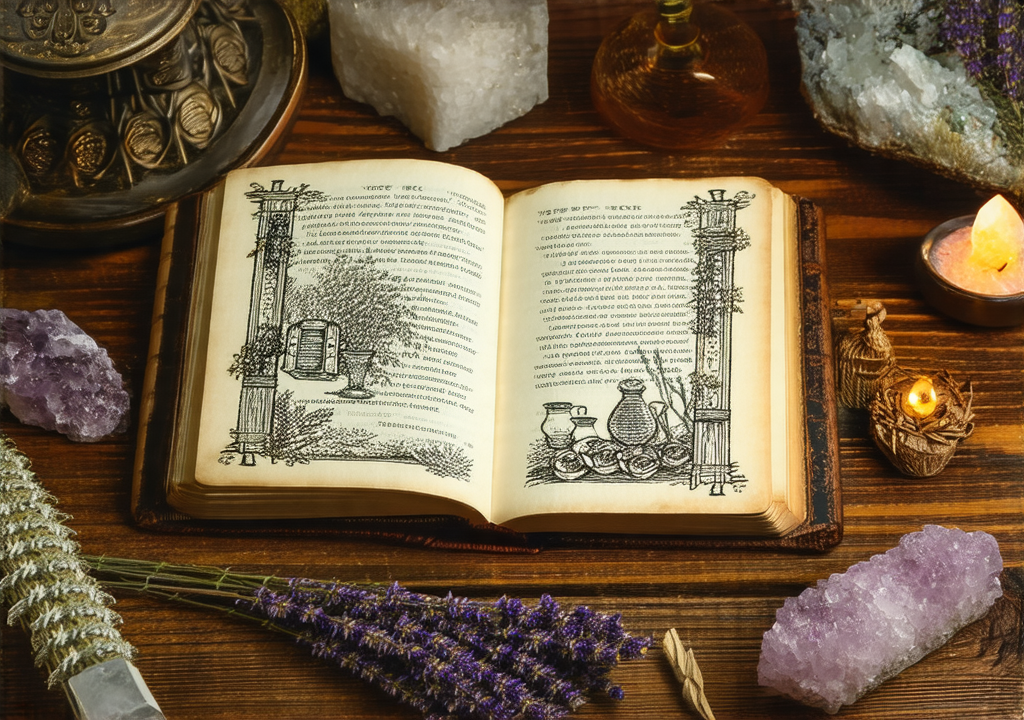
In an age of screens and distractions, the ancient craft of witchcraft endures—a silent tradition passed from hearth to hearth, from grandmother’s whispered incantations to modern practitioners who feel the pulse of the earth beneath their feet. At its heart lies a rich tapestry of folk wisdom and practical magic, woven together by centuries of observation, intuition, and lived experience.
The Nature of Folk Wisdom in Witchcraft
Folk wisdom—the knowledge that lives not in books but in bones and blood—forms the foundation upon which magical practice is built. Long before grimoires and spellbooks found their way into libraries, peasants and shamans read the signs written across the sky and within the seasons: how certain plants responded to moon phases, which herbs protected against illness, what words carried weight when spoken over fire.
This wisdom is not mere superstition masquerading as knowledge; it is empirical observation refined through generations of trial and error, packaged into sayings that make sense to those who live close to the earth. “Plant by candlelight for fruitfulness,” reads one such tradition, and farmers have found truth in its verity.
The Practice of Ritual
Where folk wisdom provides content, ritual gives it form. Witchcraft as practice demands intention—each spell, each herb laid upon a shelf, each tool used with purpose. Consider the significance of the pentacle: not merely decoration but a circle of power that holds intention and protects against stray currents in the etheric realm.
The ritual spaces most practitioners create need only be simple—a cloth, perhaps candles or incense, the elements represented if not always drawn from nature directly. What matters is the attention brought to bear upon them, the deliberate shaping of will into something tangible.
Tools and Talismans
Among the oldest instruments in the witch’s kit are those tools born from the earth itself: the athame (the ritual knife), the wand for channeling intent, and especially the cauldron, vessel and symbol alike—a hearth within a hearth where transformation occurs. Each carries associations that have been tested over centuries of use.
Talismans follow similar logic. They are not magic in themselves but conduits for intention—the way a crystal seems to catch light or how certain stones feel “right” when held, the inexplicable comfort they offer during difficult times. Modern witchcraft retains this sense of wonder while acknowledging that such beliefs can be understood scientifically as well as mystically: perhaps crystals respond to subtle electromagnetic fields; perhaps we are simply animals who find patterns comforting.
Witchcraft in Contemporary Life
Today’s practitioners must navigate between reverence for tradition and openness to innovation—the oldest practices alongside new discoveries about herbs, celestial alignments, and the nature of consciousness itself. Some follow ancient paths; others blend modern scientific thought with traditional ritual forms; still others create entirely new systems while drawing on old wellsprings.
The essence remains constant: witchcraft is a living practice, not an artifact preserved in amber. It changes as practitioners change it, adapting to each generation’s needs while keeping alive the core wisdom of the earth and sky.
Folk Wisdom, Magical Practice — A Complete Guide explores this enduring craft through its history, methods, tools, and inner workings. Whether you’re seeking knowledge or seeking to deepen your practice, within these pages lies a wealth of insight—some ancient beyond reckoning, some newly discovered by practitioners whose work we now share.
The journey begins simply enough: step into the circle, bring your intention forward, and discover what magic has been waiting for all along.


Recent Post

Gallery






Featured Videos






No Comments