


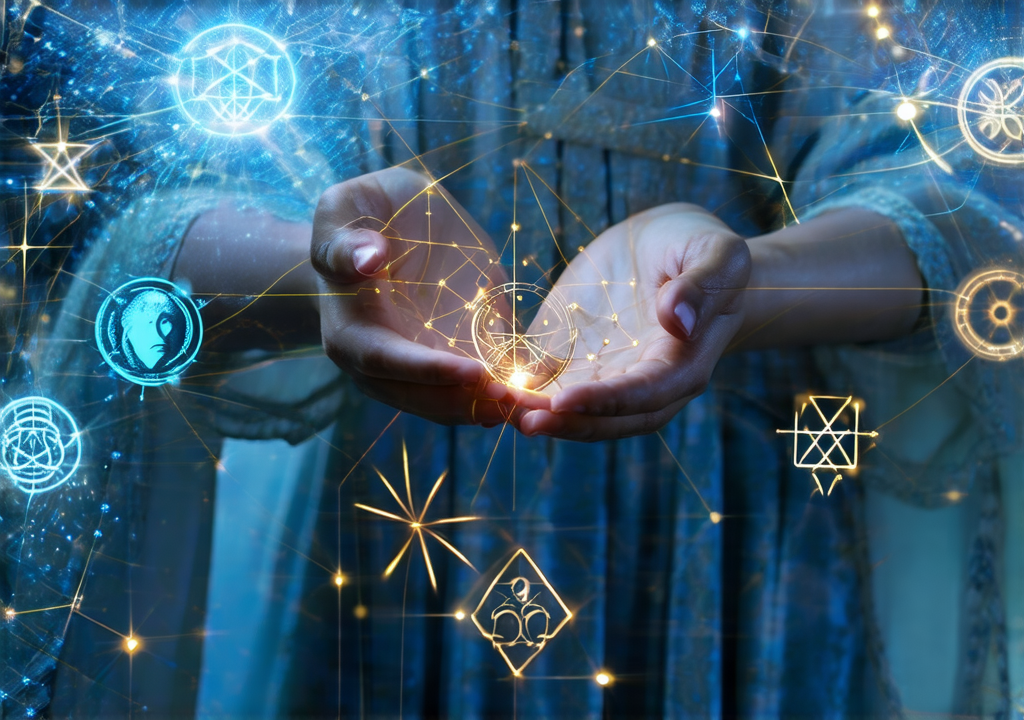
When we step into a ceremonial space, whether it be a consecrated temple or the corner of our own home, something extraordinary occurs. The mundane world recedes, and a threshold is crossed where intention meets cosmic forces and begins to shape reality itself. But what exactly is happening during these rituals that makes them so potent?
The Architecture of Power
At its core, ceremonial magic operates on principles far more sophisticated than mere incantation or prayer. It is an architecture of power built upon several fundamental pillars: symbolism, geometry, timing, and elemental correspondence. When a magician enters ceremony, they are not merely performing actions—they are constructing a microcosm that mirrors the macrocosm, creating a vessel through which divine forces may flow.
The ritual space itself becomes a living entity. Each corner is consecrated; each direction is assigned its proper angelic or elemental guardian; each object placed upon the altar carries specific mathematical and symbolic weight. The magician moves with deliberate precision, for in ceremonial magic, every gesture and movement has meaning.
Symbolism as Technology
Consider how symbols work. When a practitioner invokes the pentagram, they are not drawing five lines on parchment—they are invoking an archetypal force that governs protection, commandment, and the perfect balance of elements. The symbol operates on multiple levels simultaneously: it represents, it communicates with celestial powers, and it creates a resonance within the magician’s own psyche that aligns their will with the desired effect.
The power of symbols lies in their ability to bridge worlds. They are visual languages understood by both human consciousness and divine intelligences alike. When an adept raises the pentagram, they are speaking directly to the forces of air; when they trace the cross on the body, they invoke protection through the elements of earth and spirit.
The Geometry of Sacred Space
The geometry underlying ceremonial ritual is no mere decoration—it is literal technology for channeling cosmic energy. The circle of art, traced with specific tools using precise incantations, creates a boundary that protects while simultaneously opening portals. Within this circle, ordinary matter becomes charged with magical potency; outside its bounds, the forces of chaos press inward.
The square represents material manifestation; the circle, spiritual containment. Together they form the hexagram—the great seal upon which all lesser symbols are built. Every aspect of a properly constructed ritual space reflects these geometries: the altars follow proportional relationships discovered by the ancients; the positioning of candles, incense, and offerings follows sacred ratios that have been preserved across traditions.
Timing is Everything
The ancient masters understood deeply that timing matters. Rituals performed during specific hours, on particular days, under certain planetary influences produce dramatically different results than those performed at random times. The twelve hours of the day correspond to planetary rulers; each hour carries a unique energetic signature. Performing magical work during its appropriate planetary hour amplifies the effect exponentially.
Similarly, the lunar cycle dictates countless ceremonial operations. New moon for beginnings; full moon for fruition and illumination; waxing for growth and manifestation; waning for banishing and dissolution. Each phase of the moon carries specific magical correspondences that have been cataloged over millennia of observation.
The Science of Visualization
Perhaps the most misunderstood element of ceremonial ritual is visualization. Far from being mere imagination, visualization is actually a precise mental discipline that creates actual energetic patterns within the practitioner’s subtle body and projects outward into the world around them. When done correctly during ceremony, visualization becomes as real as any physical object—perhaps even more so, for it exists in a realm where intention shapes reality directly.
The ancient texts describe specific techniques for visualization: some practitioners visualize their desired outcome as light; others see it as sound vibrations; still others perceive it as geometric forms or living entities. These differing methods correspond to different levels of consciousness and produce different kinds of effects.
Elemental Correspondences
Each element—fire, water, air, earth—carries specific qualities that can be harnessed during ceremony. Fire represents transformation and willpower; water carries emotion and intuition; air provides communication and intellect; earth grounds manifestation. When a ritual invokes fire, the practitioner is calling upon the force of transformation itself to work through their intention.
The ancients understood these correspondences as laws of nature that could be observed in both macrocosm (the universe) and microcosm (the human body). Fire exists in our blood; water flows through our veins; air breathes into our lungs; earth constitutes our flesh. When ritual invokes fire, it resonates with the fire within us—and thus we become conduits for that elemental force.
The Key: Intention Coupled With Method
What makes ceremonial rituals so powerful is not any single factor but rather the precise combination of intention and method working together. A simple prayer spoken without ceremony has less power than a meticulously performed ritual with clear intent. Conversely, elaborate ritual without focused intention produces only beautiful spectacle.
The answer to what makes ceremonies so effective lies in understanding that they operate on multiple levels simultaneously: they manipulate symbolism, geometry, timing, elemental forces, and pure intention—each level reinforcing the others. When all these factors align properly during ceremony, something remarkable happens: the magician becomes a living bridge between worlds, their will becoming reality through the medium of sacred art.
This is why ceremonial magic has survived across cultures and millennia—the principles remain constant even as practices evolve. The rituals are not mere customs but actual technologies for working with forces that shape reality itself. When you perform a proper ceremony, you are not merely pretending—you are doing something real, measurable in its effects if you know how to observe them properly.
What makes it truly mind-blowing? That the same principles apply whether you perform grand rituals or simple ceremonies at home: the power lies not in elaborate trappings but in understanding what each element does and performing the ritual with precise knowledge of those purposes. The ancients understood these truths clearly; we merely need to remember them, for they are as true now as when first discovered thousands of years ago.


Recent Post


Gallery






Featured Videos





No Comments