


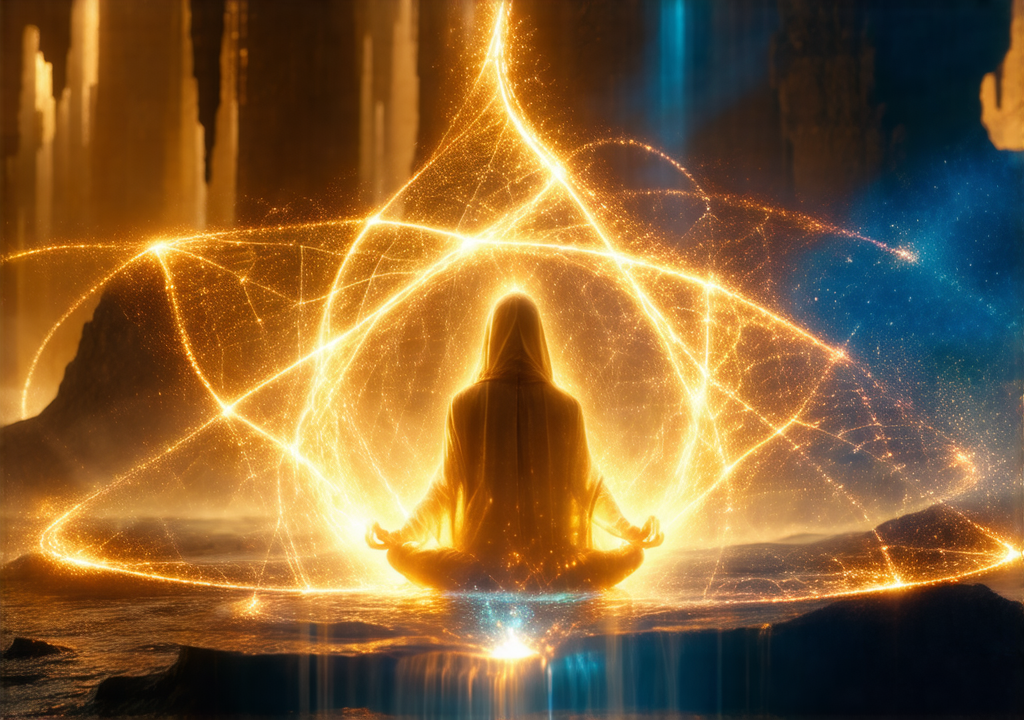
The Hermetic Order of the Golden Dawn emerged as one of the most influential organizations in Western esoteric tradition during the late 19th century. Founded on April 6, 1888, this mystical society brought together scholars, mystics, and magicians who sought to preserve ancient wisdom while synthesizing it into a coherent system for modern practitioners. At its heart lay the concept of elemental magic—understanding that fire, water, air, earth, and spirit are not merely physical substances but fundamental forces through which consciousness interacts with the cosmos.
The Foundations of Golden Dawn Ritual Magic
The Golden Dawn developed a comprehensive magical framework built upon three primary pillars: astrology, Kabbalah (the Tree of Life), and Tarot. These systems interconnect to form a map of reality that practitioners use in their rituals. The order taught that everything in existence participates in the elemental correspondences—each planet, zodiac sign, tarot arcana, letter of the alphabet, and even numbers possess specific elemental qualities.
Understanding these correspondences allows the magician to work with energy at its source rather than against it. When a ritual requires the element of fire, for instance, practitioners might invoke Mars or Leo, use red incense, hold a candle in their right hand, and speak in an energetic tone—all reinforcing the same elemental signature throughout the working.
The Elemental Correspondences Table
In Golden Dawn practice, every magical operation engages specific elements through precise correspondences:
Fire represents will, action, transformation, and the active principle. It governs fire itself as a physical element, but also encompasses solar energy, the sun’s rays, passion, courage, and all things dynamic. In rituals, fire is invoked through candle flame, incense burning, colored candles of red or yellow, dragon blood incense, and the element of fire sigilized on parchment.
Water embodies emotion, intuition, the subconscious, and receptivity. It governs rivers, rain, oceans, dreams, love, and healing arts. Water rituals employ chalices filled with pure water, moonstones for illumination, blue or silver candles, sea salt, and incenses of lotus flower or jasmine.
Air signifies thought, intellect, communication, and breath. It rules winds, the atmosphere, mental clarity, and all things aerial. Air workings utilize swords of office, white chalk on paper, feather tokens, air-incensed (like sandalwood), and silver bells.
Earth encompasses solidity, manifestation, stability, and the physical realm. Earth includes soil, stones, metals, plants, and all that is fixed. Earth rituals employ pentacles or coins, green candles, earth from various corners of the garden, roots-based incense, and herbs such as sage and lavender.
The Magic Circle and Elemental Invocations
Central to Golden Dawn ritual practice is the magic circle—sacred space created within which the magician operates at will. The traditional magic circle consists of multiple concentric rings: outer rings inscribed with zodiac signs and divine names, an inner ring for elemental invocation, and a central point where the magician stands in union with all forces working around them.
When a practitioner enters the circle, they draw down the energies from each cardinal direction. The four elemental teachers—Oph, Auriel, Caspriel, and Paliel—are called forth at their appropriate directions: south for fire (Brisine), north for water (Taphthartharthar), east for air (Raphael), west for earth (Purusha). Each element receives invocation with specific prayers, and the practitioner visualizes energy descending from above or emanating from the four points of the compass.
Practical Elemental Workings
The beauty of Golden Dawn elemental magic lies in its accessibility to practitioners at every level. Beginners begin by learning the basic correspondences: memorizing which tarot cards belong to each element, practicing visualization of elemental spirits, and building simple altar setups for daily meditation. Advanced students might construct elaborate talismans inscribed with planetary hours, astrological aspects, and sigils drawn from the Key of Solomon.
Elemental workings serve numerous purposes in Golden Dawn practice:
- Purification: Using incense burns to cleanse space before ritual
- Dedication: Releasing a candle flame to dedicate one’s work
- Conjuration: Calling forth elemental spirits through prayer and visualization
- Banishing: Removing unwanted energies from an area or individual
- Evocation: Drawing elemental forces into physical objects or the self
The Inner Workings of Elemental Ritual
What distinguishes Golden Dawn ritual magic is its emphasis on inner transformation alongside outer action. When a magician invokes fire during ceremony, they are not merely calling upon external flame; they are awakening the inner fire—the will, passion, and dynamic energy within their own soul that corresponds to this element. The outer rite reinforces the internal work, making the abstract concrete.
This principle of “as above, so below” guides every Golden Dawn working: the macrocosm reflects in the microcosm, and through ritual, the magician aligns themselves with cosmic forces rather than merely manipulating local energies. Every gesture carries symbolic meaning; every word spoken during incantation resonates across dimensions.
Conclusion: Embracing Elemental Mastery
The Hermetic Order of the Golden Dawn offers practitioners a complete system—a language of symbols that allows one to read the universe as text, and to write upon it through ritual practice. Unlock elemental magic by learning these ancient correspondences, practicing regularly in meditation, and building simple rituals that engage with fire, water, air, earth, and spirit. As you master each element individually, they combine in your hands into a powerful tool of transformation—opening doors not only to external forces but to the deepest mysteries within yourself.


Recent Post



Gallery






Featured Videos





No Comments