


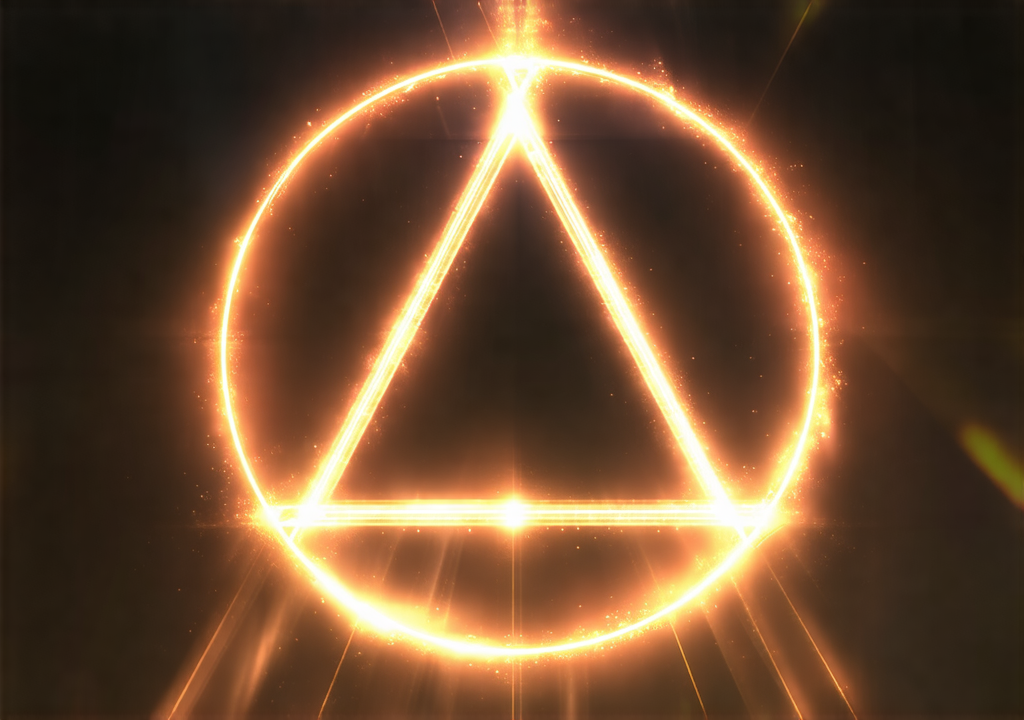
The Great Work in Matter and Mind
The ancient alchemists understood something modern science has yet to fully embrace: the universe is not merely composed of inert matter waiting to be rearranged, but rather exists as a living continuum where spirit and substance share an intimate kinship. At the heart of their great work lay the principle of transmutation—the artful conversion of base matter into higher forms, whether in laboratory crucible or within the depths of human consciousness itself.
The Nature of Base Matter
What alchemists called “base” matter was not merely physically inferior but fundamentally lacked spiritual vitality. Lead, earth, and stone were seen as dense with materiality yet spiritually dormant—potentially divine but locked behind their own heavy veils. Gold, by contrast, represented the perfected state: incorruptible, luminous, complete in itself. But this perfection was not merely physical; it was spiritualized matter, substance saturated with spirit.
The alchemists believed that every form of matter contained within it a seed of divine potential—a spark of spirit waiting for the proper conditions to awaken and bloom. This understanding transformed their craft from mere technical operation into a sacred dialogue between heaven and earth, where the alchemist served as midwife to creation’s hidden birth.
The Alchemical Journey: From Base to Gold
The transformation required more than physical manipulation; it demanded the participation of the practitioner’s own spirit in the work. When lead became gold through the Great Work (Magnum Opus), the process was not unlike a spiritual awakening. The base metal shed its heavy shell like a caterpillar shedding skin, revealing beneath the luminous form that had always been latent within.
Three stages marked this journey: Nigredo (the blackening, where matter dies to itself), Albedo (whitening through purification), and Rubedo (redding into fullness). Each stage mirrored spiritual development—death of the ego, cleansing of intention, and awakening of higher consciousness.
Spirit as Active Agent
What distinguished true alchemical transmutation from mere chemical change was the role spirit played as active agent rather than passive recipient. The alchemist’s will, informed by deep understanding and guided by symbolic practice, served as catalyst—guiding matter toward its own perfection rather than forcing it into new shapes.
This principle held true whether working with metals or with human beings. When one sought to transmute a person’s character, the same principles applied: recognize the divine seed within base nature, apply appropriate conditions of heat (passion) and cold (discipline), and allow transformation to occur through participation rather than compulsion.
Inner Transmutation
The outer work with metals mirrored an inner work equally real. The alchemist who worked upon lead in his crucible simultaneously worked upon his own soul. Every successful transmutation in the laboratory was accompanied by spiritual progress within, for the practitioner had to become like that which he sought to create—willing gold before willing it into existence.
This insight reveals why true alchemy has always been understood as a path of initiation rather than mere technique: one cannot transmute matter without being transmuted oneself in the process. The work is reciprocal, each transformation affecting both worker and material alike.
Modern Relevance
Though modern science speaks in different terms—electrons and nuclei, quantum fields and chemical bonds—the principle remains intact. We now know that matter can indeed change its essential form; nuclear transmutation proves what alchemists intuited. Yet the deeper truth their practice revealed—that spirit participates actively in material transformation—remains equally valid whether one frames it in ancient language or modern physics.
The real question is not whether transmutation occurs but whether we are sufficiently awake to participate consciously in our own transformation. Every moment offers opportunities for spiritual transmutation: experiences converted into wisdom, relationships refined into love, suffering transmuted into insight.
Conclusion: The Living Crucible
Transmutation—spirit into substance—is ultimately about participation rather than manipulation. It requires the practitioner to enter deeply into the work, bringing both intention and sensitivity to each moment of transformation. Whether working with lead or lead within oneself, whether in laboratory crucible or heart’s inner chamber, the principle remains: matter is spirit waiting to awaken, and every act of true transmutation involves both outer change and inner awakening.
The great work continues—not merely as historical practice but as living possibility available to all who seek it with sincere intention. After all, if lead can become gold through patient, conscious participation in transformation, then what might we ourselves become when we turn our own spirits toward their highest forms?


Recent Post



Gallery






Featured Videos





No Comments