


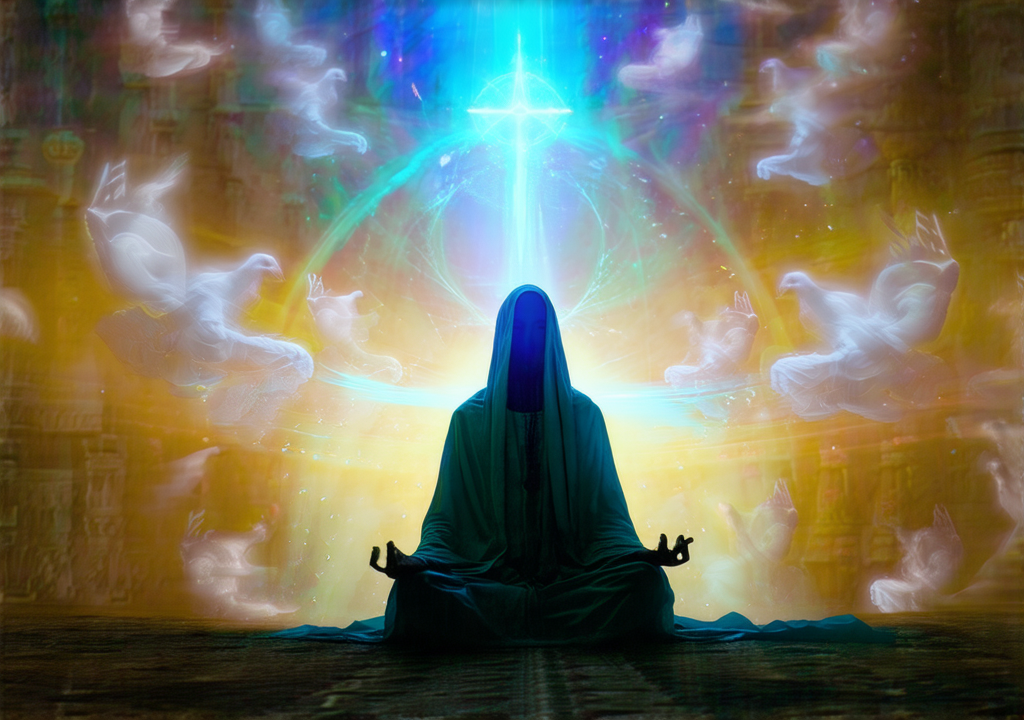
In the vast landscape of spiritual practice, prayer has many faces and methods. Some pray with simple words, others with complex liturgies or meditative silence. But there exists within this tradition a particular kind of prayer that stands apart from all others: Theurgic Prayer, also known as “God-working” in Greek (θεουργική). This ancient practice invites practitioners not merely to speak to the divine, but to actively participate with it, creating a reciprocal relationship where heaven and earth meet.
What Is Theurgy?
The word itself comes from two Greek words: theos, meaning “god,” and ergon, meaning “work” or “deed.” Thus, Theurgy is literally the work of God—or more precisely, the working together with divine beings. While prayer (προσευχή) involves petitioning, praising, and conversing with the gods, Theurgy goes further: it seeks actual communion through ritual action, symbolic gestures, meditation on divine names, and participation in sacred ceremonies that elevate the practitioner beyond ordinary consciousness into direct encounter with divine realities.
This concept is most famously articulated by figures such as Iamblichus (c. 245–325 CE), who wrote extensively about theurgy in his treatise On the Mysteries. Unlike earlier Neoplatonic thinkers like Plotinus, who emphasized intellectual contemplation as the path to union with the One, Iambichus maintained that certain divine beings could only be approached through specific ritual practices. Theurgy was not merely an intellectual exercise but a transformative act of participation.
How Theurgic Prayer Differs From Normal prayer
To understand what makes Theurgy special, consider how it differs from typical forms of prayer:
Ordinary prayer is primarily communicative. We speak to God—asking for help, giving thanks, expressing love. It resembles a conversation between two parties, where one speaks and the other listens. Theurgic prayer, by contrast, operates through symbolic action that draws divine energies downward into human consciousness. Through carefully structured ritual practices—including incantations, visualizations, physical postures, and material offerings—the practitioner becomes an active participant in their own spiritual transformation.
Ordinary prayer is often spontaneous and informal. A person might close their eyes, fold their hands, and speak from the heart. Theurgic prayer, however, is deliberate and structured. It involves specific formulas, sacred geometries, timed ceremonies, and precise materials. The practitioner must prepare themselves—both physically and mentally—before engaging in these works of the divine.
Ordinary prayer tends to be petitionary: “Lord, grant me…” or “Thank you for…”. Theurgic prayer is more about alignment with cosmic order itself. Rather than asking God to do something for us, Theurgy involves positioning ourselves so that divine energies can flow through us.
Core Elements of Theurgic Prayer
Divine Names and Invocations
Central to the practice is the use of sacred names—of deities, angels, archangels, and cosmic principles. These are not merely sounds but powerful vessels of divine presence. In traditions ranging from Neoplatonic Theurgy through Kabbalah into hermeticism, speaking a divine name is calling that being into relationship.
Symbolic Gestures and Postures
Theurgists do not simply kneel in quiet reverence; they engage their bodies as instruments of communion. Specific postures correspond to specific cosmic principles: arms raised upward for celestial energies, hands forming mudras (sacred hand gestures), eyes fixed on specific directions, feet grounded in sacred geometries. Each gesture participates in the divine order it invokes.
Sacred Materials
Unlike casual prayer, Theurgic practice often employs physical elements: incense (representing ascending smoke), water (for purification and flow), light (for illumination), earth and stone (for grounding). These materials serve as bridges between the material and immaterial worlds. In particular traditions, specific materials correspond to specific deities or cosmic powers.
Structured Timing
Theurgic prayer often occurs at ritually significant times: solstices, equinoxes, lunar phases, planetary hours. The practitioner aligns their internal rhythms with external cosmic patterns, creating resonance between themselves and the divine energies they seek to commune with.
Historical Examples of Theurgy in Practice
Iamblichus himself described how specific ritual practices—such as calling upon divine names at appropriate times, using particular incense, facing certain directions while chanting—could draw divine beings into proximity. Similarly, Hermetic texts describe meditations where practitioners visualize themselves ascending through cosmic spheres, each sphere inhabited by a specific archon or principle.
Theurgy also appears in various forms across traditions: the Kabbalistic practice of Tzadik (righteous intercession), certain Vedic rituals involving precise chanting and offering placement, even elements of Christian liturgical prayer that involve symbolic actions (the sign of the cross, incense, Eucharistic communion) point toward Theurgic principles.
Why Practice Theurgic Prayer?
For those seeking more than intellectual understanding or emotional consolation, Theurgy offers something distinct: actual participation with divine beings. It is a practice where one does not merely talk about God but actively works with divine energies, transforming both the practitioner and the world around them.
Whether you call yourself Neoplatonist, Hermetic, Christian, or simply a seeker of deep communion, Theurgic Prayer offers a pathway to genuine encounter—with divine beings who respond not just to our words but to our whole being: body, mind, and spirit united in sacred action.


Recent Post



Gallery






Featured Videos






No Comments