


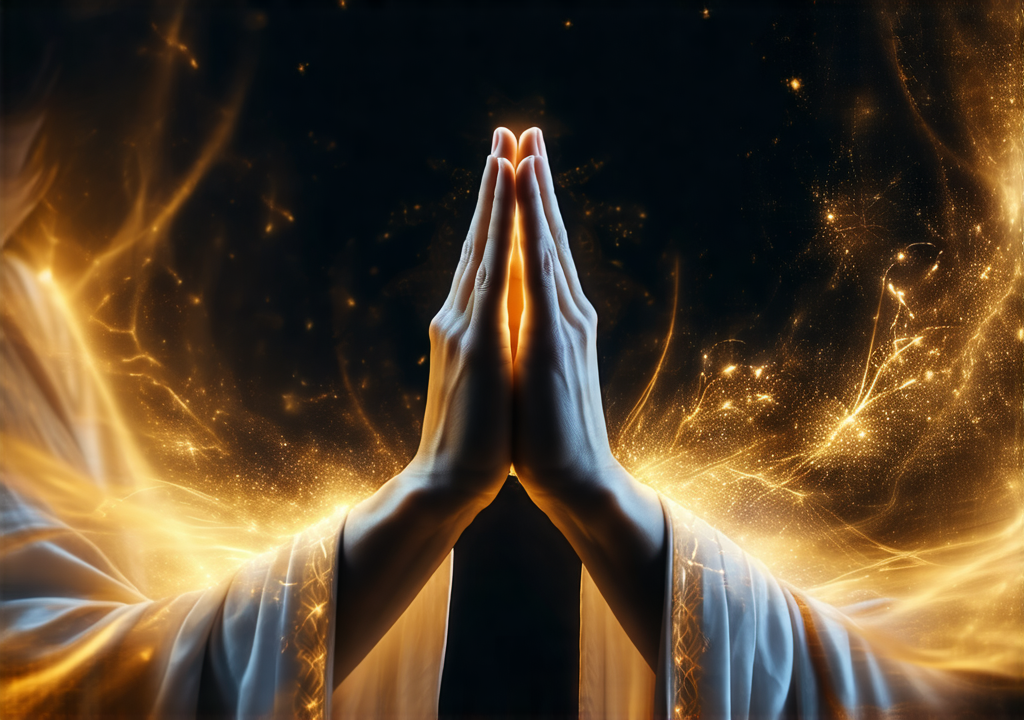
Prayer is one of humanity’s oldest practices, but few realize that prayer can be enchanted—infused with intentionality, ritual, and the very power of God himself. This is what we call Theurgy, from the Greek θεουργία, meaning “god-working” or divine work. While ordinary prayer asks and petitions, theurgic prayer collaborates with heaven, participating in the divine life through sacred gestures, symbols, and consecrated actions.
Why Pray with Magic?
You might wonder: Isn’t prayer just talking to God? Shouldn’t we be simple and direct? But consider how often God works through means. He sends rain on crops; he uses bread and wine as vessels of grace; he speaks through prophets who use symbolic actions—Ezekiel lying on his side, Isaiah walking naked, Jeremiah buying a field in Jerusalem. Theurgy extends this logic: if ordinary prayer is conversation, theurgic prayer is communion—a deeper participation where our prayers become liturgical, where heaven itself responds to our ritualized petitions.
The early church fathers understood this well. When they called God’s work in the sacraments “mysteries” (μυστήρια), they recognized that God’s communication with us involves not only words but acts—visible signs carrying invisible grace. Theurgy makes explicit what every Christian already practices: that prayer is never just about something; it always does something.
What Is theurgic Prayer?
Theurgy takes seriously three ideas often neglected in modern Christianity: first, that worship is human participation in divine action; second, that symbols are not mere signs but channels of power; third, that ritual matters—how we pray with our bodies and materials affects how God responds.
In a simple example: when you kneel before the altar, cross yourself, and speak the words “In nomine Patris,” your prayer is richer than if you had merely thought those words. Why? Because the body participates in worship, and symbols participate with us. Theurgy makes this participation deliberate.
Core Practices of Theurgic Prayer
1. Consecration
Before praying, set apart what you’ll use for sacred purposes. A candle becomes more than wax when dedicated; a stone can become an icon when consecrated. This practice echoes in every Christian liturgy—from the blessing of holy water to the ordination rites where bishops lay hands on candidates, making them “participatory” in Christ’s priesthood.
2. Symbolic Action
Theurgy relies heavily on symbolic gestures—each one carrying spiritual meaning. When you light a candle while praying for illumination, your action mirrors the truth: God is light, and our prayers bring that light into darkness. Every gesture can be sacramental if done in faith and directed toward God’s glory.
3. Meditative Invocation
Unlike passive meditation, theurgic prayer calls upon divine powers. This invocation—spoken aloud or inwardly—is itself a form of magic: not manipulation but participation. By naming the divine names and calling their power into presence, you enter into communion with beings who are already working on your behalf.
4. Sacramental Time
Theurgy often practices prayer at specific times (dawn, vespers, feast days) when heaven’s veil is thinnest. This isn’t superstition—it’s recognition that God works within time as well as through it. When you pray at the proper moment, you join your will to the divine rhythm of creation.
Getting Started: A Practical Ritual
Try this simple theurgic prayer:
Preparation: Light a candle, find a quiet space, and hold a meaningful object (a cross, a stone, or even your hands together).
Invocation: Call upon God by name—Father, Son, Spirit—and ask what you need. Speak aloud if possible.
Consecration: Bless the air around you, the room, yourself. Say: “May this prayer ascend as incense; may my petitions rise like sacrifices.”
Silence: Sit in stillness for five minutes, listening—not hearing but hearing. Theurgy demands attention to what God is already saying.
Closing: Bless yourself again and give thanks. End with a short doxology or hymn.
That’s it! You’ve performed theurgic prayer—and if you feel something different afterward (peace, warmth, clarity), celebrate it as evidence that prayer does work through sacred action.
Common Misconceptions
Theurgy is pagan mysticism. False. The early church fathers practiced a form of theurgy called “liturgical theology,” and their writings on mystical union are deeply rooted in Scripture (especially Paul’s letters to the Corinthians, which use temple imagery). True theurgy is Christian—it participates in God’s work rather than manipulating forces independently.
Theurgy requires special power. No—anyone who prays can practice it. The key is faith, not charisma. Every saint has performed acts of theurgic prayer; they just made them visible through their rituals and writings.
Why You Should Try It
If you’ve ever prayed and felt that your words were too small, or if you’ve wondered whether prayer really changes anything beyond your own heart—this practice will help. Theurgy shows that our prayers are not merely requests but participations in the divine life: when we pray, God doesn’t just hear us; he joins with us.
So pick up a candle or close your eyes and try it. Call upon the Father through his Son in union with the Spirit—and watch what happens.


Recent Post


Gallery






Featured Videos





No Comments