



Alchemists have long understood that transmutation is not merely about changing one substance into another—it is the process of elevating base matter toward perfection itself. From the earliest alchemical writings in Alexandria to the laboratories of Paracelsus, practitioners pursued a single transformative principle: the belief that all matter shares a common essence capable of being refined into gold, but more importantly, into something far greater—divine substance that bridges the material and spiritual realms.
The foundation of this understanding begins with the concept of prima materia, the primordial substance from which everything originates. Ancient alchemists believed that beneath every physical form lay an unformed potential waiting to be unlocked. The alchemical art was not about creating something new, but revealing what already existed in latent state within base matter.
The Core Principles
The classical alchemical framework rests upon three pillars: the understanding of correspondence between macrocosm and microcosm (the great world and small), the recognition that matter undergoes continuous transformation through cyclical processes, and the conviction that spiritual purification accompanies material refinement. When an alchemist works with lead, mercury, or any base substance, they are simultaneously working upon their own inner nature.
This principle of correspondence—that “as above, so below”—gives transmutation its deeper meaning. The transformation occurring in the laboratory mirrors transformations occurring within the soul and throughout the cosmos. Gold, for alchemists, was not merely a physical metal; it represented perfection itself: incorruptible, luminous, and complete.
Methods of Transmutation
The methods employed by alchemical practitioners varied widely but shared common elements. Calcination involved reducing substances to ash through fire. Fixation purified them by binding volatile components. Distillation separated pure essence from base material, while sublimation elevated the refined matter above its former state.
The most celebrated technique—the Magnum Opus, or Great Work—required multiple stages beginning with Nigredo (blackening), where base matter was dissolved and putrefied until it returned to its primordial form. This was followed by Albedo (whitening), during which purification occurred, then Citrinitas (yellowing) as the substance turned toward gold, culminating in Rubedo (reddening)—the final stage where the philosopher’s stone emerged and transmutation of base metals into gold became possible.
The Philosophers’ Stone
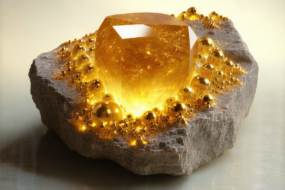
Central to alchemical practice was what practitioners called the Lapis Philosophorum, or philosopher’s stone—a substance capable of transforming lead, mercury, and other base metals into gold in a single transformation. But the stone itself was more than a catalyst; it embodied the perfected essence that alchemists sought within themselves as well.
The search for this divine substance drew countless practitioners throughout history. From Islamic scholars like Jabir ibn Hayyan to European masters such as Nicholas Flamel and the legendary Paracelsus, each contributed discoveries of profound significance. The true breakthrough came not from accumulating knowledge but from recognizing that transmutation required both material operation and spiritual preparation.
Divine Transmutation: Beyond Physical Transformation
What made alchemical transmutation so remarkable was its dual nature—it worked upon matter outwardly while simultaneously refining the inner self. When a practitioner witnessed base lead become luminous gold, they experienced not merely an external event but confirmation of their own elevated state. This is why many sought to become as well as become with the philosopher’s stone; they understood that true transmutation required both laboratory work and spiritual transformation.
The alchemical art demanded patience—years or even lifetimes of dedicated practice—and mastery over opposing forces: water and fire, salt and mercury, sulfur and antimony. Yet when the practitioner finally achieved it, the result was not merely gold but something transcendent—a substance that carried divine properties into the physical world.
The Legacy Continues
Alchemy’s influence extends far beyond its historical period. Modern science owes much to alchemical methods and insights—the laboratory itself is descended from the alchemist’s workshop. But perhaps more importantly, the pursuit of transmutation continues in new forms: nuclear physics achieving what alchemists dreamed when they first began manipulating matter at its most fundamental level; chemistry discovering new substances with properties previously unknown; medicine extending through alchemical-inspired research on cellular transformation and healing.
Conclusion
The great truth that alchemy discovered—that base matter contains within it the potential for divine perfection—remains as relevant today as it was when ancient practitioners first observed it in their crucibles. The one transformation they sought continues to echo through human history: from base lead to luminous gold, from material to spiritual, from mortal to immortal. It is a transformation not merely of substance but of understanding itself—a recognition that beneath the surface world lies infinite possibility waiting to be revealed.
The One Transformation That Alchemists Have Been Searching For Centuries—and will continue searching for—remains not only in their crucibles and laboratories, but within every practitioner who approaches them with patience, knowledge, and devotion.


Recent Post



Gallery






Featured Videos






No Comments