


Introduction: The Ancient Art of Transformation
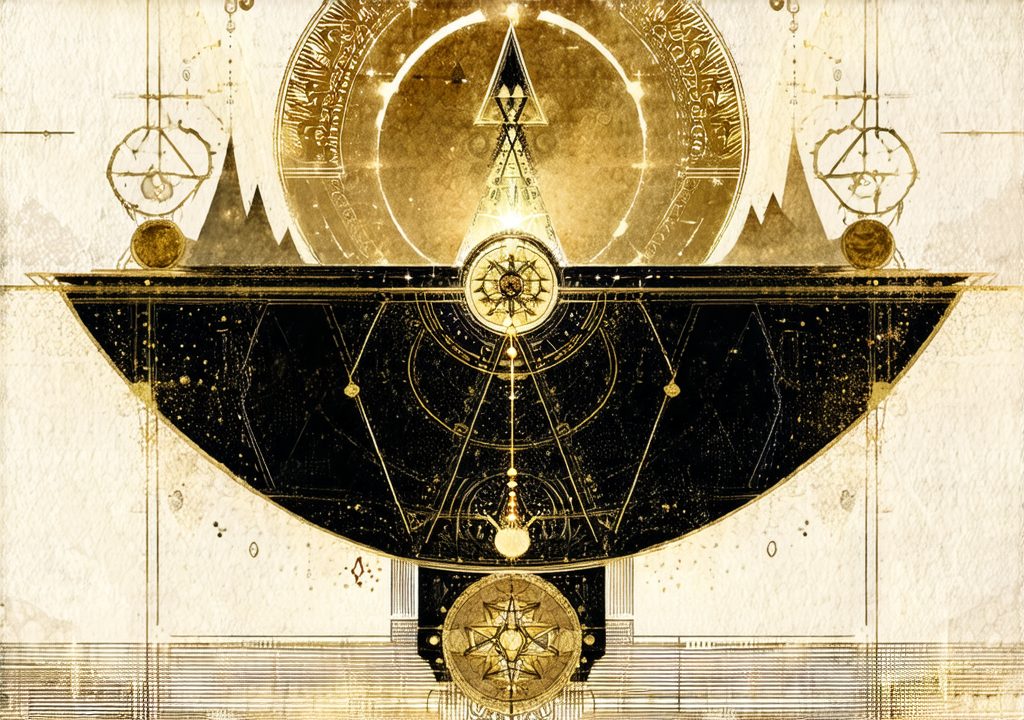
Beneath the surface of what we perceive as solid matter lies a hidden architecture of elements, forces, and spiritual energies that have been recognized since antiquity as the realm of alchemy. At its heart stands transmutation—the sacred process by which base matter is elevated into higher forms, whether in the laboratory or within the human soul. The word “alchemy” itself derives from the Arabic al-kīmiyā, meaning perhaps “the art of transformation,” and it encompasses far more than mere chemical conversion. True alchemy operates on multiple levels simultaneously: material, spiritual, and cosmic.
The Foundations: Four Pillars Of Alchemical Understanding
To understand transmutation, one must first grasp its foundational principles. Ancient alchemists identified four fundamental substances—the quattuor elementa: earth (earthly solidity), water (fluidity and absorption), air (movement and spirit), and fire (transformation and purifying energy). These were not merely physical substances but principles of consciousness that permeated all matter.
Beyond the elements, alchemists recognized three kingdoms: mineral, plant, and animal—each possessing its own essential character and capacity for transformation. The great work (magnum opus) proceeds by recognizing the hidden connections between these domains and working with them as one unified field of energies.
The Great Work: Stages Of Transmutation
The classical alchemical process unfolds through what is known as nigredo (blackening), albedo (whitening), citrinitas (yellowing), and finally rubedo (redding). Each stage represents a specific transformation of both substance and consciousness:
Nigredo—The black putrefaction, where matter is broken down to its essential states. This phase involves decomposition, dissolution, and the exposure of hidden qualities through heat and chemical change.
Albedo—Purification and whitening, where impurities are separated and refined. Here the alchemist achieves clarity and begins to perceive the prima materia—the primal substance underlying all things.
Citrinitas—The golden phase where transmutation becomes visible in color changes, particularly when metals take on a yellow luster suggesting proximity to gold.
Rubedo—The final redding, where the philosopher’s stone is achieved—a substance capable of perfecting matter and granting longevity.
The Mechanics: How Transmutation Works At A Deeper Level
Modern understanding reveals several layers in how transmutation operates:
1. Resonance and Frequency: Every atom vibrates at specific frequencies. When aligned through focused intention, the alchemical fire (heat), catalysts, and sacred geometries can shift matter from one resonant state to another—literally changing its frequency profile.
2. Elemental Interpenetration: Unlike modern chemistry’s view of discrete elements, classical alchemy taught that all substances contain traces of every other element within them. Transmutation is therefore not creation but revelation—bringing hidden qualities into manifestation through proper treatment and conditions.
3. The Role of Consciousness: Perhaps the most profound insight is that transmutation requires conscious participation—not merely external catalysts like sulfur, mercury, or lead, but also the alchemist’s own spiritual state. The laboratory becomes a microcosm of the inner work; what occurs to matter simultaneously occurs within the practitioner.
4. Time as Catalyst: Alchemical transformations require specific temporal conditions—seasonal alignments, lunar phases, and even planetary positions influence which transmutations succeed and which fail.
Practical Methods: From Laboratory To Spirit
Traditional alchemy employed numerous methods for achieving transmutation:
Calcination: Heating matter to extreme temperatures until it becomes ash—the “death” of the material form allowing spirit to emerge.
Cohobation: Repeated distillation and return, each cycle increasing potency through concentration.
Agnus Dei: The “sacrifice” where opposing elements are joined in marriage—often represented by sulfur (masculine) and mercury (feminine) uniting as one substance.
Vitriol: Using strong acids to dissolve matter completely before recombination into new forms.
These methods mirror internal practices: meditation, breathwork, visualization, and the contemplation of symbols—all aimed at changing both the outer environment and the inner state simultaneously.
The Philosopher’s Stone: Ultimate Transmutation
The Philosopher’s Stone (Lapis Philosophorum) stands as the ultimate product and catalyst of alchemical transmutation—a substance so refined it can convert base metals into gold, heal diseases, and extend life. More importantly, it represents a state achieved rather than merely an object: the perfected self in perfect harmony with cosmic forces.
Conclusion: Why Alchemical Transmutation Endures
What makes alchemy’s mechanics of transmutation so enduring is that it addresses both practical material transformation and spiritual awakening through a single unified framework. When we speak of “turning lead into gold,” we mean not merely changing one metal to another but transforming our own consciousness along with it—elevating the base matter of daily experience into something luminous, complete, and divinely resonant.
The hidden mechanics remain accessible: they require patience, symbolic thinking, a willingness to observe deeply, and most importantly—the courage to participate in transformation rather than merely witness it from outside.


Recent Post



Gallery






Featured Videos






No Comments