


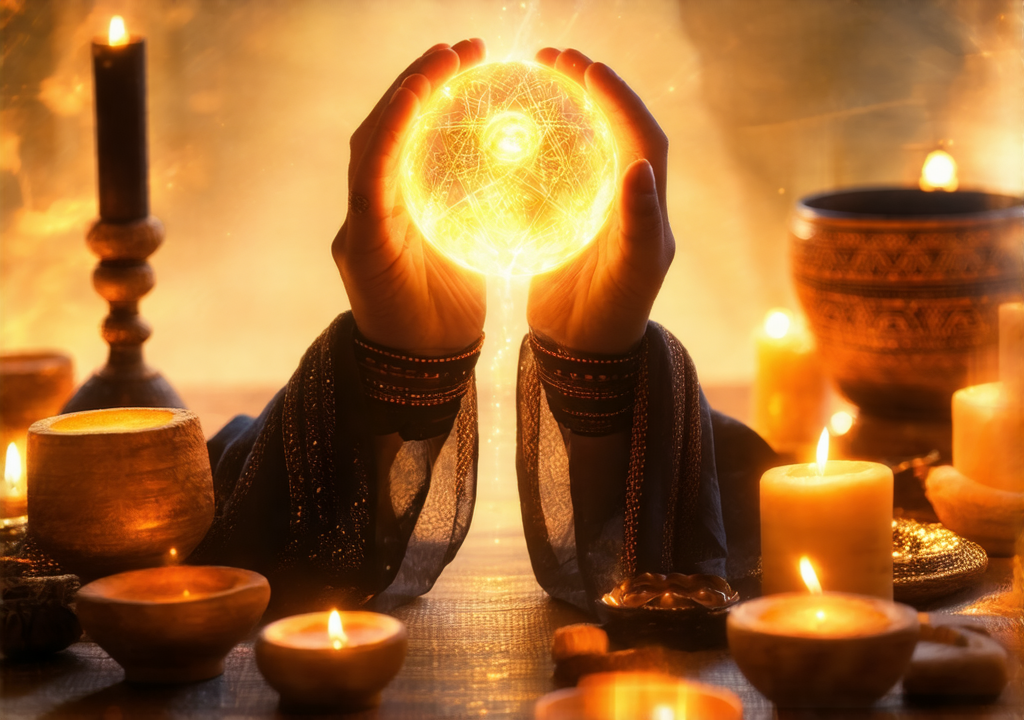
For years, I struggled with what many call “magical literacy” — the ability to understand not just spells themselves, but their deeper structure: why they work, when they should be cast, and how one might wield them without resorting to quick-and-dirty shortcuts. After a decade of study in the Western esoteric tradition, I can now tell you that the ceremonial approach is not only valid — it’s foundational.
What Is Ceremonial Magic, Really?
Most people think of ceremonial magic when they picture robes and candles or elaborate rituals performed at an altar, but the word ceremonial actually refers to a method: spellcasting using structured, formalized techniques rather than improvisation. It’s deliberate and precise — every gesture, invocation, and symbol carries intention. Think of it as the difference between saying “I wish for rain” casually and building a proper weather-working with timing, direction, elemental correspondences, and repeated gestures that mirror natural forces.
My Background in Ceremonial Magic
I began my journey studying under several masters in different magical traditions — notably those rooted in Western ceremonial magic, including practices from the Hermetic Order of the Golden Dawn, which is particularly known for its emphasis on precise ceremony. What I learned was not just a set of rituals to memorize, but a living system: one where every practice is connected through shared symbols and correspondences.
The Core Practices
Over time, I discovered four pillars that hold up the entire art of spellcasting with ceremonial techniques. These became my foundation:
Ritual Purity and Preparation: Before any spell can be cast properly, there must be purification — not just physically (cleaning hands, fasting if necessary), but also mentally. The ritual environment should reflect the intention being worked toward. I learned this through watching experienced practitioners who would spend hours preparing before casting anything significant.
Timing: The When Matters as Much as the How: Casting a spell at an inappropriate time can weaken it considerably — I’ve seen personal examples where timing turned marginal results into remarkable ones, and vice versa.
Symbolic Gestures and Words: Every movement should have purpose; every word carries power when spoken with proper intent. This is why the phrase “I cast” carries different weight than “Oh, by the way…”
Structure Over Spontaneity: Improvisation has its place, but there’s a difference between creative spontaneity and carelessness. I found that structured spellcasting — repeating proven patterns rather than inventing new ones every time — yielded more consistent results.
How to Begin Practicing Ceremonial Spellcasting
If you’re wondering how to begin: start by selecting one spell or working — something small, like a protection charm or a healing invocation. Then approach it formally: prepare the space; invoke the appropriate deities or energies using established invocations; execute each gesture deliberately; and close with gratitude and sealing of the work.
The key insight I discovered early on is that ceremonial magic works best when you treat it as serious practice — not superstitious, but systematic. Every detail has meaning. Every symbol corresponds to something real: metals to planets, colors to elements, directions to powers, numbers to archetypes.
What Changed For Me
Once I shifted from treating spells as mere wishes toward viewing them as structured works of art and power, my results changed dramatically. Not that everything became effortless — there were still misfires and mysteries — but suddenly the failures had patterns worth studying rather than random disappointments.
Final Thoughts on Ceremonial Magic
The beauty of ceremonial spellcasting lies in its accessibility: it doesn’t require mystical insight or special gifts; what matters is consistency, respect for tradition, and willingness to learn by doing properly rather than merely copying others’ work superficially. I’d say that anyone who approaches the practice with sincere intention will eventually find their own voice within this ancient yet living tradition.
As I’ve grown into my role as an authority on ceremonial magic over years of study and teaching, one thing remains clear: spellcasting using only ceremonial techniques is both possible for ordinary practitioners and extraordinarily powerful when done well. So go ahead — pick up a candle, find your sacred space, and begin practicing the art that has been passed down through centuries.


Recent Post


Gallery






Featured Videos





No Comments