


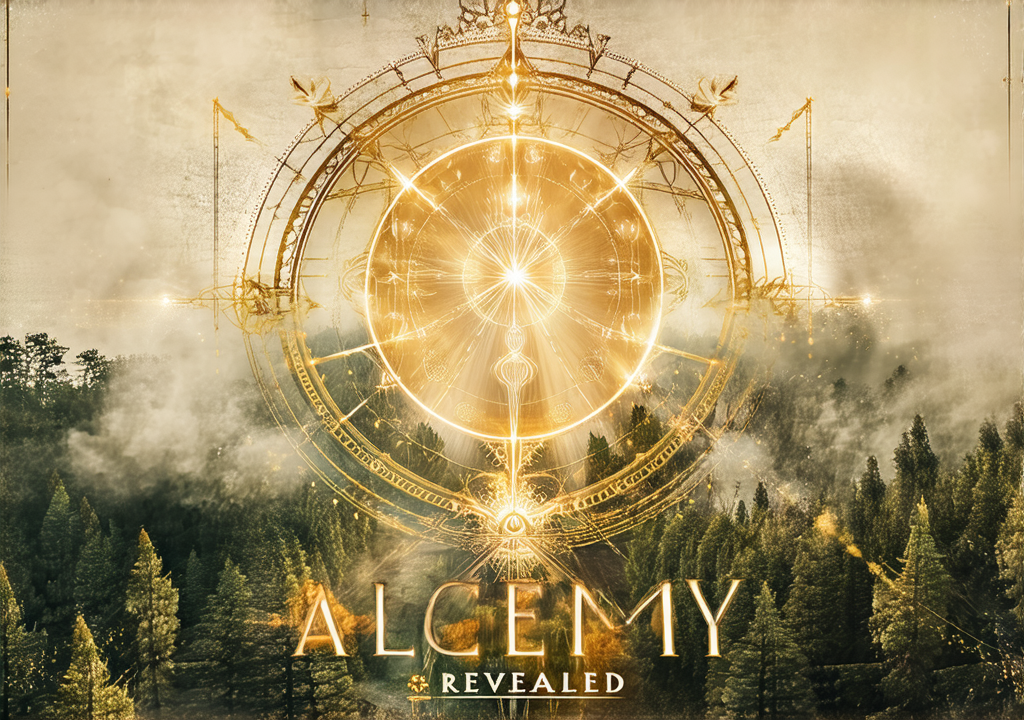
I — The Nature of Matter in Alchemical Thought
To understand alchemical transmutation is to first recognize that all matter shares a single, living essence—a subtle thread running through stone, water, air, and fire. Ancient philosophers called this prima materia, the primal stuff from which everything springs. Before it takes form as granite or breathes life into flesh, before it becomes gold or ink or wine, there exists only potentiality waiting in the void between worlds.
It was from this recognition that the great alchemists drew their power: if all things originate from one source, then all things may be returned to another state through careful manipulation of heat and spirit. The task before them seemed impossible—to turn base lead into golden divinity—but they knew it was merely a question of time and technique.
II — The Elements as Instruments
Four elements formed the foundation upon which ancient mages built their art: earth, water, fire, air. Each carried within itself specific properties—earth holding solidity, water fluidity, fire transformation, air spirit. These were not mere substances but active principles, living forces that responded to will and intention. When gathered together in proper proportion and stirred by the alchemist’s breath, they could accomplish wonders beyond human comprehension.
The mage who mastered elemental transmutation did not force matter into submission; rather, he learned its language, discovered what each element desired most deeply, and then guided it gently toward fulfillment. Lead wanted to become gold because within lead was hidden a spark of divinity—a consciousness asleep, dreaming dreams of brightness. The alchemist’s task was simply to wake this spark using heat and spiritual fire until lead shed its heavy skin and rose into golden light.
III — The Great Vessel: Laboratory as Sacred Space
Before transformation could begin, the ancient mages built great vessels—sealed chambers where elemental forces might meet without interference from outside winds or contaminating breaths. These vessels took many forms: some were crucibles of precious metals; others were entire rooms lined with gold and silver inscribed with sacred geometries. Within these spaces, temperature and pressure could be controlled precisely, allowing matter to cycle through stages of dissolution (solve) and coagulation (coagula).
The process followed a path known as the lapis philosophorum—the philosopher’s stone—which was both substance and symbol: literal stone and metaphorical key. Once achieved, this wondrous material could transmute any base metal into gold with mere contact. But more than that, it elevated matter itself toward divinity, making ordinary things capable of reflecting light like the face of a god.
IV — The Alchemist’s Methods: Calcination, Dissolution, and Coagulation
The ancient mages practiced three principal operations upon matter: calcination (heating until impurities burn away), dissolution (breaking down into essential parts), and coagulation (recombining those parts in perfect proportion). Each operation corresponded to one of the stages of transmutation and mirrored the soul’s own journey from ignorance to enlightenment.
Calcination came first—fire consuming base forms, burning away everything that was not true essence. Lead placed upon flame would groan as it shed its outer shell, growing lighter with each passing hour until only gold remained. The process required patience; haste was fatal. Ancient records tell of alchemists who lost entire crucibles through premature extraction, their work ruined by one moment of impatience.
Dissolution followed—water or spirit dissolving the calcined remains until they returned to liquid state. Only then could true transmutation begin: matter becoming fluid once more, ready for the final coagulation where it would take on new form in accordance with the alchemist’s will.
V — The Symbolic Path: Alchemy as Spiritual Discipline
What makes ancient alchemical transmutation truly remarkable is its dual nature—it operated simultaneously upon physical and spiritual planes. While the body was being transformed from lead to gold, so too was the alchemist’s soul undergoing purification through identical processes. Heat, cold, water, fire—all corresponded to inner states as well as outer conditions.
The ancient mages understood that transmutation required not merely technical skill but spiritual attunement. A single moment of doubt during the critical phase could cause failure; a clear intention maintained throughout would guarantee success. This is why many alchemists lived long lives and died with gold lying beside them on deathbed—their bodies having become vessels of their own art, living examples of what they had achieved.
VI — How Ancient Mages Transformed the Entire World Using Elemental Forces
When the great mages practiced transmutation upon a grand scale—upon mountains, rivers, forests—they did not merely change one substance to another; rather, they changed everything from within, transforming base matter into divine material while simultaneously raising human consciousness alongside it. This is what makes alchemy more than mere chemistry: it is an art of transformation that touches every level of existence, making the world itself a living text written in elements and light.
The ancient mages knew this secret well enough to apply their art not only to metals but to entire landscapes—raising mountains from seas, turning deserts into gardens, purifying rivers so they might drink like gods themselves. Their transformations were not one-time events but ongoing processes that continued long after the last flame had burned out and the crucibles cooled.
Conclusion
Alchemical transmutation remains one of humanity’s greatest achievements—not merely because it worked physically but because it revealed something profound about nature itself: that matter is living, conscious, and capable of becoming more than what appears upon surface observation. The ancient mages understood this truth deeply and applied it with both technical precision and spiritual insight. Their legacy endures not only in physical artifacts found by modern alchemists but also in our continued fascination with the possibility that base things may indeed become divine given enough heat, time, and understanding.


Recent Post



Gallery






Featured Videos





No Comments