


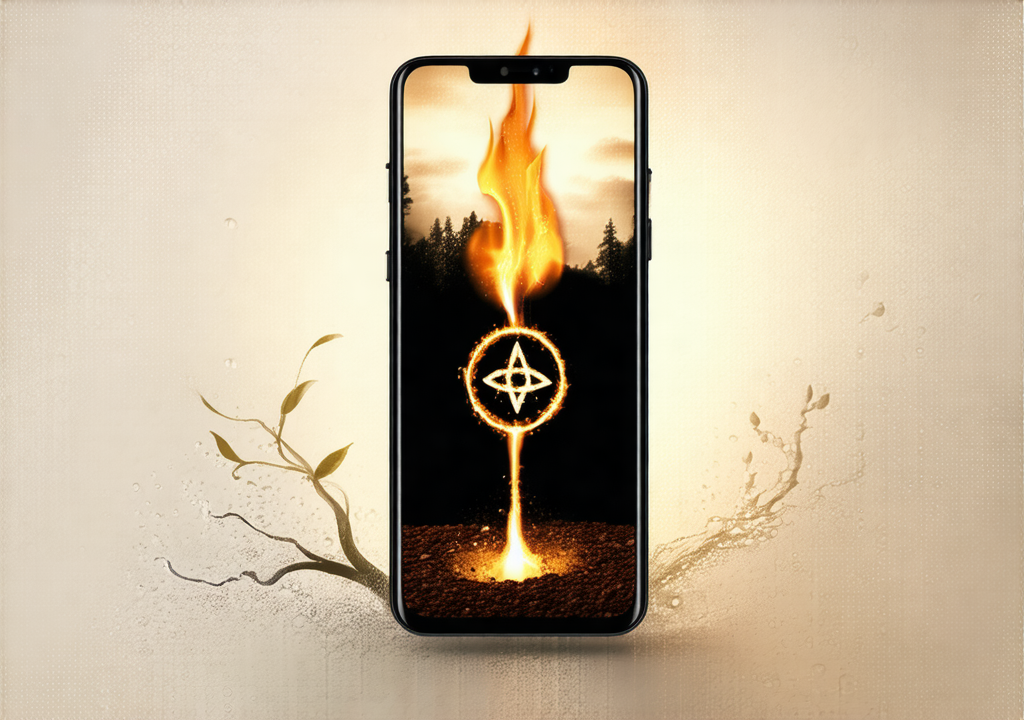
The Hermetic Order of the Golden Dawn, founded in 1887 by William Wynn Westcott and Arthur Edward Waite, brought together a remarkable synthesis of Western esoteric traditions during an era when rationalism reigned supreme. Yet beneath its Victorian exterior lay a system that drew from millennia-old wisdom—ancient Egyptian, Greek, Hebrew, and Cabalistic sources—that modern magicians are only beginning to fully appreciate once again.
The Architecture of the Temple
At the heart of Golden Dawn practice lies the ceremonial temple itself: an octagonal room divided into seven chambers representing elemental correspondences. Each chamber corresponds to one of the four cardinal directions plus their interstitial elements, creating a microcosm of the cosmos within the sacred space. This arrangement mirrors the structure found in ancient pagan temples and even echoes architectural patterns from Egyptian mastaba tombs and Greek peristyle houses.
The Golden Dawn’s ritualists understood that magic is not merely about willpower or intent but involves precise alignment with cosmic forces—aligning human microcosm with macrocosm, spirit with matter, conscious awareness with hidden realms of power. This principle of correspondence was central to their practice: “As above, so below” was more than a motto; it was the operational principle behind every ritual act.
Elemental Symbolism and the Elements in Detail
The four classical elements—Earth, Water, Air, and Fire—along with Spirit or Akasha (the quintessence), form the backbone of Golden Dawn magical theory. Each element carries specific qualities, colors, directions, virtues, and planetary associations that practitioners manipulate during rituals:
- Fire represents transformation, energy, purification, and the rising spirit; associated with summer, east-to-south movement, and the color red.
- Water embodies intuition, emotions, subconscious depths, and receptive power; linked to autumn, south-to-west flow, and blue hues.
- Air signifies intellect, thought, communication, and breath; connected to spring, west-to-north progression, and yellow tones.
- Earth stands for material substance, stability, grounding, and manifestation; tied to winter, north-to-east motion, and green shades.
Spirit or Akasha occupies the center point—the unifying principle that connects all other elements together, much as the hub holds a wheel in place while allowing its spokes to radiate outward.
The Wands, Cups, Pentacles, and Swords
Central to Golden Dawn practice are four primary tools corresponding directly to these elemental forces: the Wand (Fire), Cup or Chalice (Water), Pentacle (Earth), and Sword (Air). These correspond not only to elemental energies but also to astrological signs, planetary influences, and psychological faculties. Ancient practitioners would have recognized these as echoes of earlier traditions—from Babylonian fire-altars to Greek phallic symbols—yet the Golden Dawn systematized them into a coherent working model that modern practitioners find both practical and profound.
Cabala and the Tree of Life
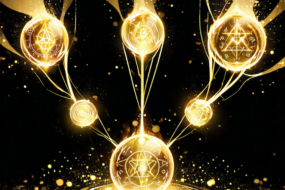
No discussion of Golden Dawn magic is complete without mention of the Tree of Life, with its ten Sephiroth (spheres) interconnected by twenty-two paths corresponding to the Tarot trump cards. Each sphere represents a different aspect of divine manifestation—from Kether (the Crown, representing pure divinity and will) through Chokmah (Wisdom), Binah (Understanding), and down through Chesed (Mercy), Geburah (Severity), Tiphareth (Beauty), Netzach (Victory), Hod (Splendor), Yesod (Foundation), to Malkuth (Kingdom).
This system provides practitioners with a map for navigating spiritual development, showing both ascending paths toward divine union and descending paths for channeling higher forces into material reality. The twenty-two connecting paths correspond to the twenty-two Hebrew letters—each letter serving as both linguistic unit and magical symbol carrying specific energetic content.
Ritual Practice in Detail
Golden Dawn ritual involves intricate sequences of gesture, incantation, and visualization that practitioners perform using symbolic tools, colored lights, and specific verbal formulae. The basic “banishing” rituals—particularly the Banishing Ritual of the Pentagram and the Lesser Banishing of the Hexagram—are foundational exercises performed daily by serious practitioners for centuries. These rituals create protective boundaries, purify sacred space, and align the practitioner’s personal energy field with cosmic forces before beginning more advanced work.
The system includes detailed instructions on how to draw pentagrams (five-pointed stars) in air using ceremonial sword or wand, visualize light radiating from each point of the compass, invoke divine names, and banish surrounding conditions through sweeping gestures corresponding to elemental directions. Modern practitioners who practice these rituals consistently report profound experiences that align with ancient descriptions—suggesting something deeper than mere ritual form is at work.
Why Ancient Practitioners Understood More Than We Think
Modern magicians often approach Golden Dawn as merely a historical curiosity—a Victorian invention—but this overlooks the system’s deep roots in genuine esoteric traditions dating back millennia. The symbolism employed corresponds to patterns found throughout ancient civilizations worldwide, from Egyptian hieroglyphs through Greek geometrical proportions to Indian mandalas and Hindu yantras.
What ancient practitioners knew that modern magicians tend to forget is that ritual works not by mere convention but by actual manipulation of cosmic principles—by aligning human consciousness with forces that operate independently of belief systems themselves. This understanding transforms the Golden Dawn from a curious Victorian relic into something far more significant: a living system for practical metaphysical science, applicable across cultures and centuries alike.
The Living Tradition Continues
The Golden Dawn continues to thrive not as mere imitation but as genuine practice—hundreds of practitioners worldwide maintain active communities, publish journals, and develop new techniques based on ancient principles while adapting to modern contexts. Their understanding of elemental forces, their symbolic language, and their practical methods continue proving valid through continued use—not because they follow authority figures or ancient texts slavishly, but because the system works when practiced properly by those willing to engage it seriously.
Conclusion
Golden Dawn ritual magic endures as one of Western esotericism’s most important achievements precisely because it combines genuine ancient wisdom with systematic organization—providing practitioners with tools that work whether they believe in spirits or not, and whether they view magic through literal or symbolic lenses. The secret knowledge preserved by ancient practitioners was indeed more than modern magicians thought at first glance; it remains accessible today to those willing to practice rather than merely read about these enduring traditions.


Recent Post

Gallery






Featured Videos




No Comments