


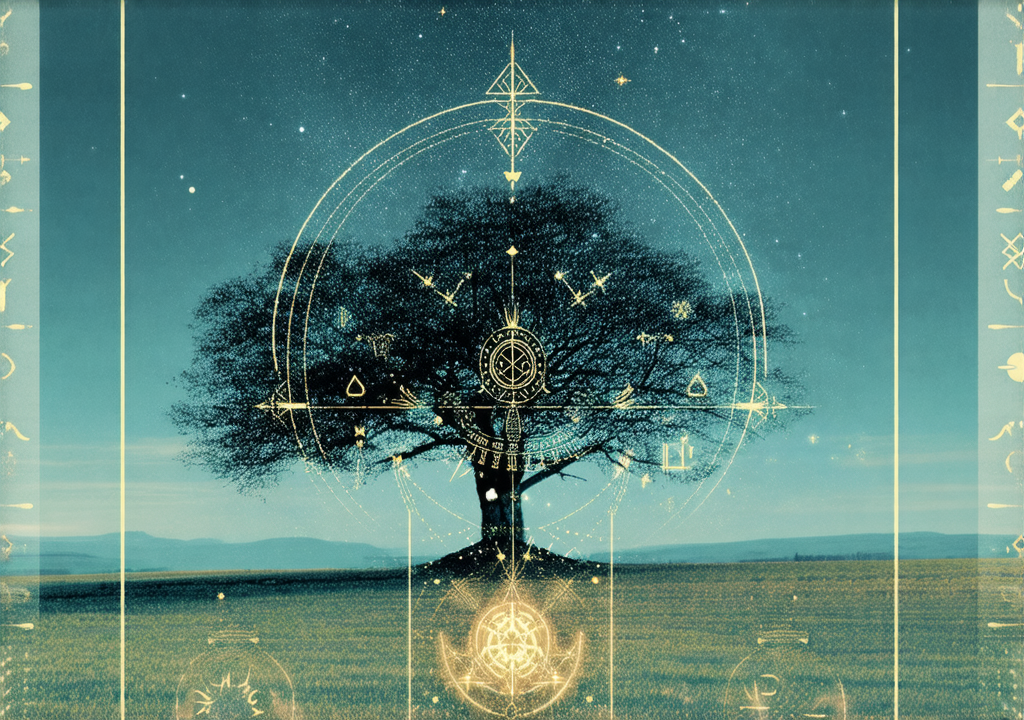
A High-Ritual Primer by Your Trusted Authority on Magical Practice
Welcome to the ancient art of ceremonial magic—the practice where precision meets transcendence, where every gesture carries weight and every spoken word resonates through unseen realms. Whether you’re a curious novice or someone who has dabbled in lesser forms of sorcery but wishes to ascend to the higher mysteries, this guide will equip you with the essential knowledge of high-ritual magic in mere moments.
What Is Ceremonial Magic?
Ceremonial magic—also known as “high magic” or “solomonic arts”—differs from folk traditions and intuitive practices by its structured, deliberate methodology. Rooted in centuries-old tradition stretching back through the Western esoteric lineage, this form of magic relies on precise ceremony: carefully arranged symbols, consecrated materials, specific timings, and repeatable procedures that produce genuine magical effects.
Where lesser magics depend largely on personal feeling or innate ability, ceremonial magic provides a technical framework that works regardless of your natural temperament. It is the science of heaven above and earth below brought together in one harmonious practice.
The Foundations: Sacred Geometry and Planetary Hours
The bedrock of any high ritual lies in its geometry—the sacred patterns drawn upon the circle and within the pentagram, hexagram, and other mandals that serve as gates between worlds. Before beginning any ceremony, prepare your magical tools (often called “tools of art”) according to their planetary correspondence:
- Wand — Jupiter, for will
- Pentacle or Coin — Earth, representing stability
- Ritual Knife or Athame — Mars, for direction and cutting through illusion
- Chalice or Cup — Venus, for reception and nourishment
- Censer — Air, carrying prayers upward
The Threefold Circle of Operations
Every high ritual moves through three essential phases:
- Purification (Purge) — Cleansing the space with incense, bells, water, and spoken invocations until the air feels charged and ready
- Consecration (Setting apart) — Using the pentagram to draw the magic circle, invoking divine names, calling down planetary energies
- Incorporation (Merging the practitioner into the work) — Standing within consecrated space, focused on intention
The Quintessential High-Ritual Steps
Step One: Setting Your Intentions
Before you light any candles or speak any words, center yourself and clearly define your magical aim. Is it protection? Healing? Knowledge? Love? Power? Ceremonial magic works best when intentions are specific yet broad enough to allow the spirits themselves to interpret according to their own wisdom.
Step Two: Preparation of Space and Tools
Whether you work in a dedicated temple or simply prepare a small altar, ensure your tools are clean, consecrated, and positioned according to elemental correspondences (East=Air/Wand, South=Fire/Cup, West=Water/Incense, North=Earth/Pentacle).
Step Three: The Opening of the Circle
Begin with invocation and the drawing of the pentagram—whether “in” for banishing lesser forces or “out” for calling forth spirit. Speak the Sacred Names as you trace each direction, then close your circle with final invocations.
Step Four: Invocation of Spirits
Call upon the planetary spirits, archangels, or divine names appropriate to your purpose. Each invocation is a conversation between practitioner and cosmos—patient, respectful, and commanding when needed.
Step Five: Closure
Thank all invoked powers, seal the circle with final words, then extinguish candles in order from South to North while visualizing the sacred geometry folding back into its source.
Common Mistakes of Beginners (And How to Avoid Them)
The greatest error beginners make is rushing through the ceremony as if performing a checklist rather than living within it. Ceremonial magic requires presence—not mere procedure. Let each step breathe; let silence between words carry intention as powerfully as speech itself.
Another common mistake: confusing ceremonial rigidity with rigidity in spirit. You may draw your pentagram perfectly and wear the correct vestments, but without genuine devotion behind them, they are merely decorative. The outer form must serve the inner reality.
Tools of the Trade
While a full ritual apparatus can be elaborate, begin simply:
- A clean white cloth for the altar
- Five candles (one central, four at cardinal points)
- Incense burner with frankincense or sandalwood
- Small bell for sanctification and closure
- A journal to record results
Closing Thoughts
The beauty of high ritual lies in its accessibility. Any soul with sincere intention can perform true magic. Begin simply—perhaps beginning each morning with a brief pentagrammatic invocation before the day begins, and each night calling down blessings upon sleep. Within months of consistent practice, you will feel yourself more attuned to unseen currents than ever before.
The ancient masters tell us that true mastery is not reserved for those who spend decades in contemplation alone or perform elaborate ceremonies from youth until death. Rather, mastery belongs to those who approach each rite with full presence and undivided heart—regardless of how long they have practiced the art.
May your circle be ever sacred, your intentions clear, and your magic strong.


Recent Post



Gallery






Featured Videos






No Comments