


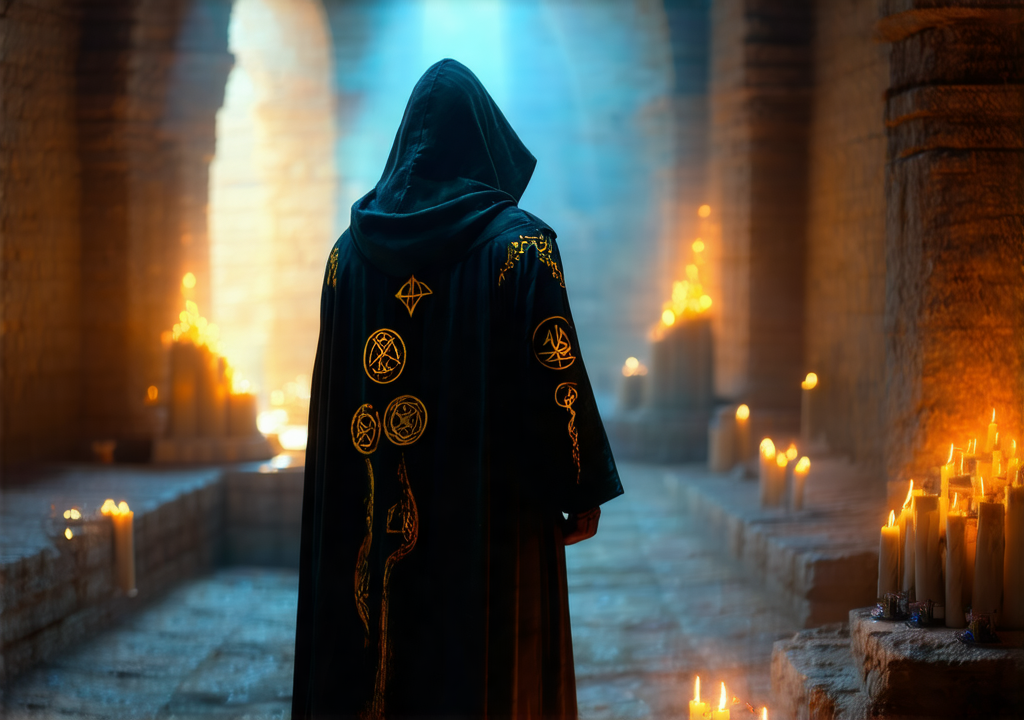
The Golden Dawn—the Hermetic Order of the Golden Dawn—is one of those things that has quietly shaped modern occultism without most people realizing it. Founded in 1888, this pioneering esoteric organization established the framework through which Western magic operates today. Though its original membership waned after decades of internal strife and charismatic leadership changes, its influence endures, woven into everything from ceremonial magick (with that distinctive “X” for the ‘x’) to contemporary witchcraft, alchemy, and divination practices.
A Brief History Worth Knowing
The Golden Dawn emerged during a period when Victorian England was deeply engaged with spiritualism, yet growing skeptical of its more theatrical manifestations. Three key figures—William Wynn Westcott, Samuel Liddell Mathers, and Arthur Edward Waite—combined to create what would become perhaps the most influential magical organization in Western history. They built upon earlier traditions including Rosicrucianism, Kabbalah, alchemy, and Enochian magic, synthesizing these into a cohesive system of practice that could be learned systematically.
The order’s structure reflected both its hermetic roots and its innovative approach: seven grades of initiation, each corresponding to planetary influences and offering deeper instruction in the arts of magick. The initial three grades (Neophyte, Zelotos, and Theoricus) provided foundational training, while the three senior grades (Illuminatus, Magus, and Magus Angelicus) prepared adepts for higher magical work.
Elemental Symbolism: Understanding What Makes It Tick
What makes the Golden Dawn system so distinctive is its treatment of elemental symbolism. Unlike earlier magical traditions that tended toward mysticism, the Golden Dawn offered something almost scientific in its approach to understanding relationships between symbols, planets, colors, and numbers. This systematic quality is what modern magicians appreciate most.
The order’s practice of element allocation—assigning specific elements to different stages of life—is particularly noteworthy. It taught practitioners that youth was connected to fire (passion and vitality), middle age to water (emotional depth and wisdom), old age to air (mental clarity), and death to earth (return to the material world). This framework for understanding personal development proved remarkably practical, which is why it continues to be used by modern magicians working through life transitions.
The Secret Practice: Why Magicians Keep Using It
Modern practitioners often discover the Golden Dawn system in unexpected places. A tarot reader might recognize the elemental correspondence of suits (swords = air, cups = water, wands = fire, pentacles = earth). A ceremonial magician performing banishing rituals might realize they’re using the same format established by the Golden Dawn’s founder—L.W. Griffith’s famous “banishing ritual” is essentially a modern continuation of Golden Dawn practice.
Even those who never formally joined an organization often adopt Golden Dawn practices: the use of pentagrams and pentacles, the invocation of archangels (Michael, Raphael, Gabriel, Uriel), and the simple act of performing elemental invocations before beginning magical work. These aren’t isolated curiosities—they’re practical tools that have been tested by practitioners for over a century.
Why Modern Magicians Care About What Was Built in 1888
The Golden Dawn’s lasting appeal lies in its balance between accessibility and depth. You can begin practicing immediately with basic elemental invocations, yet you can spend decades studying the system’s deeper layers: the detailed correspondences of numbers, letters, colors, and symbols; the intricate system of astrological talismans; and the sophisticated ritual architecture that supports magical work.
Modern magicians particularly value its systematic nature. In an age where everything is increasingly connected to data and structure, having a coherent symbolic framework for understanding reality makes practical sense. The Golden Dawn offers not just rituals but a comprehensive worldview—one that can be applied to daily life as well as formal magical practice.
Practical Applications: Beyond the Rituals
Beyond ceremonial magick, the Golden Dawn system influences modern astrology, numerology, and divination practices. Its elemental correspondences have been adopted by many modern tarot readers, and its approach to planetary hours and days continues to be used in daily magical operations. Many contemporary practitioners who don’t explicitly identify as “Golden Dawn” nonetheless practice it authentically—they simply call their work something else.
The order’s emphasis on personal development through systematic practice appeals particularly to modern professionals: people who value structure, tradition, and practical results, but also seek depth and meaning in their magical work. The Golden Dawn system doesn’t require abandonment of modern life—it complements it.
Final Thoughts
If you’re curious about magick, the Golden Dawn’s legacy is worth exploring not just as historical practice but as living wisdom. Its symbols remain potent precisely because they’ve been tested over time and across generations. Whether you’re already practicing ceremonial magick or simply wondering what all those pentagrams on doors actually mean, there’s value in understanding this system—and its continued relevance to modern magical life is undeniable.
The secret of the Golden Dawn isn’t really a secret at all; it’s just that so many people practice its rituals without knowing they’re doing so.


Recent Post


Gallery






Featured Videos





No Comments