


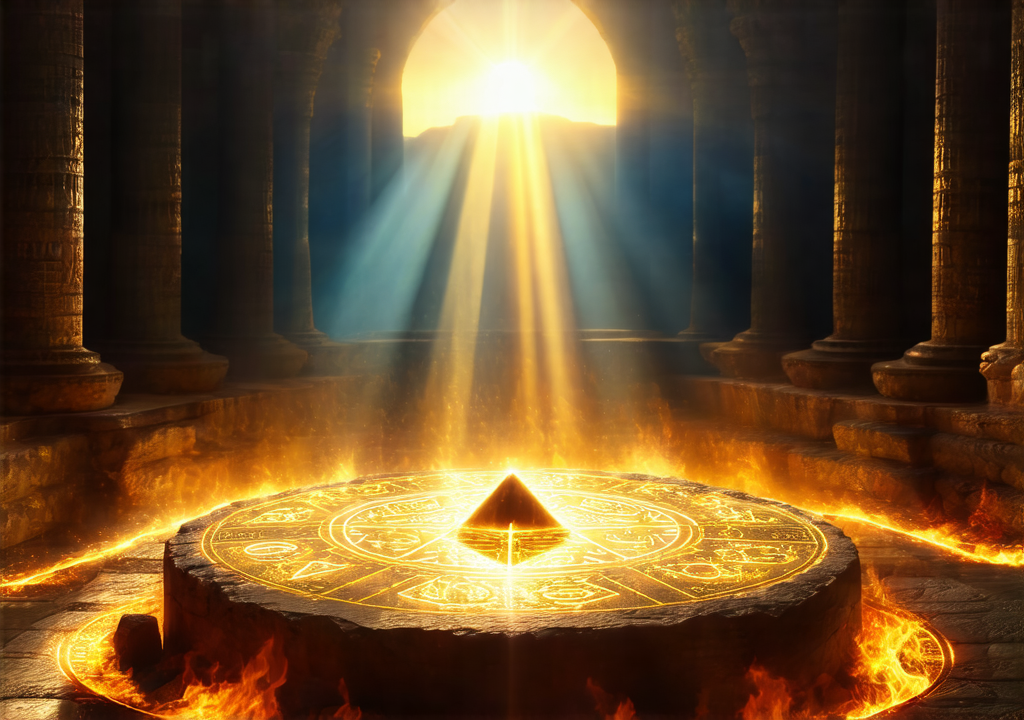
The Hermetic Order of the Golden Dawn, founded in 1887 by William Wynn Westcott, Arthur Edward Waite, and Samuel Liddell Mathers, represents one of the most influential esoteric organizations in Western occult history. At its core lies a profound understanding of elemental forces that have guided spiritual seekers for centuries. This article explores the mystical depths of Golden Dawn practices and their enduring legacy.
Origins and Founding Principles
The name “Golden Dawn” evokes the dawn of enlightenment, symbolizing the emergence of divine wisdom through ritual practice. The order was established under the guidance of the invisible College, drawing upon Hermetic traditions dating back to ancient Egypt, Greek philosophy, and Kabbalistic thought. Its teachings synthesized Western magical practices into a cohesive system that emphasized direct experiential knowledge over mere intellectual understanding.
The organization’s rituals were designed to facilitate personal transformation through the mastery of elemental forces. These rituals incorporated symbols, incantations, and visualizations that corresponded to earth, water, air, fire, and spirit—each element possessing distinct qualities and energies.
The Element System
Central to Golden Dawn teachings is the fourfold elemental system: Earth representing solidity and matter; Water embodying emotion and intuition; Air signifying thought and communication; Fire expressing will and transformation. Above these rests the fifth element, Spirit or quintessence, which binds all other elements together in unity. This hierarchical structure mirrors cosmic order and reflects humanity’s position within the greater cosmology.
The elemental correspondences extend throughout Golden Dawn practice: colors, sounds, incense, and sacred geometry all carry specific meanings that practitioners use to align themselves with particular energies during ritual work. The system reveals a beautiful interconnection between microcosm (the individual) and macrocosm (the universe), demonstrating how small actions reflect larger cosmic patterns.
Ritual Practices and Symbolism
Golden Dawn rituals involve elaborate symbolic constructions that activate the practitioner’s inner faculties. The main ceremonies include the Lesser banishing of Pentagram, Greater invocation of planetary forces, and the drawing of circles of protection using sacred geometry. Each ceremony employs specific tools—wands representing fire; cups embodying water; swords signifying air; pentacles representing earth—to focus intention and channel elemental energies.
The organization’s unique contribution lies in its detailed system of correspondences: colors linked to elements, planetary hours for specific magical workings, and the use of the Tree of Life as a map for spiritual ascent. These correspondences create a language through which practitioners communicate with divine forces during meditation and visualization exercises.
Key Figures and Their Contributions
Samuel Liddell Mathers served as principal teacher within the Golden Dawn, authoring numerous works including “Kabbalah Unveiled” and expanding upon traditional Hermetic teachings. Arthur Edward Waite contributed significantly to modern occultism through his work on tarot symbolism and the establishment of the Golden Dawn’s legacy in popular culture.
William Wynn Westcott’s original constitution established organizational principles that emphasized hierarchical progression, with initiates advancing through graded degrees corresponding to increasing levels of spiritual attainment. The order’s structure reflected both internal development and external service, balancing individual growth with collective responsibility.
Modern Relevance and Continuing Influence
The Golden Dawn’s influence extends far beyond its initial formulation in Victorian England. Its teachings continue shaping contemporary magical practice, influencing everything from ceremonial magic to modern Wicca, New Age spirituality, and even popular fiction. The organization’s comprehensive approach to elemental symbolism provides practitioners with practical tools for everyday use—whether through meditation techniques, ritual calendar observances, or symbolic correspondences applied to daily life.
Contemporary Golden Dawn practitioners find renewed relevance in its teachings as ancient wisdom meets modern consciousness: the emphasis on direct experience over dogma resonates with today’s spiritual seekers who seek personal authenticity while honoring traditional practices. The organization’s integration of science and mysticism prefigures current efforts to reconcile empirical knowledge with inner discovery.
Practical Applications for Today
For those seeking to engage with Golden Dawn teachings, several paths offer accessible entry points: studying its foundational texts; participating in modern revival groups; practicing elemental meditations; or exploring tarot reading through the organization’s symbolic framework. Each approach offers unique benefits while maintaining connection to traditional methods.
The true power of the Golden Dawn lies not merely in memorizing correspondences but in cultivating personal awareness and developing direct experience with elemental forces. As practitioners move beyond intellectual understanding toward lived knowledge, they unlock ancient secrets that remain as relevant today as when first revealed by ancient mystics seeking light amidst darkness.
In conclusion, the Golden Dawn endures because it speaks to fundamental human needs: connection to nature’s rhythms, meaningful ritual practice, and accessible pathways to spiritual development. Its elemental symbolism provides both philosophical framework and practical tools for navigating life’s complexities while maintaining inner clarity and purpose.


Recent Post



Gallery






Featured Videos





No Comments