


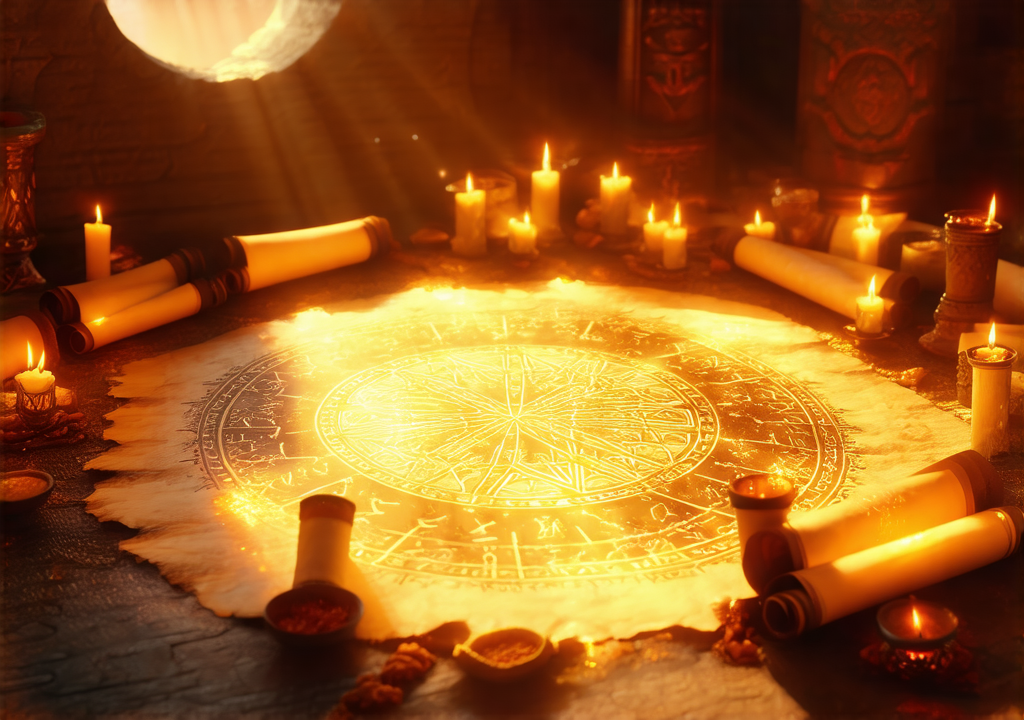
The Golden Dawn was a prominent hermetic occult order in the late 19th and early 20th centuries that combined elements from Western esoteric traditions to form a rich tapestry of ritual magic. Its teachings, systematized by figures like W. W. West and Arthur Edward Waite, have endured as foundational practices for modern occultists seeking deeper connections with divine forces through their rituals.
Origins and Foundation
The Hermetic Order of the Golden Dawn was established in 1888 by William Wynn Westcott and Samuel Liddell MacMath Matthews, who developed an elaborate system of initiations based on ancient hermetic wisdom. The order’s name derives from its symbol of a golden dawn representing spiritual awakening and illumination through esoteric knowledge.
The early members of this remarkable group included notable occultists such as Aleister Crowley and Arthur Conan Doyle, which helped cement the Golden Dawn’s lasting influence on Western magical practice.
Key Principles of Ritual Practice
Central to Golden Dawn ritual are several key principles that practitioners must understand:
- Divine Names: The use of sacred names in prayer and invocation
- Elemental Correspondences: Mapping between elemental forces (fire, water, air, earth) and planetary correspondences
- Kabbalah: Use of the Tree of Life as a map for understanding relationships between different aspects of divine manifestation
The Element Symbolism in Golden Dawn Rituals
The element symbolism used by practitioners includes:
- Fire representing passion and transformation
- Water symbolizing emotion and intuition
- Air embodying intellect and communication
- Earth grounding spirit through matter
- Spirit serving as the divine essence connecting all things together
These correspondences allow practitioners to visualize abstract concepts while performing rituals, making their work more effective and meaningful.
Common Golden Dawn Rituals
Several rituals stand out among those performed by practitioners seeking connection:
The Lesser Banishing of the Pentagram: This fundamental protective spell involves drawing a pentagram with each corner corresponding to one of five elemental forces while invoking divine names associated with specific aspects.
The Invocation of Mercury: Practitioners call upon this planetary spirit through meditative chanting, using its associated symbols and colors during ritual work.
The Lesser Exorcism of the Pentagram: A purification rite performed to cleanse space or objects of negative influences before beginning new magical work.
The Golden Dawn System of Correspondences
In their system, practitioners use:
- Colors as visual markers for different elemental energies
- Numbers representing various mathematical relationships
- Geometric shapes like circles and triangles indicating specific purposes within ritual contexts
- Incense types corresponding to particular divine aspects being invoked
Modern Applications
Today’s golden dawn practices continue evolving while maintaining their traditional foundations, with contemporary practitioners often combining ancient methods alongside modern psychological insights for more effective spell work during times of transformation.
The Golden Dawn remains one of the most influential esoteric systems available today; its rituals offer powerful tools for anyone seeking deeper connections within themselves through ritual magic.


Recent Post

Gallery






Featured Videos




No Comments