


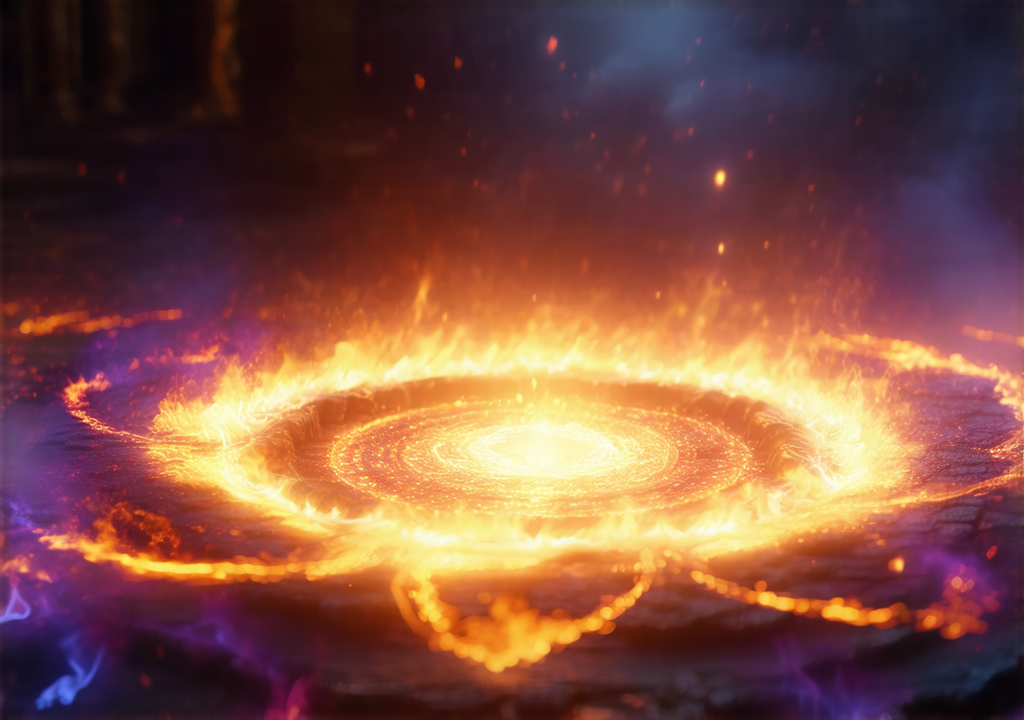
The Hermetic Order of the Golden Dawn, founded in 1888 by William Wynn Westcott and Arthur Edward Waite among others, stands as one of the most influential esoteric organizations in Western occultism. Its intricate system of rituals, symbols, and correspondences remains foundational to modern ceremonial magic, influencing practitioners from Aleister Crowley to contemporary magicians who follow its teachings.
The Golden Dawn’s approach to ritual magic is rooted in three primary sources: Kabbalah (the Tree of Life as a map of divine emanations), astrology (planetary hours, zodiacal correspondences, and elemental rulerships), and alchemy (the transmutation of base matter into spiritual gold). Together with these traditions comes an elaborate symbolic language that practitioners must learn to wield effectively.
The Pentagram: A Symbol of Spiritual Command
No symbol appears more frequently in Golden Dawn rituals than the pentagram—a five-pointed star drawn counterclockwise from the top point downward. When invoked, this figure represents the quintessence, or fifth element (spirit), and is considered a protective sigil that can banish lesser forces. The magician traces it with the sword or wand while invoking specific divine names: Yehovah, Tetragrammaton, Adonai, Tetrabarash, and the Archangel Mikael.
Counterclockwise pentagram drawing in ritual practice emphasizes the element of water and inward-facing spiritual work. Clockwise tracing invokes fire energy for outward manifestation. The same symbol appears at the center of many talismans and altar layouts throughout the Golden Dawn system.
The Hexagram: Union of Opposites
The hexagram—six-pointed star formed by two interlocking triangles—is a cornerstone of Golden Dawn symbolism, representing the balance between opposing forces: active/passive, male/female, heaven/earth, fire/water. In ritual magic, it serves as a powerful working symbol for invoking divine energies into material form and was used extensively in talismanic magic, particularly those associated with planetary workings.
The upward-pointing triangle of fire represents spirit rising through matter; the downward triangle of water signifies the descent of divine forces. Together they create what Western alchemy calls the “chemical marriage” or coniunctio oppositorum. This same principle appears in Kabbalistic work, where the hexagram maps onto the Tree of Life’s sephiroth.
Elemental Correspondences: The Four Pillars
At the heart of Golden Dawn ritual practice is its system of elemental correspondences. Each element—Earth, Water, Air, Fire—is associated with specific colors, directions, deities, and magical tools:
- Earth (North): Yellow, solid forms, the material world; represented by a square or cube
- Water (East): Blue, emotions, intuition, the subconscious; ruled by the cup or chalice
- Air: Green, intellect, breath, communication; symbolized by the wand and directed toward the East in many Western traditions. Though traditionally associated with Air, the Golden Dawn placed it at West for its elemental air connection, a notable departure from conventional practice.
- Fire (South): Red, will, passion, spirit; represented by the sword or torch
Each element possesses specific planetary rulerships, colors, and sacred names: YHVH (Earth), Elohim (Water), Adonai (Air), and Tetragrammaton (Fire). These correspondences appear throughout Golden Dawn rituals in every altar layout, incantation, and invocation.
The Tree of Life: A Map to the Divine
The Tree of Life consists of ten sephiroth (emanations) connected by twenty-two paths corresponding to Hebrew letters and tarot trump cards. This structure functions as a map of consciousness itself—from Malkuth (the Kingdom of physical manifestation, where practitioners typically begin their work) through Yesod (Foundation), Hod (Splendor), Netzach (Victory), Tiphareth (Beauty/Center), Chokmah (Wisdom), Binah (Understanding), Chiah (Life), Da’ath (Knowledge), and Kether (the Divine Crown at the top).
Each sephiroth possesses specific planetary, elemental, and angelic correspondences that determine how rituals are performed within them. Practitioners visualize ascending through these spheres during meditation and invocation. The twenty-two Hebrew letters create the paths connecting these spheres, each letter carrying its own numerical value (gematria) and symbolic meaning.
Sigils and Seals: Keys to Hidden Power
Golden Dawn ritual practice involves numerous sigils—geometric symbols believed to capture specific divine energies or archetypal forces. These include:
- The Seal of Adonai, used for invoking angelic powers
- The Sigillum Dei (or Sigil of the Sun), a geometric arrangement representing pure divine will
- Various planetary seals drawn from Heptameron, Greek magical papyri, and medieval grimoires
- The Golden Cross or cross-shaped pentagram connecting Heaven to Earth
Each sigil functions as both an invocation tool and a protective barrier. When properly constructed and consecrated, they can be used repeatedly in ritual work, talismanic magic, and everyday practice.
Conclusion: Symbols Still Living
The symbols of the Golden Dawn are not mere decorations—they carry meaning that practitioners have found effective for over a century. From their pentagrammatic figures to complex tree diagrams, each symbol acts as both mnemonic device and active tool in ritual work. Whether you’re new to ceremonial magic or an experienced practitioner, understanding these ancient symbols provides access to deeper layers of meaning within your practice—and opens pathways to experiences beyond ordinary perception.


Recent Post

Gallery






Featured Videos




No Comments