


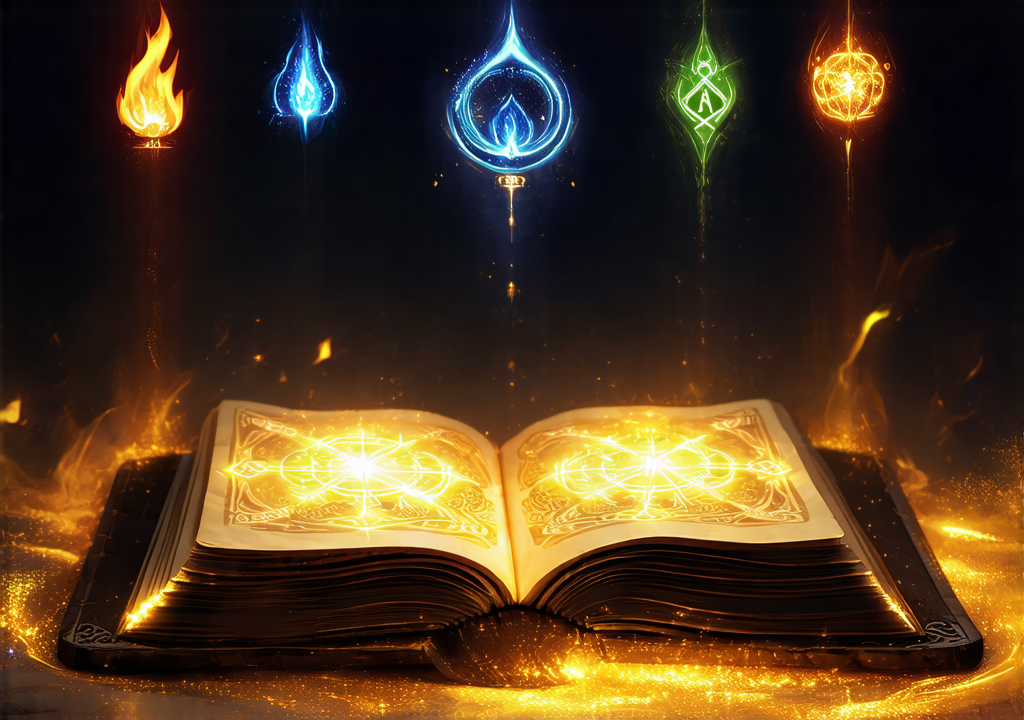
Introduction to Golden Dawn Symbolism
The Hermetic Order of the Golden Dawn, founded in 1887 and later refined by Aleister Crowley, Arthur Edward Waite, and W.B. Yeats, established one of the most influential magical systems of modern Western esoteric tradition. Drawing upon centuries of ceremonial magic, kabbalistic wisdom, and alchemical tradition, the Golden Dawn revealed that ancient symbols permeate our daily lives—not as mere decoration or decoration—but as living keys to understanding hidden patterns in nature, consciousness, and reality itself.
When you look at a child’s drawing, notice how their pentagrams appear spontaneously; when you examine medieval architecture, observe how geometric precision mirrors cosmic order; when you trace the lines of your palm, feel how ancient diviners saw reflected in them the very blueprint of human destiny. These symbols are not relics confined to dusty manuscripts or ornate temples—they breathe around us, embedded in everything from traffic signs to architectural details, waiting to be recognized by those who know how to see.
The Pentagram: A Star Within a Circle
No symbol better represents Golden Dawn elemental magic than the pentagram itself—five points of fire, air, water, earth, and spirit arranged within an enclosing circle of unity. In ceremonial practice, this star became so sacred that it was drawn in the air during invocations to ward off chaos and summon divine presence. Yet pause before you next see a five-pointed star on a street sign or notice the distinctive Five Stars logo, and realize how ancient wisdom continues speaking through modern design.
The pentagram’s points correspond to the classical elements: fire at apex representing spirit’s dominion over matter; air beside it symbolizing breath and intellect; water below pointing toward emotion and intuition; earth anchoring base—the material foundation upon which all magic rests. When you look closely, these same principles echo through Renaissance paintings where divine figures appear surrounded by pentagonal geometry, through stained glass windows in Gothic cathedrals, even in the five-petaled flowers whose botanical symmetry mirrors cosmic harmony.
The Cross: Sacred Geometry Within Human Experience
The cross appears everywhere—from Christian churches to early Celtic jewelry, from medieval heraldry to modern branding—but its meaning extends far beyond religious affiliation alone. In Golden Dawn cosmology, it represents the intersection of spiritual and material realms, vertical axis connecting heaven and earth while horizontal axis spans the earthly plane of experience.
Consider how often you encounter this symbol daily: crossroads where roads intersect mirror the cosmic cross; crucifixions depicted countless times in art illustrate not just sacrifice but transformation; even simple compasses and astrolabes reveal crosses within their designs. Look carefully at any ancient stone, any medieval building entrance, and you’ll find crosses carved into doorways—a reminder that doorway thresholds represent symbolic gates between worlds.
The Triangle: Manifestation Through Geometry
The triangle stands as perhaps the most versatile symbol in Golden Dawn practice, appearing throughout magical literature and ritual tools. Its three sides reflect countless triadic principles: beginning-middle-end; birth-lifes-death; creation-sustenance-destruction. When drawn within a circle—as happens repeatedly in Golden Dawn diagrams—it represents manifestation emerging from eternal unity.
Notice triangles everywhere around you now: pyramids ancient Egyptian structures, tridents held by Poseidon and Neptune, the triangle on your restaurant sign, even triangular prisms splitting light into rainbow spectrum—all witness to this fundamental geometry’s universal presence. In Golden Dawn tarot readings, trump cards often feature triangular elements that help diviners understand how spiritual principles manifest materially through specific life situations.
The Eye: Perception Beyond Physical Sight
The all-seeing eye—whether depicted in Renaissance paintings, on dollar bills, or carved into ancient stones—represents perception transcending ordinary sight. In Golden Dawn practice, this symbol connects to divine wisdom and inner vision awakened through meditation and contemplation.
When you encounter this symbol next—in jewelry stores displaying pendant necklaces featuring open-eye designs, or notice how many architectural landmarks feature eye motifs prominently displayed atop towers—you’ll recognize something deeper: the eye represents consciousness itself observing creation from within creation’s midst. The Golden Dawn taught that true perception requires not just eyes but active attention directed inward as well outward toward the world.
Conclusion: Seeing What Was Always There
The symbols discussed here—pentagram, cross, triangle, and eye—each carry their own distinctive power while sharing common characteristics of ancient wisdom continuing speaking through modern life. They demonstrate how Golden Dawn tradition didn’t invent these patterns but rather recognized what was always present around us waiting for recognition.
Next time you notice a five-sided sign or see an intersection forming a crossroad pattern, pause briefly and recognize that you’re witnessing symbols whose meanings stretch back millennia—symbols representing elemental forces and spiritual principles woven into everyday experience. What once seemed mysterious now reveals itself clearly: ancient wisdom never disappeared; it simply waited patiently for someone to look closely enough to notice.


Recent Post

Gallery






Featured Videos






No Comments