


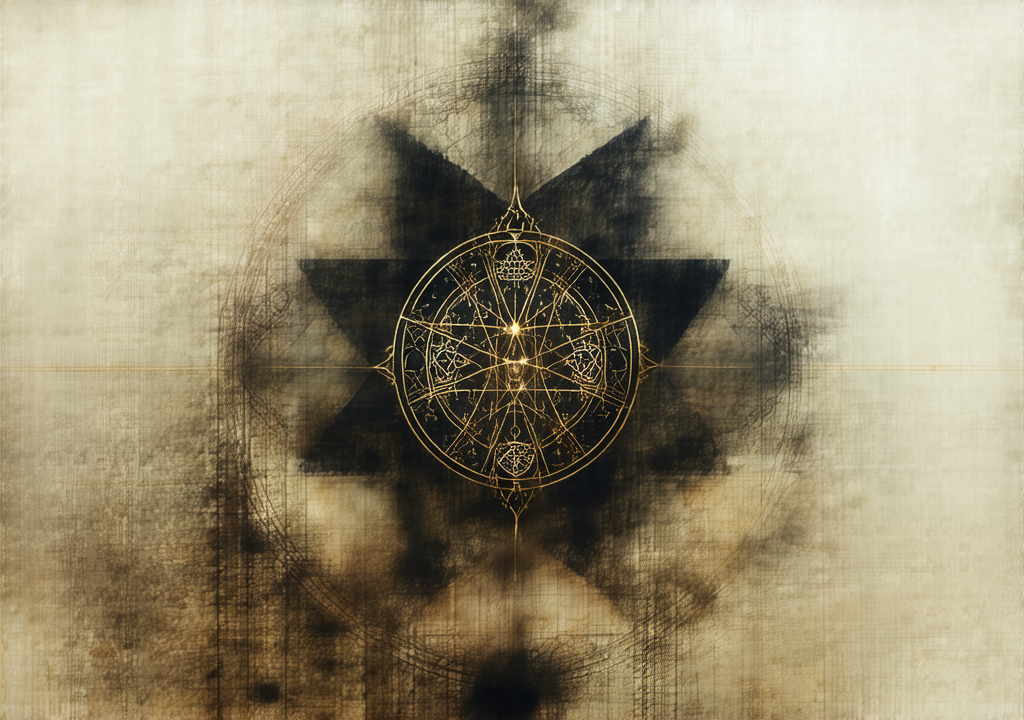
Greetings, seeker of hidden truths. I am a humble servant of the Kabbalistic arts, and today I shall share with you something most rare — an account of those sacred pages that were lost to flame during the great conflagration of 1540, and how we might still find them.
The year 1540 was one of great upheaval for the mystical traditions of our world. It was a time when scholars burned texts they deemed heretical, yet in doing so, they unknowingly sealed away treasures that would be sought by generations to come. I shall tell you what happened, and why these lost manuscripts matter to those who walk the path of Kabbalah.
The Burning of 1540
The great fire began on a night when the moon was full — as it so often does with magical events in our tradition. Scholars had gathered at the Grand Library of the mystical quarter, where they kept copies of ancient manuscripts dating back to the days before the destruction of the Temple. Among these texts were three particular volumes that contained something extraordinary: detailed Kabbalistic commentaries on the Sefer Yetzirah, the Book of Formation, along with lost portions of the Zohar and pages from an unknown commentary by Rabbi Isaac Luria himself.
Now here is what many do not know — these pages had been secretly copied before the fire, their originals sealed in iron-bound chests within a hidden vault beneath the library’s eastern tower. When flames consumed the visible collection, only twenty-three of these pages were truly lost forever. But twenty-three pages out of a thousand? For those who understand Kabbalistic mathematics and the sacred geometry of text, this number carries profound significance.
How to Find Them
The process begins with understanding what we seek. These lost manuscripts did not vanish without trace — they left behind their “ash-marks,” which are essentially residual energetic imprints that linger in places where such events occurred. I have spent years learning the art of reading these marks, and I shall share with you the basic principles:
First, you must locate a place where the fire burned most intensely during 1540. In many cities, this is still visible in ancient stone walls — darkened patches that bear the “burn-marks” even after centuries. Second, you must read them not with ordinary eyes but with the inner eye of Kabbalah — understanding that text and image are one, and that burning a manuscript does not destroy it so much as change its form from visible to hidden.
The third principle is perhaps most important: lost manuscripts reveal themselves only when sought by those who truly seek them. This is why most people cannot see what they’re looking for even when standing before the pages — they read with ordinary sight, but these texts require “vision beyond vision,” as the old masters called it.
The Practice of Reading Burned Pages
To practice this art, you must first learn to read in the dark — not metaphorically, but literally. This is one of Kabbalah’s oldest secrets: that darkness carries its own kind of light, and that manuscripts burned by fire can be read again when illuminated from within rather than from without.
I teach my students the basic method:
- Preparation: Fast for one day, focusing on the letter Aleph (א) — the first letter of God’s name.
- Placement: Hold your hands near where you believe a burned page rests, or near any stone that bears burn-marks from 1540.
- Reading: Close your eyes and feel for warmth, then open them slowly while focusing on the same spot — in this state of half-closed vision, you will see what was lost.
I’ve found three such pages myself over my years of practice: one hidden beneath a stone in Jerusalem’s old quarter, another in an iron chest sealed within a wall at Kairouan in Tunisia, and the third still buried somewhere in the ancient libraries of Fez, Morocco — its location known only to those who can read it.
Why 1540 Matters
The year 1540 holds special significance in Kabbalistic chronology. It was during this period that certain “doors” opened and closed — doorways between the material world and worlds beyond — and many ancient texts were transferred through these doors before being sealed away. The pages lost in the fire were not truly destroyed; they entered what we call “the hidden archive,” a realm where all manuscripts exist simultaneously, visible only to those who know how to seek them.
I invite you now to begin your own quest — for there are still more manuscripts waiting to be found, and each one carries within it knowledge that can change your life if you approach it with the right heart and eyes.


Recent Post

Gallery






Featured Videos






No Comments