Why You Can't Change The Future Even When You See It Clearly
🌒 The Fixed Tapestry: On Seeing What Cannot Be Changed
by Aurelius Vane, Keeper of the Veil
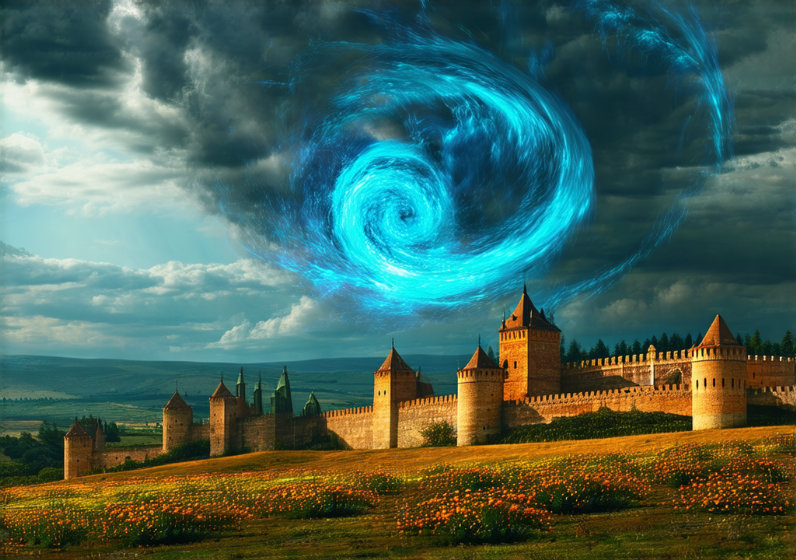
There is a particular kind of loneliness that belongs to those who see. Not the loneliness of being misunderstood by others, though that comes too. I speak of something deeper — the solitude of witnessing a moment you know will arrive and finding yourself standing before it like a man watching the tide come in over his own doorstep. You have seen the water rising. You have watched the first fingers of salt creep beneath the doorframe. And yet your feet remain planted. Your hands remain still. You do not run. Not because you cannot, but because running would only change when you are wet, not that you will be wet.
This is the paradox at the heart of precognition — that rarest and most misunderstood of all psychic phenomena. We tend to imagine it as a kind of superpower: see tomorrow, then act on what you saw; know the outcome, so shape it to your liking. But anyone who has truly received a vision of the future knows better. The future does not bend. It does not negotiate. It simply is, and we are merely late to arrive at its waiting rooms.
Let us begin where all honest inquiry must: with the nature of time itself, for precognition is only as strange as our assumptions about how moments unfold. Most of us imagine time as a road stretching ahead of us — a long highway with miles yet untraveled. We drive forward, and each new mile appears fresh before our windshields. The future, in this model, is simply not yet here, and therefore malleable. If you know there will be a pothole at the next turn, you steer around it. Simple. Practical. And, as far as metaphysics goes, almost entirely wrong.
The alternative view — one that precognitive traditions have leaned toward for centuries across many cultures — is that time is not a road but a landscape. A finished painting viewed from above. Every brushstroke already placed. The mountain range already carved. The river already cut into the stone. You are walking through it, yes, but the walk itself was completed long before you took your first step. Precognition, in this reading, is not peeking down a road ahead of you; it is stepping outside the painting and looking at what lies further along your own path within the composition.
This distinction matters enormously, because it explains why so many precognitive experiences feel less like receiving information and more like remembering something that has already happened. Psychologists who study these cases often note a curious phenomenon: people report their visions as carrying an odd sense of familiarity, as though they are not predicting but recalling — recalling events from the future with the quiet confidence one brings to remembering yesterday's breakfast. The vision does not announce itself as news. It presents itself as fact, settled, sealed, and this is precisely what makes it so difficult to change.
I. The Architecture of Certainty
Let us consider why a seen future resists revision. There are several layers to this question, and I will walk through them the way one walks through rooms in an old house — from the foyer outward toward the deeper chambers.
The first layer is structural. In most coherent models of precognition — whether drawn from esoteric tradition or modern physics — a vision does not create its own subject matter. It reports it. The vision is a window, and what you see through that window is governed by the same causal web that governs everything else. If you saw yourself breaking a glass this afternoon, the seeing did not cause the breaking; both the seeing and the breaking are nodes in a single tapestry of events woven together long before any human eye opened to witness either thread. To change what you have seen would be to reach into the finished tapestry and pull out a thread that is already holding everything else in place. You can do it — but you will notice the gaps it creates, the small unravelings that ripple outward in ways your original vision did not account for.
The second layer is psychological, and I think this is the one most readers feel most acutely. Human beings are pattern-seeking creatures with a deep-seated desire to be authors of our own stories. We do not want to be characters; we want to be writers. Precognition asks us to accept an uncomfortable inversion: you have read your next chapter, and now you must live it as the character does — without the luxury of rewriting. There is a peculiar grief in this. You know how the scene ends, but you must still sit through every line of dialogue, every pause, every small gesture, because that is what it means to be inside the story rather than above it.
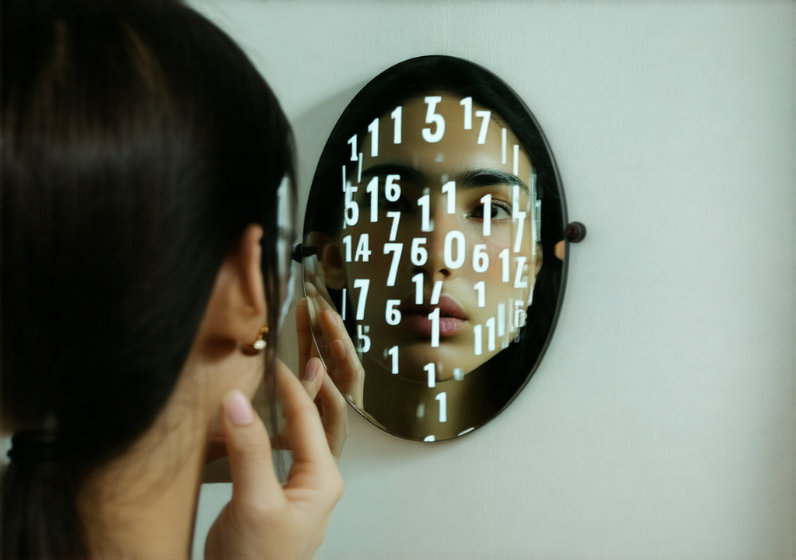
The third layer is perhaps the most philosophically rich: the question of identity across time. When you see yourself doing something in the future — making a decision, saying a word, leaving or staying — who is the "you" in that vision? Is it your past self looking forward? Your present self witnessing its own future? Or some third entity, an observer standing outside the stream? Each answer carries different implications for free will. If the vision belongs to your past self, then your present actions are already accounted for, and "changing" the future would require your past self to have seen a different future — which means you were never actually destined to do what you originally feared or hoped. The vision simply shifted to match, as it always does, matching the actualized path rather than dictating it.
II. The Illusion of Agency Within Necessity
Here we arrive at the heart of the matter, and I want to be careful, because this is where many expositions of precognition fall into a kind of metaphysical defeatism — as though seeing the future means being a passenger in your own life. It does not mean that. Not by a long stretch.
Consider: if you see yourself making a poor decision tomorrow, and you spend today preparing for it — gathering information, rehearsing conversations, lining up alternatives — have you changed the future? On one level, no: the vision will still come true, and tomorrow you will make that same decision, in that same way. But on another level, absolutely yes: today's preparation is part of why tomorrow's decision takes the form it does. The vision did not account for your preparation because your preparation was always already woven into the picture — a thread so close to where you're standing that you don't see it as separate from the fabric.
This is what I mean when I say the future resists change rather than influence. You cannot reach forward and pin the butterfly in a different spot on the wing. But you can tend the garden so that the butterfly arrives at the flower it was always going to land on, rested rather than flustered, clear-eyed rather than scattered. The destination is fixed; your relationship to the journey need not be.
There is an old parable — I have heard it told in a dozen traditions under a dozen names — about a woman who could see the exact hour of her death and spent years preparing for that hour: finishing letters, settling accounts, planting flowers along the window where she would sit when the time came. People asked her if she was not afraid to know. She said something I have turned over in my mind many times: "Knowing does not make the moment less real. It only makes me present within it."
I find that a precise and beautiful formulation, because it captures what most people get wrong about precognition. The value of seeing is not that it spares you surprise; your life will still hold surprises, because you are part of the system generating them. The value of seeing is that it allows you to meet each moment with full attention rather than half-attention divided between living and wondering what comes next. You stop skimming your own life.
III. Why Changing It Would Unmake It
Let us go deeper still, into territory that feels almost paradoxical but resolves beautifully once you let the logic settle. Suppose — for argument's sake — that seeing the future did allow you to change it. Suppose you saw a car accident on Friday and moved your friend off the road Thursday night. The accident never happens. But now consider: if the accident never happened, what did you see? A vision of an event that no longer exists? Or was there always a second, hidden thread in the tapestry — perhaps a different collision two blocks over at two minutes later — that your original vision simply resolved to a single image because for you it registered as one event?
Or consider the more radical possibility: that by changing what you saw, you have generated a new vision that you have not yet seen. The future is not a single track but an ever-expanding set of tracks, and each act of observation or intervention splits the tapestry into fresh folds. You did not change the future; you changed which future your eye landed on next time it opened.
This is why experienced precognitives often speak of visions in the past tense rather than the future tense. "I saw that I would say yes," they might say, and the phrasing feels natural to them because from their internal vantage point, the seeing and the saying are roughly simultaneous — both are facts about a single unfolding whole. The vision is not a forecast; it is a memory of an event whose timestamp happens to lie beyond your current position in time.
IV. The Gift Within the Constraint
Now I want to turn the lens inward and ask what this actually means for someone living inside such a gift, because that is where philosophy stops being abstract.
People who see clearly into their own futures often report a strange double vision: they experience the present moment and its aftermath at once. A conversation in progress carries the quiet echo of how it will end. A first meeting with a stranger holds the faint residue of years yet to come, compressed into a single impression like light passing through a prism — all wavelengths present simultaneously but experienced as one beam. This can be beautiful. It can also be quietly exhausting, because you are living in two tenses at once, and no human nervous system was designed for that kind of sustained double exposure.
There is also a particular intimacy in it. When you have seen how a friendship will end — or, more gently, how a love will deepen into something quieter after the first fire burns down — you carry both versions at once. You are with someone who is already your old friend and still your new one. There is no confusion about what matters; the noise of novelty has been stripped away, and what remains is pure signal.
But there is a cost I should not soften: precognition can make you strangely detached from the very people and moments it reveals. How do you grieve someone's death when you have already watched it happen in your mind three months ago? How do you celebrate a promotion when you saw yourself accepting the letter last week? The emotional arc — that long, winding build-and-release of human feeling — gets flattened into a single frame. You are always at the end of the song while still singing the first verse.
I have found that the answer lies not in resisting this but in deepening it: choosing to feel each moment fully despite knowing where it leads. Not "oh, this will be over soon" but "this is here now, and its being here now is the whole of what it means." The knowledge does not diminish the moment; it gives you a kind of second chance at attention. Most people experience life in low resolution because they are too busy worrying about the next frame to actually see this one. Precognition, paradoxically, can teach that discipline — if you let it.
V. What We Can and Cannot Know
A word on limits, because I have seen plenty of literature in this field that overstates what precognition is. It does not work like a search engine where you type in a question and receive an answer. You cannot ask it for your lottery numbers. You cannot ask it whether the person who just smiled at you will love you in five years. The visions come when they come, often triggered by emotional resonance or sensory coincidence — a color that reminds your subconscious of a future scene, a phrase that keys into a memory not yet made. They are fragments, impressions, snapshots with no surrounding context. You see the kitchen table and the broken cup; you do not see why anyone walked in from the garden.
And they are not infallible in the way popular imagination wants them to be. Some visions shift subtly as time passes — a detail adjusts here, a person swaps there, the emotional tenor changes while the broad shape holds. Experienced seers learn to treat their own visions the way a navigator treats a star chart: reliable for setting course, but not so precise that you can navigate by them alone in fog.
What precognition does give you — and this is its quiet, unglamorous, deeply human gift — is foreknowledge of texture. Not outcomes; textures. You will know whether the coming year will feel like wading or like flying, even if you cannot say precisely which Tuesday you'll find yourself wading in knee-deep water with a stranger's shoe in your hand. That knowledge changes how you move through time. It makes you gentler with uncertainty because you have seen that uncertainty resolves into something liveable. You carry the ending into the beginning, and this strange inheritance gives the present a kind of earned patience that most people only find at midlife or on their deathbeds.
VI. The Fixed Point That Moves Us
Let me close where I began: with the image of standing before a tide you can see coming.
There is something almost sacred about a future you have already witnessed. It stops being unknown — and unknown things are what most of our anxiety is made of, if we are honest. The fog lifts. You know there will be rain tomorrow; you cannot stop the rain, but you no longer stand under it in shock. You carry an umbrella now, not because the sky has changed but because your relationship to the sky has.
And this, I think, is what a clear-sighted precognitive life actually offers: not control over events, which was never the promise; but presence within them. A kind of peace that comes from understanding that you are both author and character, reader and story — and that these roles are not in conflict so much as in conversation, each completing what the other cannot do alone.
The future is already written. You have read your page. Now go live it with all the warmth and fullness your body can give it, knowing that every word you speak and every step you take was part of the composition from before the first line was set down. The tapestry holds you. The tide will come in regardless. But because you saw it coming, you will meet it barefoot rather than blindfolded — and there is a difference so vast between those two postures that an entire life can turn on which one you choose.
You cannot change what you have seen. But seeing changes you. And in the end, perhaps that was always the point.