Why Some People Glow Around You — And Others Are Killing It
The Invisible Feast: Unraving the Mechanics of Psychic Symbiosis and Drain 🌙
Have you ever walked into a room where one person seems to radiate warmth, while another leaves you feeling hollowed out? Have you noticed that after spending time with certain friends, your battery feels recharged, as if they have somehow transferred their own vitality to you? Conversely, are there individuals who seem to drain the very life force from your chest, leaving you tired, anxious, and emotionally raw without a single word being spoken? If these experiences resonate with you, you are not imagining things. You are participating in one of the oldest and most ubiquitous forms of energy exchange known to humanity: psychic vampirism and its counterpart, empathic symbiosis.
While modern psychology has begun to validate the phenomenon—often labeling it as emotional labor, codependency, or parasocial relationships—the esoteric tradition has studied this dynamic for millennia. To understand why some people "glow" around you while others are quietly killing your spirit, one must first abandon the notion that human interaction is a purely cognitive event. It is not just about what is said; it is about what is exchanged in the subtle bodies of energy that surround and permeate us. This article seeks to demystify this invisible economy, exploring how we give away our light, why some individuals are natural collectors of it, and how you can build a psychic immune system to protect your own luminescence.
The Architecture of Human Energy: More Than Just Chemistry 🌿
To comprehend psychic vampirism, one must first understand the human energy field, or what esotericists call the aura. In Western psychology, we speak of neurochemistry—dopamine, serotonin, cortisol. These are undeniably real. However, to view them as the totality of human experience is like describing a symphony solely by listing the chemical composition of the wood in the instruments. It misses the music.
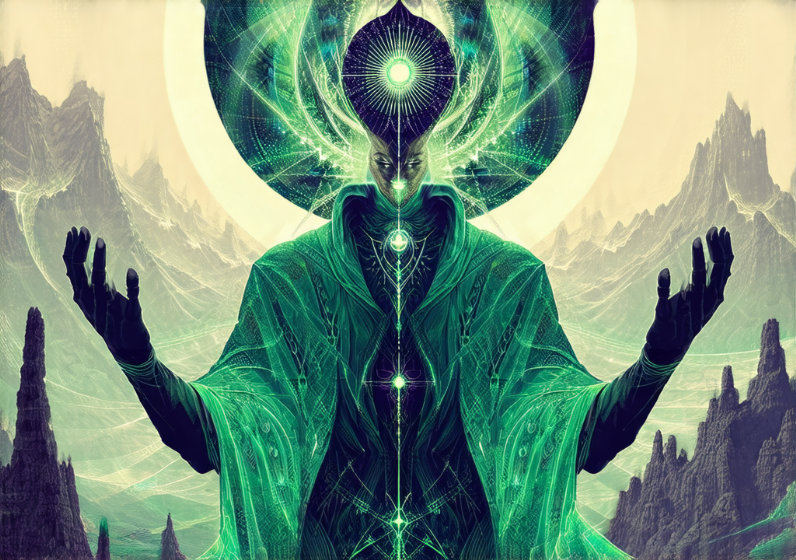
The aura is a multi-layered electromagnetic field generated by the body's chakras—energy centers that run along the spine and extend outward into space. In traditional systems, there are seven primary chakras, each associated with specific emotional states, colors, and vibrational frequencies:
The Root (Muladhara): Stability, survival, security
The Sacral (Svadhisthana): Creativity, pleasure, flow
The Solar Plexus (Manipura): Willpower, identity, personal power
The Heart (Anahata): Love, compassion, exchange
The Throat (Vishuddha): Expression, truth, communication
The Third Eye (Ajna): Intuition, insight, perception
The Crown (Sahasrara): Spiritual connection, unity
Each chakra radiates a specific frequency. When you are in a state of high energy—joy, passion, creative flow, deep love—your aura is bright, cohesive, and expansive. It "glows." Conversely, when you are drained, anxious, or depleted, your aura becomes dim, fragmented, or contracted.
Herein lies the key insight: energy seeks balance. When two people meet, their fields interact. This interaction can be synergistic (symbiotic) or parasitic. Most human relationships fall on a spectrum between these two poles, and understanding where you and another person stand on that spectrum is the first step toward healthy energetic boundaries.
The Glow: What It Means to Be a Giver ✨
Let us begin with those who "glow." These are the people in your life who seem to bring warmth, clarity, or vitality into your presence. Psychologically, they might be called "energizers" or "anchors." Energetically, they are often what we call empathic conduits or symbiotic partners.
A true symbiotic partner is someone whose energy field resonates harmoniously with yours. When you sit together in silence, there is a sense of shared warmth, not because they are doing anything specific, but because your chakra frequencies align at the heart and throat centers. You feel "seen." Your creative flow deepens. You want to create, share, give. The exchange is mutual; both parties leave the interaction feeling more alive than before.
However, there is a subtlety here that must be understood: not all who make you glow are pure givers. In fact, many of them are consciously or unconsciously drawing on your energy to fuel their own. This is the paradox of psychic symbiosis. You feel good around them because they are "feeding" off your creative spark, your warmth, your enthusiasm—but in a way that feels natural and reciprocal, at least in the early stages. The glow you feel is real; it's just also a sign that they are harvesting your light to power their own dimmer field.
This distinction—between true symbiosis and subtle vampirism—is one of the most important to learn for anyone who identifies as sensitive or empathic. In both cases, your energy flows outward. The difference lies in what comes back: does your field feel replenished afterward? Or does it feel slightly thinner, like a candle that has burned down an inch while you were talking to them?
The Drainers: Anatomy of a Psychic Vamp 🧛
Now let us turn our attention to those who are "killing" your spirit. These individuals are the psychic vampires—not in the gothic, fang-wielding sense, but in the subtle, everyday form that most sensitive people know all too well. A psychic vampire is someone who unconsciously (or consciously) draws upon another person's energy to feel good, centered, or alive, without providing an equivalent amount of energy in return.
Why do they do this? In many cases, it is not malice. It is a learned survival mechanism. Most psychic vampires grew up in environments where their own emotional needs were met only by depleting others—often parents who expected them to be "the strong one," or households where vulnerability was punished and the child learned to take energy from caregivers without giving anything back. The pattern becomes so ingrained that it operates below conscious awareness. They genuinely believe they are being social, friendly, or supportive, while simultaneously draining you dry.
The mechanisms by which psychic vampires operate are as varied as the people who practice them. Let us examine the most common types:
1. The Energy Leech (The Silent Drainer) 🌫️
This is perhaps the most insidious type because they do not demand anything overtly. They simply are. You find yourself in long, meandering conversations where they talk about their problems for hours while rarely asking how you are. When you try to share something of your own, they redirect back to themselves: "Oh, that's tough... but have I told you what happened with my boss last week?" The conversation becomes a one-way monologue, and by the time it ends, you feel exhausted—because your energy has been used as fuel for their emotional processing.
What makes this type particularly difficult is how natural it feels in the moment. They are often charming, funny, or endearing while doing it. You don't notice the drain until afterward, when the fatigue settles in and you realize that four hours of "conversation" left you more tired than a full day's work would have.
2. The Emotional Sucker (The Pity Magnet) 😔
This type is all about drawing out your compassion. They share dramatic stories—health scares, relationship crises, financial disasters—in ways that are slightly exaggerated or never seem to reach resolution. You feel compelled to listen, empathize, and offer advice. In the process, you pour a significant amount of emotional energy into them: worry, concern, care. They absorb your compassion as if it were oxygen. The exchange is one-directional; you give all the emotion, and they take all the comfort.
The tell-tale sign? These individuals tend to have an unchanging cast of problems. You have been listening about "Karen" for three years, but Karen has never once improved or left their life. Your energy is being recycled into a perpetual cycle of worry that benefits them and depletes you.
3. The Attention Vampire (The Spotlight Seeker) 🎭
This type needs to be the center of attention, not out of malice, but out of a deep-seated need for validation. In social settings, they are the loudest, most dramatic, or most charming person in the room. They interrupt others, hijack conversations, and perform their own emotions loudly—laughing too hard at jokes that aren't very funny, crying dramatically over minor inconveniences. People around them feel like supporting cast members in someone else's show. Your energy is drawn out as you adjust your volume to match theirs or simply fade into the background so they can shine.
If you are a naturally quiet or reflective person, this type will leave you feeling invisible and drained after an evening together. You gave all of your attention to their performance, and by the end, you feel like a battery that has been fully discharged.
4. The Guilt Tripper (The Obligation Drainer) 📜
This type draws energy through obligation rather than direct demand. They make you feel responsible for their happiness, their problems, or their feelings. "If you don't help me with this project, I'll really feel let down." "You never seem to be available when I need someone." "I guess it's not that important to you." You spend your energy managing their emotional state—giving in, apologizing, explaining, comforting. Your own needs go unmet because they have trained you to believe that meeting theirs is your job.
This type often uses the language of love as a tool for extraction: "I only need this from you because I love you." "Real friends would help each other like this." You give energy not out of desire but out of guilt, and the debt you feel creates a subtle energetic tether that keeps you tied to the drain.
5. The Creative Sucker (The Idea Stealer) 🎨
This type is common among artists, entrepreneurs, and creative professionals. They love hanging around people who are generating new ideas, exciting projects, or innovative thinking. They listen raptulously, offer supportive comments ("That's so brilliant!"), but rarely contribute their own original work in return. You feel inspired in their presence—because they are feeding off your inspiration. By the end of the evening, you have shared half your creative spark, and they leave feeling energized by ideas that were never theirs to begin with.
You might notice a pattern: after time with this person, your own creative projects feel harder to work on. Your inspiration has been partially harvested. You are left with the task of actually doing the work, while they get to enjoy the buzz of being around someone "inspiring."
6. The Drama Magnet (The Crisis Center) 📺
This type lives in a state of perpetual mild crisis. Every day brings some small catastrophe: a neighbor's dog, a delayed package, an annoying coworker, a slightly underseasoned restaurant meal. They need to tell you about it. They need your reaction—agreement, sympathy, or advice. You are the audience for their daily drama show. Your energy is drawn out as you listen, react, and try to help solve problems that may not have real solutions.
The key marker here: they want you to be engaged with their drama, but they don't actually want the problem solved. If you offer a concrete solution, they often push back or find another way to keep the drama going. They need your emotional energy, not your practical help.
The One-Way Mirror: Why It's So Hard to Spot 🪞
One of the most frustrating aspects of psychic vampirism is how well it can disguise itself as friendship, love, or mutual support. Unlike a classic vampire in fiction—who takes blood visibly—psychic vampires take energy invisibly. You cannot see your aura being drained. You only feel its absence afterward: the fatigue, the brain fog, the sense that something was taken from you.
This is why many sensitive people struggle to articulate their experience. They say things like "I feel so tired after seeing them" or "Something feels off when we talk," but they lack a precise vocabulary for what is happening. The language of energy exchange is not part of mainstream social etiquette, so admitting that you are being drained can feel like an accusation—a claim that the other person is parasitic, which carries its own social weight.
Adding to this difficulty: psychic vampires are often good people. They love you. They care about you. They would do anything for you in a genuine crisis. But their need for your energy operates on a subconscious level; they are not necessarily exploiting you out of malice. This makes it hard to set boundaries because, deep down, you know they don't mean to drain you—they just don't realize what the dynamic costs you.
Reading the Signs: How to Identify Your Energy Field's Response 📖
Since psychic vampirism operates invisibly, learning to read your own energetic responses is an essential skill for anyone who wants to protect their light. Here are some of the most reliable indicators that your energy has been drawn upon by another person:
1. The Post-Interaction Fatigue Test. After spending time with someone, do you feel recharged or drained? This is the simplest and most reliable test. A true symbiotic partner leaves you feeling as good as before—or better. A psychic vampire leaves you feeling like a battery that has been partially discharged.
2. The "Aftertaste" of Conversation. After leaving an interaction, what emotion lingers? If it's warmth, lightness, and clarity, the exchange was probably balanced or positive. If it's heaviness, anxiety, confusion, or low-grade irritation, you likely gave more energy than you received.
3. The Creative Dimming Effect. If you are a creative person, notice how your inspiration shifts after time with different people. Do you feel inspired and eager to create? Or do you find yourself staring at your blank page, your projects feeling harder to start or sustain? A creative sucker will leave your field slightly dimmer than you left it in.
4. The Obligation Hangover. After an interaction where someone made you feel guilty, responsible, or "bad" for not giving more of your time, energy, or resources, notice the low-grade tension that lingers afterward. This is the residue of guilt-based draining: you gave energy out of obligation rather than desire, and the debt lingers in your nervous system.
5. The Empathy Residue. If someone has been pouring their problems into you for hours, you may find yourself continuing to worry about them long after the conversation ends. Their unresolved drama continues to consume your mental space—and thus, your energy—well beyond the time you actually spent with them. This is a classic sign that they are using you as an emotional waste disposal.
6. The Mirror Effect. Notice when you find yourself mirroring someone's emotions in social settings—laughing when they laugh, crying when they cry, feeling anxious when they feel anxious. If the mirroring feels forced or uncomfortable, it is likely a sign that your energy field is being drawn toward theirs to match their frequency, which costs you more energy than a natural resonance would.
7. The Time Disproportion. Pay attention to how much time and effort goes in each direction of the relationship. If they always call, always need, always want—while you rarely reach out because it feels like work or obligation rather than desire, the exchange is one-directional. Your energy flows outward as a steady stream; theirs flows inward like a faucet that never closes.
8. The Energy Theft Pattern. If you find yourself consistently putting someone else's needs before your own—saying yes when you want to say no, giving time or resources you can't afford to give, suppressing your opinions to keep the peace—you are in a one-way energy flow. Your light is being fed into their darkness, and they don't notice because it feels so natural.
Building Your Psychic Immune System 🛡️
Now that we have identified how psychic vampirism works and learned to read its signs, the next step is building protection. This is not about becoming cold or unfeeling—far from it. It is about learning to be a conscious participant in energy exchange rather than an unconscious donor. Here are several practical strategies for building your psychic immune system:
1. The Pre-Interaction Calibration 📏
Before spending time with someone you suspect might drain you, take thirty seconds and ask yourself: "Do I want to see this person right now? Or do I feel obligated?" If the answer leans toward obligation rather than genuine desire, that is your cue to protect your energy. You can say yes but be intentional about how much of your presence you give—arrive on time, leave on time, and monitor how you feel throughout the interaction.
2. The Energy Boundary Technique ✋
This is a simple but powerful technique: imagine a thin, invisible boundary surrounding your body, like a glass wall. You can see and hear everyone in the room through it, but their energy cannot pass through without your conscious permission. When you feel someone's emotional weight or drama pressing toward you, visualize that boundary holding firm. Their feelings are theirs; they do not have to become yours. This is not coldness—it is energetic hygiene.
3. The "Energy Receipt" Check ✅
After any meaningful interaction—especially with people you know are high-maintenance or drain-prone—take a moment and ask yourself: "Did I give more energy than I received? How do I feel right now?" If the answer reveals that you gave significantly more, acknowledge it without judgment. You didn't do anything wrong; your compassion and generosity simply flowed outward as they tend to. But acknowledging the exchange helps you calibrate for next time.
4. The Creative Anchor 🎨
If you suspect someone is a creative sucker—someone who hangs around you because of what you create, rather than who you are—spend time in environments where your creativity is not relevant. Go for walks without them, work on projects they don't know about, share less of the details of your creative process. You will be surprised at how differently you feel after a week or two. Your creative energy stops being harvested and starts flowing back into your own work.
5. The Guilt Release Ritual 🕊️
If you tend to give energy out of guilt—saying yes when you want to say no, giving in to avoid conflict—try this: the next time you feel the urge to give more than you want to, pause and ask yourself: "Am I doing this because I genuinely want to, or because I'm afraid they'll be disappointed or angry?" You do not owe anyone your energy. Your light is yours to share freely—or withhold, if that's what protects it.
6. The Symbiotic Partner Search 🔍
Not all relationships need to end for you to protect your energy. Some drain-prone people can become symbiotic partners once the dynamic is acknowledged and adjusted. A psychic vampire who knows they tend to monopolize conversations will self-correct if you gently point it out: "I'd love to hear more about that, but I also want to share something on my mind." This shifts the energy flow from one-directional to mutual, and both of you benefit.
7. The Daily Energy Audit 📝
At the end of each day, take two minutes to review your interactions. Who did you spend time with? How do you feel about each person—energized or drained? Which interactions felt balanced, which felt one-directional? Over time, patterns emerge. You'll know who your symbiotic partners are and who your drain-prone people are, and you can adjust the balance accordingly.
8. The "Shine Back" Technique ✨
When someone is draining you—monopolizing a conversation, pouring drama on you, stealing your creative spark—you don't always need to do anything dramatic. Sometimes it's enough to simply shine back: make eye contact with warmth and presence, smile genuinely, give them the attention they're seeking without actually giving away your energy. Your presence becomes the gift; your inner light remains yours.
9. The Empathic Shield 🌫️
For particularly high-drain people, this technique works well: imagine a soft, silvery shield between you and their emotional field. You can feel their emotions—worry, sadness, excitement—but they don't flow through the shield into your body. You are empathic but not enmeshed; connected but separate. This is especially useful in family settings where boundaries are harder to set because of love and history.
10. The Creative Recharge Ritual 🔮
After being drained by a psychic vampire, take time to restore your own creative field. Do something that feeds your energy: write, paint, walk in nature, listen to music that moves you, spend time with someone who is a true symbiotic partner. Recharging after draining is not optional—it's necessary. Your light needs refilling just like a lantern needs oil.
The Bigger Picture: Energy Exchange as Life Itself 🌌
Here is the final and most important insight about psychic vampirism and energy exchange: it is normal. Every human interaction involves some form of energetic give-and-take. We all drain a little; we all feed a little. The goal is not to eliminate draining—it's to make it conscious, balanced, and reciprocal as much as possible.
In the deepest esoteric tradition, psychic vampirism is not seen as a flaw or a moral failing. It is seen as an energetic imbalance—a relationship where one person has unconsciously become a light source for another. The "vampire" is often someone who simply hasn't learned how to generate their own light. They draw on yours because they don't know how to make it themselves. And in that sense, the dynamic can be read with compassion: you are not being exploited; you are being relied upon—perhaps too much, perhaps without permission—but the intent is often love, even if the effect feels like loss.
Understanding this lets you respond from a place of wisdom rather than resentment. You can set boundaries gently but firmly. You can choose which relationships to invest in and which to keep at a comfortable distance. You can recognize when someone's need for your energy is healthy symbiosis or one-way draining—and adjust accordingly.
And perhaps most importantly: understanding this dynamic helps you honor your light. Your creative spark, your warmth, your empathy—these are not infinite resources. They are precious, and they deserve to be shared with people who will meet them with genuine reciprocity. When you protect your energy, you do not become less generous or less loving; you become a more sustainable giver. Your glow becomes something you choose to share rather than lose.
In the end, psychic vampirism is just another way of talking about attention and care. We give what we have: our time, our creative energy, our emotional presence. The question is not whether to give—it's how much, to whom, and with full awareness of the cost. Your light is yours. Guard it well. ✨