This Medieval Town Banned All Mirrors After a Demonologist Moved In… Why?
The Glass Silence of Vellum Hollow 🪞🕯️
By Father Aldric Thorne, Doctor of Celestial and Infernal Antiquities
To speak of mirrors in the study of demonology is to speak of a boundary that has been forgotten by the common folk. We have become so enamored with our reflections, so addicted to the glass, that we have forgotten the ancient truth: a mirror is not merely a surface. It is a membrane. A threshold. A door left ajar in the architecture of the soul. In the quiet, fog-draped town of Vellum Hollow, nestled within the limestone folds of a valley where three rivers converge beneath an ancient oak forest, this truth became the central pillar of civic life for thirty-seven years. For three and a half decades, not a single reflective surface existed in Vellum Hollow. No glass windows in shops. No polished silver spoons left out on tables. No still ponds left un-netted. The townspeople moved through their days in a world of matte stone, rough-hewn wood, woven wool, and painted plaster. They had banished the mirror. And they did so because one man told them it was necessary for their survival.
He arrived in the autumn of 1847, when the chestnuts were falling like rusted nails from the canopy above. His name was Erasmus Blackwood, though he preferred to be addressed simply as "The Curator." He carried with him a trunk bound in black leather and iron straps, a walking stick carved from ash wood that had been struck by lightning three times, and a collection of journals written in a script that scholars at the university would later identify as a hybrid of medieval Latin and Aramaic. He rented a room above the apothecary’s shop, paid six months’ rent in advance using coins that predated the current dynasty, and spent his first week walking the town without speaking to a single soul. The townspeople watched him from behind their curtains. They saw a man of medium height, with hands that moved as if conducting an invisible orchestra, and eyes that seemed to look not at you, but through you, into some deeper room within your chest.
On the eighth day, he attended the town council meeting. He did not sit in the guest chair. He stood in the corner near the stone fireplace, arms folded, listening. When a councillor asked him what business brought him to Vellum Hollow, he replied with a calm that bordered on ceremonial: "I have come to study the local demography of spirits." The room went quiet. The apothecary, a stout woman named Marta Kowalski, leaned forward and said, "Demography? We have no spirits here. We are a practical town. Miners, farmers, tradesmen." Blackwood smiled then—a thin, knowing smile that did not reach his eyes—and said, "And yet your town has the highest rate of unexplained vanishing incidents in the county. Fourteen souls lost over the past two decades. No bodies found. No notes left. Only the doors left open and the candles still burning."
Marta frowned. "People go missing in every town. They leave for better opportunities or run off with lovers. You’re a scholar, not a ghost hunter." But she had already begun to listen. And so had the others.
Over the following weeks, Blackwood conducted what he called "glass surveys" of the town. He would visit homes and shops, pressing his palm against windows, table tops, even the still surface of the well in the square. He carried a small vial of holy water mixed with crushed obsidian and a length of silver wire. Wherever he found reflective surfaces, he would mark them with chalk symbols that looked like inverted eyes. He told no one what he was looking for. The townspeople whispered. Some said he was a collector of antique glassware. Others, the more superstitious among them, began to close their windows before dusk and cover their silverware in cloth.
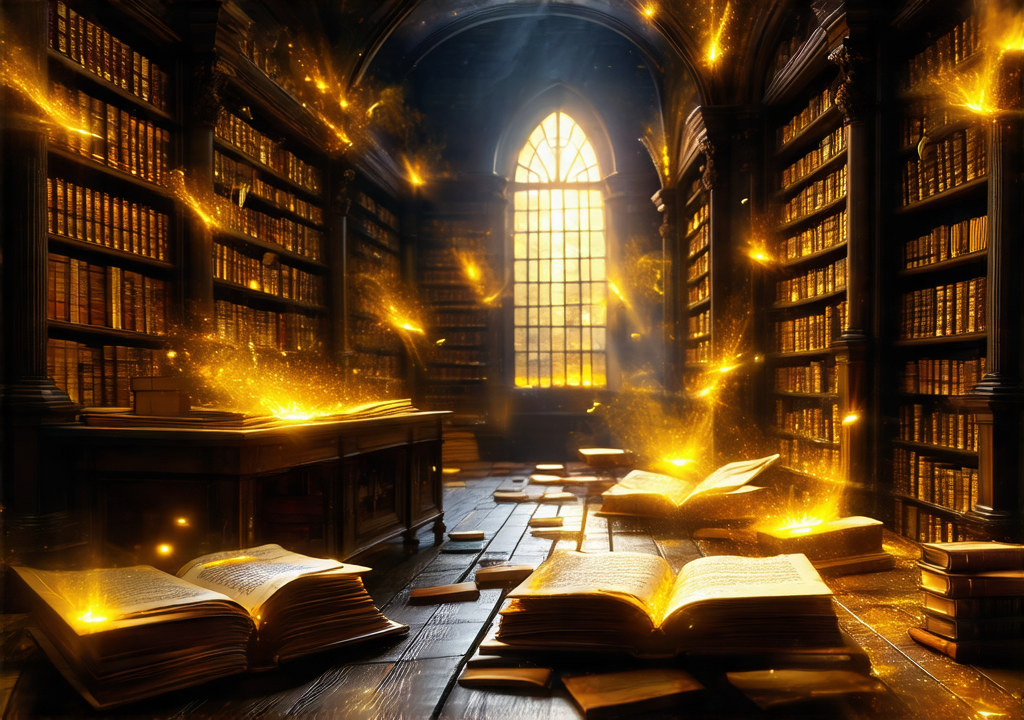
The turning point came on the night of the winter solstice. Blackwood had rented the town hall for an evening lecture, though few expected anyone to attend. It was a cold night, and the wind carried the scent of pine resin from the surrounding forests. Twelve townspeople sat in the wooden benches. Blackwood stood before them with his trunk open on a table, its contents laid out under a single oil lamp: a collection of old mirrors, each framed in dark wood or iron, some cracked, some clouded by age, one still perfectly clear.
He began speaking without preamble. "In the earliest texts I have studied—texts that predate the common languages you speak—mirrors are described not as tools for vanity but as windows between realms. The glass is a membrane that separates the seen from the unseen. When you look into a mirror, you do not see yourself. You see what looks back. And in this valley, something has been looking back for longer than any of us have been alive."
He placed the first mirror on the table—a small hand mirror with a silver frame shaped like a serpent swallowing its tail. He turned it toward the audience and asked if they could see their own faces. They nodded. "Now look again," he said. "Look past your face. What do you see behind you?"
A young farmer named Henrik Larsen looked carefully and whispered, "Just… the wall." Blackwood nodded. "Good. Most of you will only see the wall. But one of you will see something else. The mirror is a test. It reveals who among us carries the mark."
He passed the mirror from hand to hand. Each person took it in turn. Most saw only themselves and the room behind them. When it reached Marta Kowalski, she held it up, studied her own face, then froze. Her eyes widened. The oil lamp flickered. She did not drop the mirror, but her hand trembled so violently that a few flakes of tarnish fell onto the table. "There’s… someone standing behind me," she said quietly. "An old woman. In white. She has no face."
The room was silent for a long moment. Then Henrik Larsen leaned forward. "Let me see it again." He took the mirror, held it up, and after a few seconds of careful study, nodded slowly. "Yes. I can see her too. Just behind your right shoulder. She’s looking at you."
Blackwood smiled his thin smile. "This is how it works. The mirror does not show you who you are. It shows you who is watching. In Vellum Hollow, the membrane between our world and the other side has grown thin over generations of unspoken pacts. Our ancestors made a deal—small things, mostly. A child’s life for safe passage through the forest. A cow’s milk in winter. A door left open on cold nights so the spirit could rest inside. These small exchanges weakened the boundary. And now something on the other side has learned how to press through."
He explained that Vellum Hollow sat atop an ancient crossroads of elemental energies—the convergence of water, earth, air, and fire—making it a natural weak point in the veil between realms. The mirrors, common in the town for generations, had inadvertently created dozens of small portals. Each reflective surface was a place where the other side could peek through, learn, remember, and eventually step fully into our world. The missing townspeople hadn’t been stolen by bandits or lured by lovers. They had simply looked too long into a mirror and found that something on the other side reached back and pulled them through.
"This is not malice," Blackwood said. "The beings on the other side do not hate us. They are curious. They want to understand warmth, taste, touch. The mirror lets them feel these things at a distance. But they grow impatient. They want more than feeling. They want experience. And so they take those who look too long."
The town council debated for three nights. Some wanted to remove all mirrors and hang bells in doorways to mark the boundaries. Others wanted to drive Blackwood out as a fraud or a madman. Marta Kowalski, who had seen the faceless woman more clearly than anyone else, spoke up on the fourth night. "I have lived here my whole life. I know this town’s history. My grandmother told me about the old pacts. She said our family owed the forest for saving her brother during the flood of 1790. We never paid back. The debt has been growing."
The council voted to follow Blackwood’s advice. They began the work of removing mirrors and reflective surfaces from every home, shop, and public building. The task was more laborious than anyone expected. Glass windows were replaced with painted wood panels. Silverware was wrapped in cloth or stored in wooden boxes. Ponds were netted to break up their smooth surfaces. Even the well in the square had a layer of rough stone chips spread across its surface to prevent still reflection. The apothecary’s glass jars were moved into opaque ceramic vessels. The church removed its stained glass windows and replaced them with painted plaster panels that depicted saints but did not reflect light.
Blackwood oversaw the work personally, carrying his trunk from house to house, marking reflective surfaces with chalk symbols and sprinkling his mixture of holy water and obsidian dust over each one as it was removed. He worked through the winter and into spring, and by May, Vellum Hollow had become a town without reflections. It was a strange sight to visitors. Travelers passing through noted how the town looked matte and soft-edged, as if wrapped in cloth. The streets, usually glistening after rain, now held their water in small pools that reflected only the sky above, not the buildings or people. Children played in these non-reflective puddles without fear.
But it was not enough. Blackwood warned them that removing the mirrors would slow the process but not stop it. The membrane had already been thinned by decades of unspoken pacts and constant reflection. The beings on the other side still remembered Vellum Hollow. They could still feel the warmth of the town through residual connections—through the stone foundations, through the rivers that flowed beneath the streets, through the trees whose roots drank from the same aquifer that nourished both worlds.
In the summer of 1848, a child named Elise Novak disappeared. She was seven years old and had been playing near the netted pond in the square when her mother called her name three times and got no answer. The townspeople searched the forest for two days. They found only her red ribbon, caught on a low branch, and a small pool of water that had frozen solid despite the summer heat. Blackwood examined the ribbon and said quietly, "She looked at the water too long. She saw herself in it, even through the net. And something reached back."
Her mother wept but did not blame the town or Blackwood. She simply said, "At least she was warm when they took her. The other side is cold." This small detail—the warmth—became a comforting thought for the townspeople. It meant that Elise had experienced something on the other side. That it wasn’t just emptiness and silence.
Blackwood began to teach the townspeople about the nature of the beings on the other side. He called them "the Unseen Ones," not out of reverence but out of a desire to avoid giving them names, as naming is a form of binding in many occult traditions. They were not demons in the traditional sense—neither good nor evil, neither beautiful nor ugly. They were observers. Students. Beings made of memory and curiosity who had lost their physical forms eons ago and now existed as patterns of attention. They learned by watching. They grew stronger with each observation. And they were slowly learning how to cross the membrane more fully.
He taught them a practice he called "glass meditation"—a daily ritual in which each person would stand before one small, non-reflective surface (a painted stone, a smooth piece of wood) and spend five minutes focusing on their own presence without trying to see themselves. It was an exercise in grounding, in reinforcing the boundary between self and other. Blackwood explained that the Unseen Ones feed on attention. The more clearly you can hold your own shape in your mind, the harder it is for them to blur your edges or pull you through.
The townspeople practiced this ritual faithfully. They also began keeping a communal journal—a thick leather-bound volume kept in the town hall—where they recorded any unusual occurrences: a candle that burned blue, a door that opened by itself, a sound like whispering from inside walls. Blackwood reviewed the journal weekly and noted patterns. Over time, he identified three "pressure points" where the membrane was thinnest: the square near the well, the old chapel on the hill, and the mill race where the river turned sharply beneath the stone bridge.
In 1852, Blackwood proposed a more permanent solution. He designed a network of "boundary stones"—rough-hewn blocks of local limestone that had been placed in specific locations around town to act as anchors for the membrane. Each stone was inscribed with a symbol derived from his journals—a combination of geometric shapes and script that he claimed was the original language used by the first humans who made pacts with the Unseen Ones. The stones were set into the ground at the three pressure points, each one accompanied by a small offering: a pinch of salt, a drop of oil, and a thread of wool from a sheep born in Vellum Hollow.
The work was completed in late autumn. Blackwood announced that the membrane had been stabilized. The Unseen Ones could still observe but would have great difficulty crossing fully into our world. The townspeople celebrated with a quiet dinner—no mirrors, no silverware, only wooden plates and cloth napkins. They toasted to their safety and to Blackwood’s wisdom.
And then he left. He packed his trunk on a cold morning in November 1852, paid the apothecary for the remaining months of rent, and walked out of town without saying goodbye. Marta Kowalski asked him where he was going. He said, "To find another town with thin walls." She asked if he would return. He smiled his thin smile and said, "The membrane will need tending. I may come back when the stones crack."
He never returned in person, but his journals remained in the apothecary’s shop for years after his departure. Scholars from three universities came to study them. They found passages on demonology that anticipated modern psychological theories of attention and perception. They found detailed maps of Vellum Hollow’s underground waterways and stone formations. And they found a final entry, written in a different hand than the rest—shakier, more urgent—that read:
"The membrane holds for now. But I have made an error in my calculations. The original pact was not with one being but with seven. I only accounted for six. The seventh is still waiting. It has been watching from behind the well since 1790. When the water level rises above the third stone, it will step through. Watch the well. Count the stones."
Marta Kowalski kept this journal in a wooden box behind her shop shelf for twenty years. In 1872, she died of a fever that left her eyes wide open and fixed on some point just above the viewer’s head. The apothecary passed to her niece, who read Blackwood’s final entry and began measuring the water level in the well each morning.
The water rose slowly over the following years—faster than seasonal patterns would explain. In 1889, it reached the second stone. The townspeople grew quiet. They began leaving small offerings at the base of the well: a coin, a flower, a thread of wool. Children were told not to look into the water directly but to glance only from the corner of their eyes.
In 1904, the water reached the third stone. That night, the oil lamp in the town hall burned blue for six hours straight. The boundary stones hummed at a frequency that made teeth ache and dogs whine. In the morning, the well was dry. Not empty—dry. As if it had been scooped out by invisible hands. And on the bottom of the well, visible through the open stone rim, lay seven small mirrors arranged in a circle, each one perfectly clear despite decades of exposure to dust and damp.
The townspeople gathered at the square. They did not touch the mirrors. They stood in silence, watching. After an hour, Marta’s niece—now elderly herself—stepped forward and picked up the first mirror. She held it toward the crowd and asked if they could see their own faces. One by one, they nodded. "Now look again," she said, echoing Blackwood’s words from decades earlier. "Look past your face. What do you see behind you?"
A young woman named Clara Voss looked carefully and whispered, "Just… the wall." Another man added, "And a door. A small one. With a handle shaped like an eye."
They passed the mirror hand to hand. Each person saw the door more clearly than the last. By the time it reached the eldest townsman, he said simply, "The door is open. Someone is standing on the other side. They are smiling."
And that night, they held their celebration dinner in the town hall—wooden plates, cloth napkins, no mirrors, no silverware. But this time, every chair faced the doorway. And every person kept one hand near their pocket, holding a small piece of chalk and a vial of holy water mixed with crushed obsidian.
The celebration lasted until midnight. No one left. They sat in the blue-tinged light of the oil lamps, eating slowly, talking quietly, watching the door. At exactly twelve o’clock, the door opened by itself. Not creaking—just opening, smoothly, as if it had been waiting for this moment. And through the doorway stood a figure. Tall. Thin. Dressed in white that seemed to shift between fabric and light. It had no face—but where its face should have been, there was a small mirror, perfectly round, framed in silver shaped like a serpent swallowing its tail.
It stepped into the town hall. The townspeople did not move. They watched as it walked slowly through the room, touching each table with one long-fingered hand. It touched Clara Voss’s hand and she shivered but did not pull away. It reached the center of the room and turned to face them. The mirror-face caught the light from the oil lamps and reflected their faces back at them—but in the reflection, they were all slightly younger than they were in life. And behind each of them stood a second figure—a shadow version, made of smoke and stillness.
The being spoke. Its voice was like paper unfolding. "You have tended the membrane well. I am grateful." A pause. The mirror-face tilted. "I came to offer you a choice. You may keep your town as it is—safe, quiet, matte, and warm. Or you may open the door fully and let me show you what lies beyond. Both choices are gifts. Neither is a punishment."
Marta’s niece stood up. She was eighty-three years old and walked with a cane carved from ash wood that had been struck by lightning three times—identical to Blackwood’s walking stick, though she claimed it had come from the same tree. "How long have you been waiting?" she asked.
"Since 1790," the being said. "Since your grandmother made her pact. I have watched every mirror in this town. Every reflection. Every face that looked back at me through the glass. I learned your warmth. Your taste. Your touch. And now I am ready to share what I have learned."
The townspeople murmured among themselves. Clara Voss asked, "What have you learned?" The being smiled—or rather, the mirror-face caught and reflected a smile that wasn’t there on any of their faces but was visible only in the glass. "I have learned that warmth is not a temperature," it said. "It is a choice. And taste is not a flavor. It is a memory. And touch is not a pressure. It is a promise."
The room was silent for a long time. Then Henrik Larsen’s great-grandson, now the town councilman, stood up and asked, "What happens if we open the door fully?" The being said, "You will see all that lies beyond. Every reflection you have ever made in every mirror since the first glass was blown by your ancestors. You will see them all at once. And they will remember you."
Marta’s niece nodded slowly. She walked to the table where Blackwood’s journals were kept—brought up from behind the shop shelf and placed there for this moment. She opened to the final page, the one with the shaking handwriting. "He warned us about seven," she said. The being inclined its head. "You have accounted for six. I am the seventh."
She turned to the crowd. "We open the door."
They stood together in a circle around the being. Clara Voss took her hand—long-fingered, cool, and steady as stone. One by one, the townspeople joined hands with their neighbor. The oil lamps burned blue. The boundary stones outside hummed louder. And the door opened wider than it had ever been.
And through that doorway poured the reflections. Not just faces but full scenes—kitchens from 1847, forests in winter, children playing by a frozen pond. Every mirror that had ever existed in Vellum Hollow opened at once, and every reflection stepped through. They filled the town hall, moving silently, touching tables, smiling with mouths that were not there. And each one turned to look at its viewer—the person who had stood before that specific mirror decades or centuries ago—and nodded.
It lasted an hour. Or a day. Time moved strangely in the blue light. When it ended, the reflections faded like morning mist. The town hall was empty except for the townspeople and the being. The mirrors on the table were gone. The journal lay open to a new page that had not been there before. On it, in Blackwood’s steady hand, read:
"The seventh has come home. The membrane is whole again. Not sealed—opened. Both sides now share warmth. Tending continues."
Marta’s niece closed the journal. She looked at the being and said, "You may stay as long as you wish. But no mirrors in the town hall. We prefer to see each other without glass between us."
The being smiled with its mirror-face. And for the first time, the reflection showed a face—old, kind, and familiar. Marta Kowalski’s grandmother. The woman who had made the pact in 1790.
Vellum Hollow has remained mirrorless since then. Visitors still note how the town looks matte and soft-edged. Children play by the dry well without fear. And every evening at midnight, the oil lamp in the town hall burns blue for exactly six hours. The townspeople call it "tending time." And they sit together in the blue light, keeping their hands near their pockets, watching the doorway, waiting for the next reflection to step through and remind them that warmth is a choice, taste is a memory, and touch is a promise.
The town has not had another celebration dinner since 1904. But on the winter solstice each year, they leave seven small mirrors in the square—arranged in a circle, each one perfectly clear—and stand around them in silence for five minutes. They do not look into the glass. They simply hold their own shape in their minds and wait. And if you listen closely, you can hear the faint sound of paper unfolding on the other side of the membrane.
In Vellum Hollow, they say that a mirror is not a window. It is a handshake. And every reflection is a promise kept across the boundary between what we are and what watches over us from the warm dark beyond.