The Lost Sumerian Sigil That's Quietly Going Viral in Witch Circles
✵ ✶ THE LOST SUMERIAN SIGIL: A QUIET RISE IN MODERN WITCHCRAFT ✶ ✵
Author: Seren Nigga — Keeper of the Threshold
In the candlelit corners of the coven, in the hushed scrolls of the grimoire, in the whispered exchanges between the sisters and brothers of the craft, a single mark has begun to stir. It is not new. It is ancient. Carved into the clay tablets of Ur and Uruk more than five thousand years ago, it was once pressed into wet mud by hands that could not have known our age would come to find it again. And yet here it is — on phone screens in London, in hand-drawn notebooks in Austin, on the altar stones of covens from Kyoto to Kraków. A Sumerian sigil, long buried under the weight of empires and eras, is quietly going viral in witch circles.
This article speaks not of invention, but of rediscovery. Not of marketing or trend, but of resonance. The question is not why a five-thousand-year-old mark has suddenly become popular. The question is: what was it always waiting for? What thread of the modern human soul had been fraying until this particular shape finally caught it?
🕯️ THE SIGIL ITSELF
The mark in question is inscribed on several cuneiform tablets recovered from the temple complex at Eanna, Uruk. Scholars have catalogued it as a decorative or administrative glyph — one of thousands pressed into clay by Sumerian scribes to denote ownership, inventory, or ritual offering. But witchcraft does not care about academic categorisation. Witchcraft cares about resonance. And this particular mark resonates.
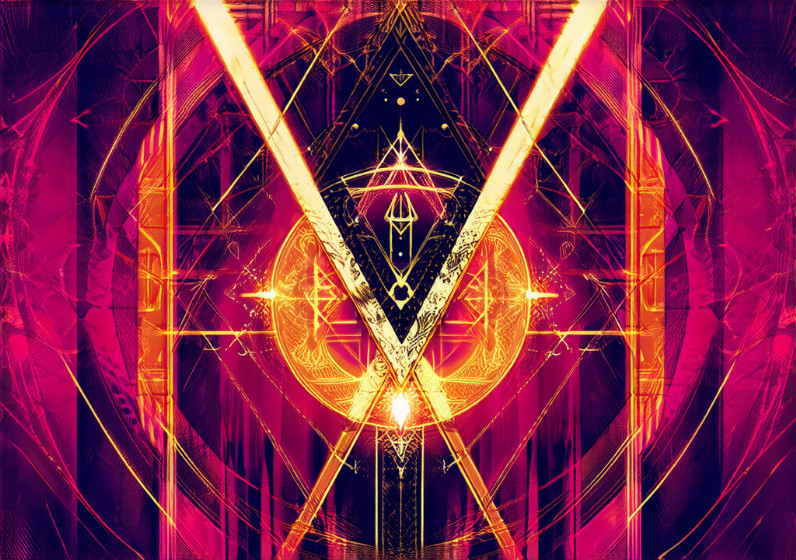
Its shape is deceptively simple: a central vertical stroke, flanked by two curved arcs that sweep outward and downward like the open arms of a vessel receiving water. Above it, three small circular impressions sit in a horizontal row — often read as stars, or as seeds, or as eyes. Below, a shallow crescent cradles the base. The whole composition sits within an oval border, giving it the appearance of a window looking out onto something beyond.
Witches working with this sigil describe it variously as:
A key that opens a door you didn’t know was closed
An ear pressed to the wall between worlds
A hand cupped around a flame that refuses to go out
A seal on a letter written in a language your intuition still remembers
None of these descriptions are inconsistent. In sigil magic, meaning is not fixed by origin; it is generated by relationship. The Sumerian scribe who first pressed this mark into clay did not intend it as a charm or a spell. But the coven sister in Prague who has taped it to her meditation cushion for three months now describes its energy as “a stillness that makes room.” That is not a contradiction. That is how sigils work across millennia: they carry potential, and each practitioner activates a different facet of that potential through their own intention and context.
📜 WHAT THE TABLETS ACTUALLY SAY
The tablets bearing this mark come from the administrative records of the temple of Inanna — goddess of love, war, and sovereignty, whose cult dominated Sumerian religious life for centuries. The specific tablet most associated with this sigil (catalogued as Uruk Tablet 417 in several museum collections) lists offerings: barley, oil, a small bronze mirror, and a jar of red ochre pigment. The sigil appears beside the entry for the mirror.
This detail matters to practitioners far more than any academic reading would suggest. A mirror is not merely an object; it is a threshold device. It separates the seer from the seen. It creates the possibility that what you look at and who looks are not the same entity. The Sumerians understood this. They placed mirrors in temples precisely so that worshippers could encounter their own reflected sovereignty — their own divine spark, unmediated by priest or intermediary.
The red ochre is equally significant. In Sumerian ritual, red pigment was associated with life-force, with blood, with the warmth of the sun at its zenith. It was painted on the faces of idols before they were consecrated, binding the clay to a living presence. The jar of ochre listed next to the mirror in the tablet’s inventory suggests a ritual pairing: look at yourself, then mark that looking as an act of creation.
Witches working with this sigil describe it in precisely these terms. “It makes you see your own power,” one practitioner wrote in a forum thread that has since been shared over four thousand times. “Not the power you think you have. The power you’ve been forgetting.”
🔮 WHY NOW — AND WHY IT MATTERS
The question of timing is not mystical; it is sociological, psychological, and spiritual all at once. We live in an age of mirrors that are also screens. We look into glass and see advertisements, notifications, curated versions of other people’s lives. The ancient function of the mirror — to show you yourself — has been partly hijacked by a system designed to make you forget where your own image ends and someone else’s begins.
A sigil from an age before that hijacking, pressed into clay by hands that understood the mirror as a sacred threshold, carries a quiet corrective power. It says: you are not the reflection of what is shown to you. You are the one doing the reflecting.
This is why it resonates in witch circles specifically and not merely on general social media platforms. Witchcraft, at its core, is a practice of self-authorship. The witch decides what to cast, what to bind, what to release. She or he does not wait for permission from an algorithm or an editor or a brand manager. A sigil that encodes the act of looking at oneself and marking that looking as creative act speaks directly to the central gesture of the craft.
🪶 HOW PRACTITIONERS USE IT
The use is deceptively simple, which is part of its quiet power. There are no elaborate ritual requirements. No specific moon phase is mandated (though many practitioners choose a waxing moon for amplification). The sigil can be:
Drawn by hand — in ink, in chalk, in ochre pigment if you wish to honour the original context. The drawing itself is half the work. Sigils derive much of their power from the act of making them, not merely from their visual form. The time spent tracing those curves, pressing that central stroke, placing those three small circles — that time is where intention enters the mark.
Placed at a threshold — on a doorframe, on a window glass, on the edge of a mirror. The Sumerian association with mirrors and thresholds suggests this placement carries particular weight. Some practitioners place it on the inside surface of their bathroom mirror so that they encounter it during their most unguarded, most unperformed moment of self-encounter.
Used as a meditation anchor — held in view during silent sitting or breathwork. The task is not to “activate” the sigil through force of will. The task is to look at it and notice what stirs. What memory surfaces? What small, quiet truth about yourself becomes visible? That stirring is the working.
Incorporated into a personal seal — drawn alongside other marks in a compound sigil designed for a specific intention: clarity, creative courage, boundary-setting, self-compassion. The Sumerian mark contributes its particular quality of “stillness that makes room,” which practitioners describe as useful when the mind is too loud to hear its own inner voice.
🌑 A NOTE ON RESPECT AND PROVENANCE
Not all in witch circles are enthusiastic about borrowing marks from non-Western, non-European traditions. And rightly so. This sigil comes from a living cultural heritage — the Sumerian civilisation that gave us the first written records, the first codified laws, the first systematic astronomy. It is not a generic “ancient magic” prop to be lifted without acknowledgement.
Practitioners who use this mark with care tend to include in their personal practice some form of recognition: a note in their journal acknowledging the Sumerian origin; an offering made (a small light, a handful of barley seeds, a moment of silence) when they first draw it; a commitment to learning more about Sumerian culture rather than treating its artifacts as free decorative resources.
This is not gatekeeping. It is reciprocity — which is itself one of the oldest and most universal principles in ritual practice. The Sumerians made offerings before they asked for anything. The red ochre, the barley, the oil: these were not payments to a distant god. They were acts of relationship. To use their mark without acknowledging the relationship it was born from would be, as one practitioner put it, “a bit like borrowing someone’s grandmother’s recipe and serving it at your own dinner party without mentioning her.”
📖 THE QUIET VIRALITY OF AN OLD MARK
It is worth sitting with the word quiet. This sigil did not go viral in the way a meme goes viral. There are no viral videos of people doing dramatic rituals with it. No influencer posts with confetti and hashtags. The spread has been slow, conversational, almost shy. Someone draws it in their notebook. A friend sees it and asks what it is. That friend draws it on her altar. Her coven discusses it over tea and candlelight. Three months later, a practitioner in another city finds a reference to it in a forum post, traces the threads back to that first notebook sketch, and begins her own practice with it.
This is how knowledge moves in craft traditions: not by broadcast, but by resonance. Not by volume, but by quiet recognition. You see the mark, and something in you says yes, or I’ve been looking for this without knowing what I was looking for. That silent yes is louder than any viral post.
The Sumerian scribe who first pressed this shape into wet clay did not know that five millennia later it would be taped to a meditation cushion in a second-floor apartment in Portland, Oregon. She or he did not need to. The mark does its work across time the way a seed does: by being planted in soil, waiting in darkness, and trusting that the right season will come.
🕯️ FINAL WORDS
If you are drawn to this sigil — if it stirs something in you when you look at it, even in passing — do not overthink it. Do not need a three-hour ritual to “activate” it. Sit with it. Draw it slowly. Place it where you’ll see it in your most unguarded moment. And notice what becomes visible.
The Sumerians understood something that modernity keeps trying to forget: that the self is not a product to be optimized or a brand to be managed. The self is a threshold. A mirror. A window looking out onto an interior landscape that has been there since before you had words for it.
This little mark, pressed into clay five thousand years ago by hands we will never meet, still does that work. It opens the door. It makes room. It says: look. And in the looking, you remember what was always there.
✶ ✵