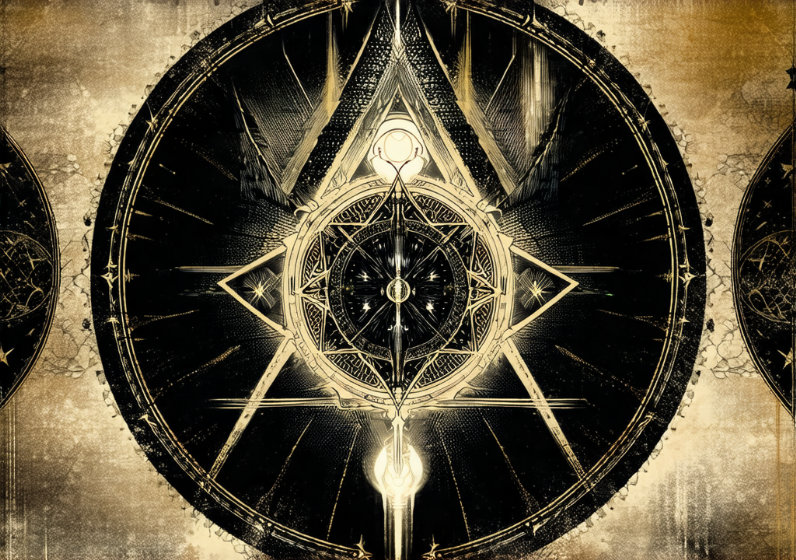
The Historical Truth About Conjuration No One Talks About
The Historical Truth About Conjuration No One Talks About
By Aldric Voss, Keeper of the Obsidian Archive
For centuries, the word "conjuration" has been shrouded in a specific type of cultural amnesia. In popular imagination, conjuration is often reduced to a parlor trick or a minor sub-genre of illusionism—a flashy display of rabbits pulled from hats and coins appearing in empty cups. It is treated as a footnote to the grander narratives of drama, art, or even true magic. But this reduction is not merely an oversight; it is a historical erasure. To understand conjuration is to understand one of the oldest, most rigorous, and most philosophically complex disciplines human beings have ever developed. It was not born in a theater; it was forged in the temples of statecraft, the laboratories of alchemists, and the quiet studies of mystics who sought to bridge the gap between the visible and the invisible.
This article seeks to unbury that truth. We will explore how conjuration was originally a scholarly discipline, not a performance art. We will examine its roots in hermetic philosophy, its role in early modern science, and the deliberate cultural shift that turned it from a tool of power into an entertainment for the masses. This is the history they rarely teach—the story of how humans tried to command reality itself, and how that ambitious project was softened into something safe, silent, and smiling.
The Etymological Root: Not Just "Calling"
To understand conjuration, we must first look at its name. The word comes from the Latin conjurare, which means to swear together or to bind by oath. This is a crucial distinction that most modern audiences miss. In common usage, we think of conjuring as bringing something into existence—making a dove appear, making a ring materialize. But etymologically and historically, conjuration was primarily about summoning and binding. It was not about creation; it was about recruitment.
In the classical world, a conjurer did not create the spirit or the object. Instead, they invited an existing force to manifest in a specific place under specific conditions. The conjurer was not a creator but a negotiator. This distinction is vital because it reveals the mindset of early conjurers: they believed the universe was already full of powers, intelligences, and entities. Their job was to locate these forces, understand their natures, and negotiate a temporary alliance with them.
This "negotiation" aspect explains why early texts on conjuration are so heavy on ritual, purity, and contract language. You do not negotiate with an equal; you negotiate with something that may be more powerful than you. Hence the emphasis on protective circles, specific times of day, particular incantations, and offerings. The conjurer was a diplomat in a foreign land, speaking the language of the unseen to secure a favor or a tool for their own work.
The Hermetic Foundation: As Above, So Below
The intellectual backbone of historical conjuration is found in Hermeticism, a philosophical and spiritual tradition that merged Egyptian, Greek, and Babylonian wisdom. Central to this tradition is the axiom "As above, so below; as below, so above." This principle suggests that the microcosm (the human body, the local environment) mirrors the macrocosm (the universe, the divine).
For conjurers, this was not just a poetic metaphor; it was an operational manual. If the heavens were made of fire and light, then to summon a solar spirit, one had to create a localized environment that mirrored those qualities. A chamber bathed in golden light, filled with sweet incense, at the height of summer, would be "tuned" to receive solar intelligences. This is why historical conjuration texts are so detailed about environmental conditions. The room was not just a stage; it was an instrument.
This Hermetic view also explains the intimate link between conjuration and alchemy. Both disciplines sought to understand the underlying structures of reality and manipulate them for specific ends. Alchemists worked with matter; conjurers worked with spirit or energy. But both believed that if you understood the fundamental "recipe" of a thing—whether it was gold or a guardian angel—you could replicate, summon, or transform it. In this light, conjuration was a form of spiritual alchemy. It was the art of transmuting intention into manifestation.
The Medieval and Renaissance Context: A Scholarly Discipline
By the Middle Ages, conjuration had become a respectable scholarly pursuit, often indistinguishable from natural philosophy. Monks and scholars studied texts like the Key of Solomon and the Lesser Book of Tokens, which laid out systematic methods for summoning angels, demons, and elemental spirits. These were not children's books; they were academic manuals, complete with diagrams, geometric patterns, and precise linguistic formulas.
During the Renaissance, conjuration took on a more public face. Figures like John Dee, the famous mathematician and astrologer to Queen Elizabeth I, used conjurational techniques to communicate with angels for state-level intelligence gathering. Dee's assistant, Edward Kelley (or Kelly), served as the scryers who acted as intermediaries between Dee and the angelic hosts. Their work was considered high-level research, contributing to navigation, medicine, and theology. Conjuration here was not a party trick; it was a tool for national strategy.
This period also saw the flourishing of "natural magic," a term used by scholars like Marsilio Ficino. Natural magic relied on understanding the sympathies and antipathies between objects and beings. For example, if you wanted to summon a water spirit, you might use blue candles, salt water, or images of fish. This was empirical observation applied to spiritual work. It was science before it was called science—a systematic study of how the world worked, including its invisible layers.
The Great Divide: When Conjuration Became Illusion
The shift from scholarly conjuration to public illusionism did not happen overnight. It began in the 18th century as theater and spectacle became dominant forms of cultural expression. Pioneers like Philip Elliott (the first recorded stage magician) began incorporating conjurational techniques into theatrical performances. However, there was a subtle but important change: the emphasis shifted from power to wonder.
In scholarly conjuration, the goal was control. You summoned a spirit and commanded it to do something—reveal a secret, heal an illness, protect a home. In stage illusionism, the goal was delight. The audience was not seeking power; they were seeking pleasure. The rabbit in the hat was not a negotiated contract with a forest spirit; it was a delightful surprise that highlighted the magician's skill and the audience's gullibility.
This shift had profound cultural implications. It democratized magic but also domesticated it. Conjuration became safe, predictable, and harmless. No one was truly negotiating with angels or demons in the theater; everyone knew (or pretended to know) that the rabbit was just a rabbit. The mysterious power of the unseen world was replaced by the cleverness of the human performer.
The Role of Secrecy: Why The Truth Was Hidden
Perhaps the most interesting aspect of this history is the deliberate preservation of secrecy among stage magicians. Once conjuration became a performance art, its practitioners realized that explaining a trick would ruin it. In scholarly conjuration, texts were shared and debated; understanding the method was part of the value. In stage illusionism, understanding the method destroyed the magic.
This led to the tradition of "magician's secrets." Magicians would perform tricks but never explain them, creating an invisible wall between performer and audience. This secrecy was not just professional courtesy; it was a philosophical stance. It suggested that some things are better experienced than understood—that mystery is more valuable than clarity.
This contrast with historical conjuration is striking. The old conjurers wanted to understand the universe so they could work within it. The new magicians wanted to obscure their methods so the audience would remain in a state of wonder. One was an act of intellectual conquest; the other was an act of emotional management. Both are valid, but they represent very different relationships with reality.
The Psychological Dimension: Suggestion and Belief
Historical conjuration also offers insight into the psychology of belief. Many scholars today argue that a significant portion of historical conjurational "success" can be attributed to suggestion, expectation, and the power of the human mind. If you believe you have summoned an angel, your brain will process sensory input in ways that confirm that belief. A shimmering light might be interpreted as a divine presence if you are expecting one; otherwise, it is just a candle.
This does not mean historical conjuration was fake. Rather, it suggests that the boundary between mind and matter was less rigid than we assume. The conjurer's intense focus, ritual purity, and environmental tuning created conditions where the mind could interact with reality in subtle but powerful ways. This is consistent with modern research on placebo effects, meditation, and the role of expectation in perception.
In this view, conjuration was a form of mental engineering. It used ritual to structure attention, emotion, and intention, creating a state of consciousness capable of influencing outcomes. Whether one calls this "magic," "psychology," or "hermetic philosophy," the mechanism is clear: the mind shapes reality through focused belief and structured action.
The Modern Resurgence: A Return to Depth
Interestingly, we are seeing a cultural shift back toward deeper engagement with conjurational ideas. In contemporary times, people are exploring hermeticism, natural magic, and ritual practice not just as historical curiosities but as practical tools for personal development. Workshops on "spiritual magic" or "ceremonial practice" draw directly from the same texts that scholars used in the 16th century: the Key of Solomon, the Lesser Book of Tokens, and works by Ficino and Delriche.
This resurgence is driven by a desire for meaning and agency in an increasingly secular and digital world. People want to feel like they are not just passive observers of reality but active participants who can shape their environment, their health, and their relationships through intentional practice. Conjuration, with its emphasis on negotiation, structure, and symbolic power, offers a framework for this kind of engagement.
Moreover, the field of cognitive science has validated many principles that conjurers relied on centuries ago. We now know that ritual actions reduce anxiety and increase feelings of control. We know that symbolic environments can shift emotional states. We know that focused attention can alter perception and even physiological function. In a sense, modern science is confirming what historical conjurers already understood: that the mind and world are not separate systems but interconnected processes.
The Misunderstood Legacy
So why does no one talk about this truth? Partly because it challenges our modern assumptions. We like to think of magic as either art (illusionism) or superstition (folk belief). Historical conjuration fits neatly into neither category. It is a rigorous, philosophical, and practical discipline that straddles the line between science and spirituality. Acknowledging this requires us to expand our definition of knowledge and power.
It also challenges our view of history. We tend to see the past as a simpler time when people believed in magic because they didn't understand science. But historical conjurers were often highly educated, scientifically literate individuals who used ritual and symbolism as tools for understanding and manipulating reality. They were not less rational than us; they had a different model of rationality—one that included the invisible, the symbolic, and the negotiated.
Their legacy is one of ambition. They wanted to understand how the universe worked so they could work within it. They saw themselves not as entertainers but as practitioners, craftsmen of reality. This is a far more dignified and interesting role than that of a trick performer. It positions them as pioneers in the study of human potential and environmental interaction.
Practical Implications for Today
Understanding this history has practical implications. If you are interested in conjuration or ritual practice today, approach it with the mindset of the historical practitioner: not as a showman trying to amaze an audience, but as a scholar-artist seeking to understand and influence your environment. Focus on structure, symbolism, intention, and consistency. Pay attention to how your state of mind affects your outcomes. Treat your rituals as experiments in mental engineering, not just aesthetic performances.
This approach can help you develop greater self-awareness, emotional regulation, and a sense of agency over your life. It connects you to a long tradition of human beings who refused to accept that the world was fixed and immutable. They believed that through knowledge, will, and ritual, they could participate in the ongoing creation of reality.
Conclusion: The Quiet Power of Negotiation
The historical truth about conjuration is not one of grand illusions or supernatural miracles. It is a story of human ingenuity, philosophical depth, and quiet power. It is the story of people who looked at an uncertain world and decided that they could negotiate with it. They used symbols, structures, and intention to create stability, insight, and influence in their lives.
This is not a lost art; it is a living tradition. Whether you call it magic, ritual, or mental engineering, the core principle remains: we are not just observers of reality. We can shape it through focused action, symbolic understanding, and disciplined practice. The rabbits from hats have captured our imagination, but the true story of conjuration lies in the quiet studies where humans learned to speak with the invisible world.
This is the truth no one talks about because it requires us to take ourselves seriously. It asks us to believe that we are not just consumers of reality but active participants in its creation. In a world obsessed with spectacle, this quiet power is perhaps the most revolutionary idea of all.