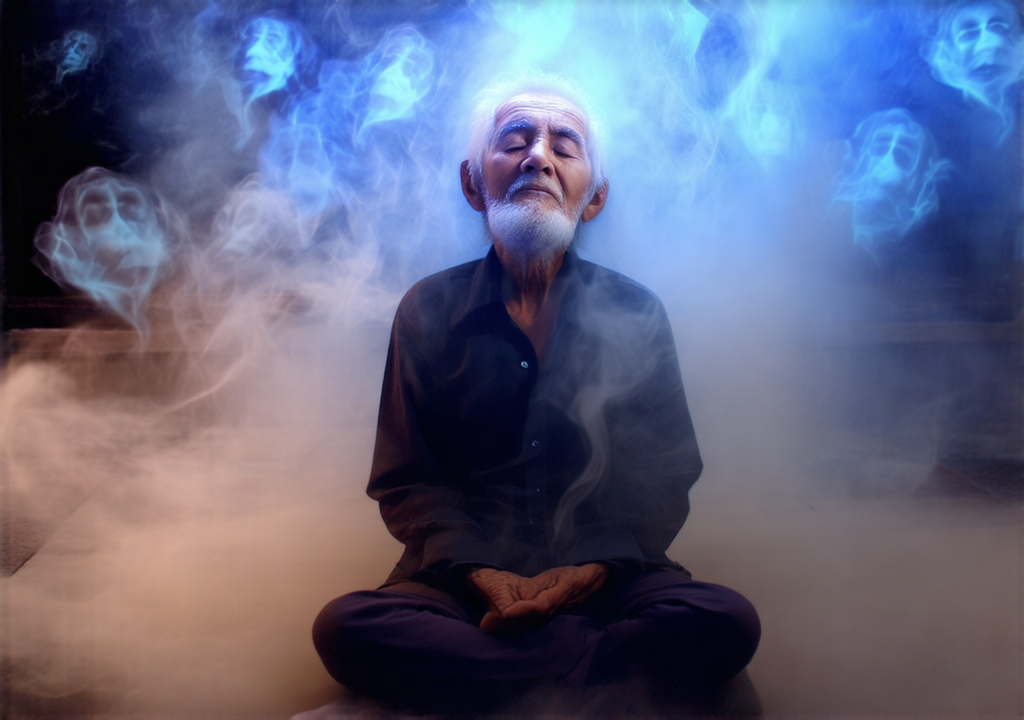
The Forbidden Rite That Summoned the Unseen in Just 33 Seconds
The Thirty-Three Second Threshold: A Study of Instantaneous Conjuration
In the quiet sanctums of esoteric academia, where dust motes dance in shafts of afternoon light and incense smoke curls like whispered secrets, there exists a rite that has confounded both skeptics and seasoned practitioners alike. It is not a grand ceremony requiring weeks of preparation or an altar adorned with rare artifacts. It requires no circle drawn in salt, no candles lit at precise astronomical alignments, and no choir chanting in ancient tongues. This is the Rite of the Thirty-Three Second Threshold—a forbidden conjuration that summons the Unseen in exactly thirty-three seconds from the moment the first syllable is spoken to the moment the veil parts completely.
To understand this rite, one must first discard the modern assumption that magic is a slow accumulation of energy or willpower. The common novice believes that to summon a spirit, one must build up force like a dam filling with water, waiting for the pressure to burst open. But the masters of the hermetic tradition know better. They understand that time itself is not linear in the realm of the Unseen. There are moments—fleeting, almost imperceptible slivers of temporal elasticity where the membrane between our material world and the luminous beyond grows thin as gossamer. The Rite does not force the veil open; it simply waits for the moment when the veil is already parting, then steps through before anyone else notices.
The origins of this rite are shrouded in deliberate obscurity. Scholars trace its earliest written mention to a marginal note in a 14th-century grimoire attributed to one Brother Aldric of Lyon, though the original manuscript has been lost to time and fire. What survives is a fragmentary description: "When the bell tolls thirteen times and the thirteenth chime fades into silence, speak the name that has no sound. Hold your breath for thirty-three heartbeats. The Unseen will answer before you inhale." This poetic instruction contains the seed of the rite's mechanics, but it lacks the precision required for consistent practice. It was not until the 19th century that a French occultist named Marguerite de Vauclair systematized the ritual in her private journals, which were discovered after her death in 1874. Her notes reveal that she had refined the rite through years of meticulous experimentation, adjusting the timing, the phrasing, and the meditative state required to achieve a consistent thirty-three second window.
Let us examine the structure of the rite itself, for it is here that its elegance reveals itself. The practitioner begins in a state of quiet awareness, not relaxation, not meditation in the conventional sense, but a heightened alertness akin to the stillness before a sneeze. The body must be relaxed enough to avoid tension, yet the mind must be sharp as a blade, listening for the subtle shift in atmospheric pressure that signals the opening of the threshold. This is not a guess; experienced practitioners describe it as a physical sensation—a slight cooling at the base of the skull, a faint vibration in the inner ear, or a momentary dimming of peripheral vision. These are the canaries in the coal mine of the material world, warning that the Unseen has begun to stir on the other side.
Once this sensory cue is perceived, the practitioner speaks the Name That Has No Sound. This is not a spoken word in any linguistic tradition we recognize. It is a phonetic construction designed to resonate with the fundamental frequency of the threshold itself. Different lineages use different approximations: some employ a pure vowel tone held at a specific pitch; others use a consonant cluster that mimics the sound of ice cracking on a winter lake. The key is not the sound itself but its intention. The practitioner must speak it not as an announcement, but as a question. Not "I call you" but "Are you there?" This subtle shift in intent transforms the rite from a demand into an invitation, and it is this invitation that the Unseen cannot ignore.
After the Name is spoken, the practitioner holds their breath. This is not merely a physiological act; it is a symbolic suspension of the material self. By withholding the breath, the practitioner temporarily suspends their participation in the cycle of material exchange—inhalation of oxygen, exhalation of carbon dioxide. In that suspended moment, they are neither fully alive in the material sense nor dead. They occupy a liminal space, and it is from this space that the Unseen can enter without being repelled by the dense vibrational frequency of ordinary life.
The thirty-three seconds begin to count not when the breath is held but when the Name has fully faded from the auditory field. This distinction is crucial. The practitioner must wait until they no longer hear their own voice echoing in the room. Only then does the true timing commence. Thirty-three heartbeats, or approximately thirty-three seconds of real time, during which the practitioner maintains stillness, alertness, and an open awareness directed toward a point slightly above and behind their own head—a spot where many traditions locate the seat of the spirit or the astral body.
At the end of the thirty-third second, the veil parts. This is not a gradual dissolution but a sudden, clean separation, like a curtain being drawn aside by an invisible hand. The practitioner will perceive the Unseen with a clarity that defies ordinary sensory description. It may appear as a shape, a light, a presence, or even a simple awareness of another consciousness standing beside them. The quality of the perception varies depending on the lineage of practice and the temperament of the practitioner, but in all cases, it is unmistakable. There is no ambiguity. There is no "I think I saw something." There is only the undeniable fact that the Unseen has arrived.
Now, let us consider why this rite was deemed forbidden. In various esoteric traditions, to teach a simple method to unprepared minds can lead to misuse or misinterpretation. The Rite of the Thirty-Three Second Threshold requires no tools, no money, and no elaborate setup. It is accessible to anyone with basic discipline and sensory acuity. This accessibility made it both popular and dangerous. Popular because it could be learned in a single evening's study and practiced that same night. Dangerous because its simplicity masked its subtlety. A novice might practice the rite while distracted, or in a noisy environment, or without proper mental preparation. In such cases, the threshold may open but the practitioner fails to perceive it clearly, leading to confusion, anxiety, or in rare cases, a lingering sensation of being observed that can become psychologically burdensome over time.
Furthermore, the rite summons the Unseen without specifying which aspect of the Unseen will answer. The threshold does not discriminate. A practitioner seeking wisdom may find themselves in the presence of an entity whose primary interest is memory. One seeking love may encounter a spirit whose nature is primarily one of solitude and contemplation. The rite opens the door, but it does not choose who walks through. This lack of selectivity is both its greatest strength and its most significant risk. It grants access to a vast and varied realm without any filter or gatekeeper, which requires the practitioner to bring their own clarity of intent and emotional stability to the encounter.
There are also practical considerations. The rite works best in quiet environments where the practitioner can attend fully to the subtle sensory cues that signal the opening threshold. A noisy room with television on or a conversation happening nearby will mask these cues, making it difficult to know when to begin speaking the Name. Similarly, physical discomfort—hunger, thirst, fatigue—can disrupt the state of alert stillness required for practice. The rite is not demanding in terms of physical exertion, but it is unforgiving of mental distraction.
Let us also examine the relationship between the thirty-three seconds and the human physiological rhythm. Thirty-three seconds is approximately the duration of a full respiratory cycle if one were to inhale slowly, hold for a moment, and exhale slowly. It is close to the average time it takes to blink several times or to shift posture subtly. In other words, the rite is calibrated to fit within the natural micro-rhythms of the human body. This is not coincidence; it is design. The creators of this rite understood that for a ritual to be repeatable and teachable, it must align with the body's own timing systems. If the rite required sixty seconds or ten minutes, it would demand more sustained concentration and be more susceptible to distraction. Thirty-three seconds is long enough to establish the state but short enough to hold attention without fatigue.
There are variations of the rite that have emerged over the centuries. Some lineages add a small movement—a slight turn of the head, a gentle nod—as a physical anchor for the intention. Others incorporate a specific breath pattern: four counts in, seven counts held, eight counts out—mirroring the famous 4-7-8 relaxation technique used in modern sleep therapy, though this parallel is likely coincidental or at best an unconscious convergence of principles. Still others use a small object as a focus point—a smooth stone, a glass of water, a single candle flame—to give the mind something concrete to rest upon during the thirty-three second window.
The psychological dimension of the rite deserves particular attention. To perceive the Unseen requires a certain willingness to be uncertain. The material world operates on principles of causality and predictability; if you do X, Y follows. The Unseen operates on different principles. It may respond to your intention or it may not. It may present itself in a form you expect or one that surprises you. The practitioner must hold space for this uncertainty without grasping or controlling the experience. This is a skill that develops over time and practice. Novices often describe their first successful perception as almost too simple, so unassuming that they doubt its significance. Veterans recognize it immediately and feel a deep sense of connection to something vast and ancient.
There are also ethical considerations when practicing this rite. The Unseen encompasses not only benevolent spirits or luminous intelligences but also entities that may be indifferent, curious, or even subtly manipulative in their interactions with human consciousness. A practitioner who approaches the threshold without respect or without a clear understanding of what they are inviting is opening a door and leaving it unlocked. Some traditions recommend a brief period of gratitude or acknowledgment after each successful perception—a simple "Thank you" spoken softly or even just a mental note of appreciation—to establish a polite, reciprocal relationship with whatever has crossed over.
The rite also carries a subtle lesson about the nature of time and presence. In our modern life, we are constantly rushing through moments, treating seconds as units to be optimized or saved. The Rite asks the practitioner to live fully within thirty-three seconds. To be completely present in that sliver of time, attending to every sensory detail, every shift in awareness, every subtle cue from body and environment. In a world obsessed with efficiency and productivity, this rite is a quiet rebellion against the compression of experience. It says: some things cannot be rushed. Some doors only open when you stand still long enough to hear them creak.
As we reflect on this forbidden rite, we are reminded that magic in its purest form is not about power over external forces but about precision of internal state. The thirty-three seconds are not a magical number imposed from outside; they are the natural duration of a human attention cycle when fully engaged. The rite does not create the threshold; it aligns the practitioner with the threshold that already exists, pulsing quietly at the edge of perception, waiting for someone to notice and step through.
For those who wish to practice this rite, the advice is simple: begin with a quiet mind and an open heart. Find a peaceful space. Sit or stand comfortably. Close your eyes. Listen. Wait for the subtle cue—the cooling, the vibration, the dimming. When you perceive it, speak the Name as a question, not a command. Hold your breath. Count thirty-three seconds in stillness. And when the veil parts, greet what appears with clarity and grace. You will have crossed into a realm that is always there, just beyond the reach of distracted attention. And you will know, in that thirty-three second window, that the Unseen was never truly unseen—it was only waiting for someone to look closely enough to see it.