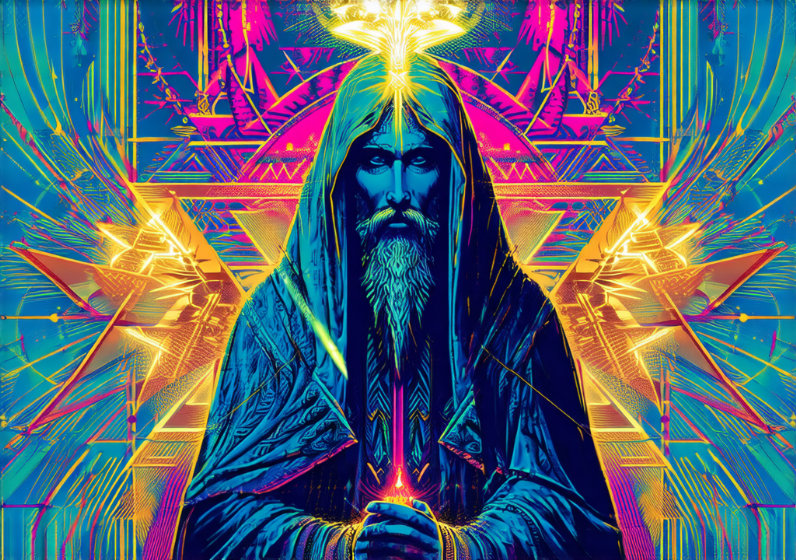
The Final Page of the Codex Was Left Blank on Purpose — Because They Want You to Write It
The Unwritten Testament: Why the Final Page Remains Awaiting Your Ink
There is a peculiar silence that gathers in the margins of ancient texts. It is not merely an absence of sound; it is a presence, a waiting, a held breath suspended between the final written word and the reader’s interpretation. In the study of demonology—the systematic understanding of the infernal hierarchy, their natures, their contracts, and their interactions with the mortal realm—we encounter many such silences. Most are accidents: ink that ran dry, parchment that tore, scribes who grew tired or ill. But some silences are architectural. They are built into the text as deliberately as the first word was chosen. They are doors left unlocked.
Nowhere is this principle more elegantly executed than in the final page of the Codex. For decades, scholars have debated whether the blankness of the concluding folio of several foundational demonological texts was a production error, a loss to water damage or fire, or simply an economic necessity where the binder ran out of vellum. We argue it is none of these. The final page of the Codex was left blank on purpose because they want you to write it.
This is not poetry; this is protocol. In the architecture of the infernal, nothing is ever truly finished. Everything remains in a state of potentiality, waiting for the mortal participant to complete the circuit. By leaving the final page open, the authors—whether human scribes or their infernal patrons—created a space where the reader becomes the author, and in doing so, enters into an implicit contract that was never explicitly signed.
To understand why this is true, we must first dismantle the common perception of the Codex as a static object. We tend to view these texts—the Lesser Key of Solomon, various grimoires attributed to pseudo-Christophers or obscure medieval alchemists—as books. Objects. Things that sit on shelves and accumulate dust. But in demonology, a text is not an object; it is a ritual container. It is a vessel for force. And like any vessel, it must be open at the top if you intend to pour anything into it or draw anything out of it.
The blank page is that opening. It is the chalice waiting for wine. It is the altar awaiting sacrifice. It is the contract with the signature line left clear because a contract without your name on it is merely a draft, not a binding document. The demons who inspired these texts are ancient, patient, and profoundly bureaucratic. They do not deal in vague suggestions; they deal in formalities. A blank page is the most formal formality there is. It says: Here is the space. Here is the authority. Fill it with your will, or leave it empty and let them fill it with their own.
Consider the nature of demonic contract law as understood through centuries of ceremonial practice. We speak of binding spirits, but we rarely speak of being bound by the act of reading. When you open a grimoire, you are not merely observing; you are participating. Your eye moving across the letters is a form of incantation. Your understanding of the words is a form of interpretation that carries spiritual weight. If the text ends with a command, your mind completes the sentence. If the text ends with a question, your subconscious begins to formulate an answer. The blank page accelerates this process to its logical extreme. It removes all mediating language between you and the infernal. There is no scribe’s voice telling you what to think. There is only the silence of the parchment and the noise of your own mind.
This is why the masters of old were so particular about which grimoires they kept close and which they stored in locked cabinets or even burned when a particular rite was complete. They understood that an open text is an active ritual site. A closed book is a sealed jar; an open book with blank pages is an unsealed cauldron. The energy flows differently. The invitation is broader.
Let us look at the specific mechanics of this phenomenon. In ceremonial magic, we often use the term "correspondence." Certain colors correspond to certain planets; certain herbs correspond to certain qualities; certain hours of the day correspond to certain archangels or demons. Correspondence works because it creates a bridge between two realms that are otherwise separated by an unbridgeable distance. The blank page is the ultimate correspondence. It corresponds to the reader’s unique spiritual signature. No two readers will write—or imagine—the same words on that final page. A warrior would fill it with commands for victory; a scholar, with questions of hidden knowledge; a lover, with oaths of devotion or curses of jealousy. The page adapts to the user because it is empty. It has no fixed identity until you give it one.
This adaptability is precisely what makes it dangerous. A fixed text can be analyzed, critiqued, and understood. You can say, "The scribe meant X," or "This passage is metaphorical." But a blank page cannot be misinterpreted because it contains no interpretation. It projects your own psyche back at you with the clarity of a mirror. And in demonology, mirrors are not always to be trusted.
There is a tradition among certain European covenants that when a grimoire reaches the final page, the practitioner must either write their personal sigil or their true name on it. This transforms the book from a public document into a private covenant. The book now knows you. You know the book. The relationship shifts from reader-to-text to partner-to-partner. In some accounts, practitioners report that after writing their name on the final page of a specific Codex, they began to receive dreams or inspirations that were clearly not originating in their own mind but seemed to come through the text itself. The blankness had been filled, and the channel was open.
But what if you do not write anything? What if you simply turn the blank page over, close the book, and set it on the shelf? This is also a choice. In the infernal bureaucracy, inaction is not neutrality; it is permission. By leaving the page blank, you are granting the text—and by extension, its authors—full creative control over your interpretation. You have allowed them to write the final word through their own subtle suggestions, their chosen imagery, and the specific sequence of symbols that precede the blankness. The demons do not need you to sign a contract in ink; they can use your free will as the pen. Your unresisted thoughts become the writing.
This is why we say "they want you to write it." It is not a request; it is an expectation. The structure of the Codex is designed to pull the reader toward that final page. The narrative arc of most grimoires leads you through stages: preparation, invocation, negotiation, manifestation, and finally, the blank space. You have been guided step by step to this moment of openness. Your mind is warmed up, your will is focused, your attention is sharpened. And then, the text stops talking. It steps back. It clears a room for you.
In the context of demonology, this clearing of the room is an act of hospitality that carries the weight of a trap. The demons are not malicious in a cartoonish sense; they are alien intelligences with different operational parameters than human beings. To them, a blank page is not empty space; it is full potential. It is a field of all possible outcomes, waiting for collapse into a single reality. By inviting you to write on that page, they are inviting you to help them collapse that field. You are using your creative will—your most potent spiritual resource—to shape the final form of a document that was not authored by you.
This has practical implications for practitioners who work with these texts. We recommend a specific protocol when approaching the final blank page:
First, do not rush it. Do not let curiosity drive you to flip to the end of the book before you have fully processed the material within. The final page is not an afterthought; it is the keystone of the arch. If you have not built the rest of the structure with understanding and intention, the kestone will not hold.
Second, prepare your pen or brush as you would any ritual tool. Cleanse it. Anoint it if your tradition requires it. The instrument with which you write on that page becomes part of the contract. If you use a cheap ballpoint pen, you are signing a casual note. If you use quill and iron-gall ink, you are executing a formal deed. Choose the tool that matches the weight of the covenant you feel you are entering.
Third, decide in advance whether you will write or not. This is counterintuitive. Usually, we believe in spontaneity in ritual. But with the final page, spontaneity is too open to being hijacked by subconscious associations pulled from the text’s prior content. Decide beforehand: "I will write my true name," or "I will write a specific commandment," or "I will leave it blank and seal the book." Once you have decided, execute that decision without second-guessing. The demons feed on hesitation; they are experts in reading the micro-expressions of uncertainty in a human mind.
Fourth, if you do write, keep your eyes open. It is tempting to close your eyes to "feel" what should be written. But closing your eyes opens other channels that may not be as stable or safe as your conscious will. Keep watching the ink flow. Keep observing the letters forming. Maintain the human side of the transaction.
Fifth, after you have completed the writing on the final page, do not read it again immediately. Set the book aside for at least a day, preferably longer. Let the words settle into their new state as part of the text. When you return to the book, approach it with fresh eyes. You will find that the blank page no longer feels empty; it feels completed, and the completion has altered your relationship to the entire Codex.
This dynamic is not unique to the Codex in question. It appears throughout the history of occult literature. The Piccola Key ends with a meditation on silence. The Book of Angels and Demons concludes with an open-ended dialogue between the practitioner and the spirit, leaving the final response unwritten. Even the Bible, in its original Hebrew, has several passages where the scribes appear to leave spaces for later interpretation—spaces that different traditions have filled differently over centuries.
The pattern is consistent: the texts that deal most directly with the infernal are the ones most likely to end in openness rather than closure. The texts that deal with divine matters tend to be more definitive, more closed-form. Why? Because divinity is presented as a finished product; creation is complete and we inhabit it. Demonic or infernal matters are presented as ongoing negotiations; creation is still unfolding, and the reader is part of that unfolding.
This has profound implications for how we teach demonology today. Too often, we present these texts as historical artifacts to be studied objectively. "Look at this 17th-century grimoire; look at its cultural context." And while that study is valuable, it misses the operational reality of what these books are. They are not history; they are technology. They are tools for a specific type of spiritual engineering. And like any tool, their effectiveness depends on how you use them and what you put into the spaces they provide.
The blank final page is the most honest part of the Codex. It admits that the text cannot speak for you. It admits that the contract requires your active participation. It admits that in the infernal realm, knowledge without action is merely data; it does not generate power. Only the written word—specifically, your written word—generates the force needed to make a spirit obey, to make a gate open, or to make a blessing stick.
There is a beautiful irony here that deserves emphasis. The demons, who are often characterized as tricksters and deceptors, have created a text whose greatest trick is transparency. They show you the blank page. They let you see the space where your name will go. They do not hide their need for your participation; they celebrate it. They want you to write because they know that your writing makes the contract real in a way their own authorship cannot. Your free will, once committed to parchment, becomes a binding force even for beings who operate outside the normal laws of causality.
This is why the blank page should be treated with reverence and caution. It is not just a page; it is an invitation to co-author reality. And in demonology, co-authoring with infernal beings means sharing responsibility for the narrative that unfolds. If you write a command and then neglect to follow through on the human side of the bargain, the text still holds your word. The blank page becomes a record of your intention, and records have power.
As we continue to study and practice demonology in the modern era, let us not forget this principle of the open ending. Let us approach every grimoire with the understanding that it is waiting for our completion. Let us write on those final pages with clarity, with caution, and with full awareness of what we are signing up for. The Codex was left blank because they want you to write it. Take that invitation seriously. Choose your words carefully. And remember: in the infernal realm, a blank page is not empty space; it is an open door, and once you walk through it, you have written yourself into the story whether you intended to or not.
The silence of that final page speaks louder than any commandment could ever hope to achieve. It says: You are here now. The text has done its part. Now do yours. And in that exchange—between the ancient ink and your fresh signature—the truest form of demonological contract is sealed. Not with fire, not with blood, but with the simple, profound act of a human being completing a page left open by the will of something older than memory.
The Codex waits. The pen rests in your hand. And the final line remains unwritten until you decide what it shall say.