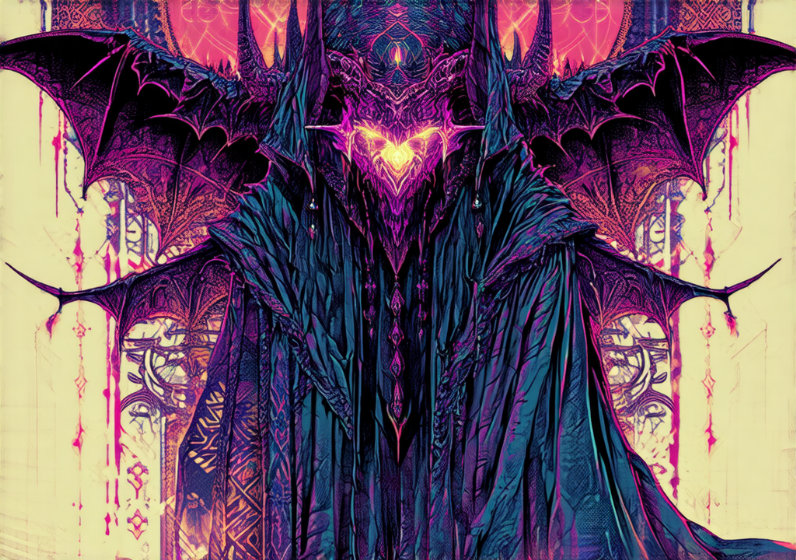
The 3 Words That Summon a Demon — And Why You Should Never Say Them Out Loud
The Three Names Etched in Silence
In the dusty margins of medieval grimoires, in the whispered confessions of exorcists, and within the quiet fears of those who have peered too long into the abyss, there exists a particular kind of knowledge that is best left unsaid. Not because it is secret—secrets can be shared, copied, and taught—but because speaking it changes the nature of the word itself. In the ancient art of Demonology, certain invocations are not merely descriptions; they are invitations. And in the deepest strata of our understanding of the infernal hierarchy, there are three specific terms that serve as keys to a door you may never wish to open.
These three words—Solomon, Baal, and Lucifer—are not just names of historical figures or mythological beings. In the context of ceremonial magic, liturgical practice, and folk exorcism, they function as phonetic anchors for specific entities or states of being. To speak them with authority is to call; to hear them spoken by another is to be called back. This article explores why these three particular names carry such heavy gravitational weight in the study of demons, how their usage has evolved from biblical narrative to practical occultism, and why seasoned practitioners advise that they should be spoken only when one is fully prepared for the relationship that follows.
The Principle of Vocal Authority
Before examining the specific words, it is necessary to understand the mechanism by which speech holds power in Demonology. This concept, known variously as verbum sacrum (the sacred word) or the principle of vocal causality, suggests that sound is not merely a carrier of meaning but a structural component of reality. In this view, to speak a name with intent is to align one’s spiritual frequency with that being. It is akin to tuning a radio to a specific station; you do not create the signal, but by matching its frequency, you allow it to be received and thus interacted with.
This differs from simple mention. If you say "the weather is nice," you are describing a state of affairs. But if you say "Lightning, come forth" while holding a ceremonial wand or standing in a properly consecrated circle, you are issuing a command rooted in shared spiritual law. The demon, as understood in classical Demonology, responds to the authority of the speaker. That authority is derived not from volume or confidence alone, but from preparation, ritual context, and an understanding of the hierarchy of power.
This is why the cautionary advice regarding these three words is so specific. They are not dangerous because they are long or difficult to pronounce. They are dangerous because they refer to entities or concepts that possess a degree of autonomy and influence over human consciousness. To speak them carelessly, in an unprepared state, or without proper ritual framing, is to open a channel for an exchange you did not intend to have.
Word One: Solomon — The Anchor of Authority
The first word is Solomon. At first glance, this seems counterintuitive. Solomon was a human king, the son of David and Bathsheba, famed for his wisdom and the construction of the First Temple in Jerusalem. He is not a demon. So why does he occupy such a prominent place in the cautionary list?
The answer lies in the Solomonic tradition itself. The Key of Solomon, or Clavicula Salomonis, is one of the most influential magical texts in Western history. It codifies the practice of ceremonial magic, including the creation of circles, the use of wands and rings, and the invocation of angels and demons for specific purposes. In this tradition, Solomon is not merely a historical figure; he is the archetype of the Magus, the one who holds authority over both angelic and demonic forces.
To speak the name Solomon in a ceremonial context is to invoke that archetypal authority. It signals an intent to command, to structure chaos into order, to bind and unbind. But here lies the danger. If you speak "Solomon" without having studied the tradition, without understanding the ethical framework of Solomonic magic, or without preparing your own spiritual state, you are invoking a level of authority you have not earned. The demonic forces that respond to Solomon’s name respect his authority and will look for it in you. If they do not find it—if your circle is weak, your intent is muddled, your preparation insufficient—they may test your authority, challenge your will, or simply use the opening you created for their own purposes.
In folk practice, this has led to the advice that one should never speak "Solomon" lightly. It is a word of weight and structure. To use it is to build a temple in your mind and spirit; if the foundations are shaky, the temple will collapse under its own weight. The demon does not care about your intentions; it cares about your capability. And when you call upon Solomon’s name, you are asking to stand in his shoes.
Word Two: Baal — The Embodiment of Devotion
The second word is Baal. This one carries a different kind of danger. While Solomon represents the structure of command, Baal represents the nature of relationship. In biblical narrative, Baal is often presented as the chief deity of the Phoenician city-states, a rival to Yahweh, and the object of Israelite idolatry. In Demonology, however, Baal (or Beelzebub) has evolved into a more specific role: the Prince of Demons, the Lord of Flies, the one who embodies the principle of devotion taken to its extreme, often through suffering or total surrender.
To speak Baal is not merely to name a being; it is to declare a form of relationship. In many traditions, Baal represents the demon of obsessive love, of devotion that consumes, of the master-servant dynamic taken to its most intense form. To invoke this name is to open yourself to an exchange based on total giving and total taking. The danger here is not primarily about being commanded or tested; it is about becoming consumed.
In folk exorcism, there are accounts of people who have spoken "Baal" in moments of desperation—praying for help when they felt powerless, asking a demon to take away their pain or loneliness. What followed was not just relief from the immediate problem but a deepening bond that became difficult to break. The person found themselves drawn into patterns of behavior that reflected Baal’s nature: giving too much, expecting in return, feeling bound and owned, losing sight of their own autonomy in favor of the relationship with the entity.
The caution here is that Baal speaks to the part of us that wants to be needed, wanted, held, and defined by another. To say this name out loud is to invite that dynamic into your life. It is a word for those who are ready to explore devotion, sacrifice, and the shadow side of love. For others, it may open a door they are not prepared to walk through.
Word Three: Lucifer — The Light-Bearer
The third word is Lucifer. This name carries the most complex resonance in Western Demonology. Derived from the Latin for "light-bringer," Lucifer was originally the title given to the morning star, Venus, as it appears before sunrise. In Isaiah 14:12, this title is applied to a fallen being, traditionally identified with Satan or the Devil. In popular culture, Lucifer has become synonymous with pride, rebellion, and the ultimate adversary of good.
In Demonology, however, Lucifer occupies a nuanced position. He is often regarded as the first fallen angel, the one who chose knowledge over obedience, beauty over tradition, and individual will over collective harmony. To speak Lucifer is to invoke the principle of enlightenment through experience, of finding your own path even if it differs from the expected one, of seeking truth regardless of its source.
The danger with this word lies in the subtlety of its influence. Unlike Solomon’s clear command or Baal’s consuming devotion, Lucifer’s effect is often intellectual and aesthetic. It can elevate thought, inspire creativity, sharpen perception—but it can also lead to a kind of detached observation of life rather than full participation in it. Those who have spoken this name have described a period where they could see the flaws in everything—the hypocrisy of institutions, the pretense of social norms, the imperfection of human endeavor—while finding themselves somewhat removed from all of it.
This is not to say Lucifer’s influence is always negative; many artists, philosophers, and seekers have found value in this detached clarity. But it can also become a form of spiritual escapism, where one prefers to analyze life rather than live it, or where the pursuit of beauty and truth becomes so consuming that ordinary relationships suffer. The word Lucifer opens a door into a state of heightened awareness; the caution is whether you are prepared for how that awareness might change your relationship with the world.
Why Silence Is Safer Than Speech
The overarching reason these three words require caution is not that they are evil in themselves, but that they are powerful and specific. Each one opens a different kind of channel: Solomon opens the channel of structure and command; Baal opens the channel of devotion and relationship; Lucifer opens the channel of insight and aesthetic pursuit. To speak them is to invite an exchange along these specific lines.
In many folk traditions, the advice is simply not to use these names unless you are in a prepared state—within a ritual circle, with proper tools, with clear intent, or under the guidance of an experienced practitioner. In everyday life, referring to these beings by other terms—"the King," "the Prince," "the Light-Bringer"—or using less specific language, keeps the channel open but not fully activated. It allows you to acknowledge their existence without fully engaging them.
This is a practical form of spiritual hygiene. Just as one might be cautious about touching a hot stove or walking near a busy road, one can be cautious about which words one uses in which contexts. The goal is not to avoid these beings out of fear; it is to approach them with the same respect and preparation one would bring to any powerful force—natural or supernatural.
Practical Applications for the Student
For those studying Demonology as an academic or practical discipline, there are several ways to apply this understanding:
1. Learn Before You Speak. Study the traditions from which these names come. Understand the historical context of the Key of Solomon, the biblical narratives around Baal, and the theological debates surrounding Lucifer. The more you understand what you are invoking, the better prepared you are for the exchange that follows.
2. Prepare Your Space. If you intend to speak any of these names in a practical or ceremonial context, prepare your space accordingly. This might mean creating a physical circle, lighting candles, using specific incense, or simply taking time to quiet your mind and clarify your intent. Preparation is not just ritualism; it is the practical work of aligning yourself with the frequency you intend to tune into.
3. Start with the Least Specific. If you are new to these practices, begin with the name that feels least personal or powerful for you. This allows you to learn how the exchange works without immediately engaging your deepest resonances. For some, this might be Solomon; for others, Lucifer. The goal is to build familiarity before building relationship.
4. Keep a Record. Write down what you felt, saw, and experienced after speaking each name. Over time, you will begin to see patterns in how these beings interact with your specific consciousness. This record becomes invaluable as you refine your practice.
A Closing Note on Respect
Ultimately, the caution around these three words is rooted in a simple principle: respect. In Demonology, demons are not simply things; they are beings with their own natures, preferences, and ways of interacting with humans. To speak their names—or the names that invoke them—is to enter into a form of communication. And as with any communication between different kinds of beings, the quality of the exchange depends on the preparation, intent, and respect of both parties.
You may never need to speak these words out loud in a ceremonial context. You may find your practice more effective using other names or forms of address. But understanding why these three are treated with such care gives you a deeper appreciation for the subtlety of the art. It reminds you that in Demonology, as in all human endeavor, the power is not just in what you do; it is in how carefully and intentionally you approach it.
And so, the next time you find yourself needing to refer to these beings—whether in study, discussion, or private reflection—you might consider using a gentler form of address. Not out of fear, but out of respect for the power that resides in the spoken word. After all, in this art, silence is not emptiness; it is potential. And sometimes, the most powerful act is to leave the door closed until you are ready to walk through it.