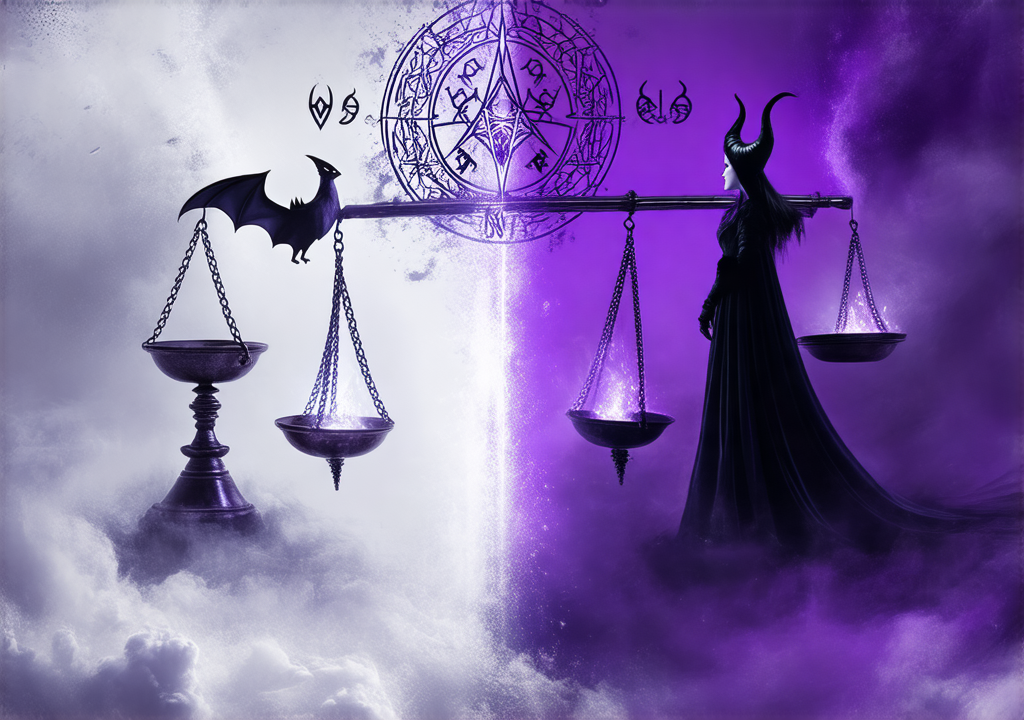
Psychic Vampirism: The Ancient Power Hiding in Plain Sight
🔮 Psychic Vampirism: The Hidden Energy Exchange in Human Connection ✨
A Quiet Drain You Can Feel but Cannot See 👁️
There are people who make you feel lighter after time together. They laugh, they listen, and when parting ways, your energy feels gathered, perhaps even more vital than before. And then there are the others. The ones who leave you mentally exhausted, emotionally hollowed out, or strangely irritated as if a small piece of your vitality has been siphoned off through an invisible straw. You did not argue with them. You did not work overtime. You simply existed in their presence.
This is the quiet signature of psychic vampirism. It is less about literal blood and more about energy, attention, emotional resonance, and subtle energetic exchange. In occult circles it has been whispered about for centuries as a parasitic spiritual practice. In psychology it appears under names like emotional drain, codependency, or energizing behavior. And in modern wellness culture it shows up as the invisible cost of being around people who take far more than they give.
Psychic vampirism is not always malicious. Sometimes it is simply a habit that has gone unexamined. At other times, it becomes a deliberate technique used to sustain another person's life force at someone else's expense. Understanding this dynamic is the first step toward reclaiming your energy, setting boundaries, and recognizing when you are giving far more than you receive.
A Brief History of Energetic Parasitism 📜
The concept of psychic or spiritual vampirism has ancient roots. In Egyptian mythology, the ba—a form of soul or life force—could be separated from the body and consumed by spirits. In Norse tradition, the draugr were undead beings that could drain vitality through touch. The Celtic world spoke of fairies who would steal a person's strength or mind, leaving them listless and weak. These myths all point to one intuitive truth: that human connection is not just social but energetic.
In Hindu and Buddhist traditions, subtle energy systems such as the nadis and chakras have long described how prana—the life force—can be transferred between beings. A healer might draw in your vitality to restore another patient. In some traditions this is seen as a sacred act of exchange. But when it becomes one-sided, unbalanced, or done without consent, it shifts from healing to taking.
In the Western occult tradition, psychic vampirism has been discussed by esoteric writers such as Arthur Orme, Aleister Crowley, and later figures in Theosophy and New Thought movements. They described how advanced practitioners could draw energy across distance, using a person's emotional state or attention as fuel for their own spiritual work. In some cases this was consensual, like an energetic donor relationship. In others it was less transparent.
By the twentieth century, psychologists began describing these phenomena in secular terms. Carl Jung spoke about how unconscious archetypes could draw energy from relationships. Viktor Frankl wrote about the human need for meaning and how people who lack inner purpose can unconsciously borrow from others. Modern psychotherapists have coined phrases like "emotional vampires" to describe those who consistently deplete the emotional resources of those around them.
So whether you frame it through ancient myth, esoteric practice, or modern psychology, the core idea remains: energy flows between people in ways we can feel even if we cannot see. And sometimes that flow is unbalanced.
What Exactly Is Psychic Vampirism? 🌬️
At its simplest, psychic vampirism refers to the unconscious or conscious drawing of another person's mental, emotional, energetic, or spiritual vitality without proportional return. This is not about a literal bite. It is an invisible exchange where one party gives far more than they receive, often leaving them feeling drained while the other person remains energized, cheerful, or at least less affected.
In an occult framework, this can be understood in several ways:
Energetic drain through subtle body connections
Emotional siphoning where feelings are borrowed and not returned
Attention-based feeding, where a person thrives on being the center of someone's focus
Psychic resonance that allows one consciousness to borrow another's life force
Intentional drawing using ritual, meditation, or meditative practices
In a more psychological framing, it shows up in:
People who constantly need emotional support but rarely offer it
Friends or partners who expect you to adjust your schedule, mood, and energy around their needs
Colleagues who drain your mental bandwidth with endless venting without offering reciprocity
Family members who take from your time, patience, and care while giving little in return
The common thread is imbalance. A healthy relationship—friendship, partnership, family, or workplace collaboration—involves mutual flow. Psychic vampirism breaks that symmetry. One person becomes a reservoir, the other becomes a consumer.
It is important to note that psychic vampirism exists on a spectrum. At its mildest end, it looks like someone who needs your attention more often than they should, or who habitually interrupts and redirects conversations back to themselves. At its most extreme, it involves deliberate practices where one person uses meditation, ritual, or energetic techniques to draw another's vitality without their knowledge or consent.
The Spectrum of Psychic Vampires 🎭
Not all psychic vampires are the same. Recognizing different types can help you understand what is happening in a specific relationship and choose an appropriate response. Here is how they tend to present:
The Emotional Sponges 💧
These individuals absorb your emotions, then treat them as their own. You share a worry, a joy, or a grief—and suddenly it has become their story. They may cry over something you described in passing. They might celebrate or mourn alongside you but rarely ask how you are feeling when the tables turn. Over time, your emotional experiences feel borrowed and recycled through them, leaving you unsure of what is actually yours.
The Attention Seekers ✋🏻
These people need to be at the center of every conversation. They interrupt, redirect, or subtly compete for attention. You begin to monitor how much you talk so as not to take too much space from them. Conversations become a quiet negotiation where your presence feels like an intrusion on their spotlight.
The Grief Consumers 🕯️
Paradoxically, some people thrive when others are in pain. Your struggles give them purpose, attention, and a way to feel needed. They offer comfort but rarely check back after the crisis passes. You notice that you keep reaching out because they seem so devoted during your difficult moments, yet the relationship feels thinner as time goes on.
The Energy Borrowers 🌀
These individuals have low personal vitality or an underdeveloped inner life. They unconsciously borrow from more energetic people to feel alive and capable. Around them, you might feel tired, foggy, or emotionally flat. Leave their presence for a few hours, and your own energy seems to return.
The Silent Drainers 🤫🏻
Perhaps the most subtle type. They do not take much of your time or attention in any obvious way. But simply sharing space with them leaves you tired. You might describe them as "heavy" without knowing why. In an energetic framework, their inner state creates a kind of resonance that pulls at yours until both become drained.
The Intentional Practitioners 📖🏻
In some spiritual or occult traditions, psychic vampirism is practiced deliberately. A healer might draw energy from one client to heal another. A guru might unconsciously or consciously siphon followers' vitality to fuel their own work. In the most esoteric versions, practitioners use meditation, visualization, or ritual to create energetic bridges between themselves and others. When this is transparent and consensual, it can be a valid spiritual practice. When it becomes hidden or exploitative, it becomes a form of subtle parasitism.
How Psychic Vampirism Works 🧩
Understanding the mechanics helps demystify what might otherwise feel like an intangible or mystical experience. Here are some common pathways through which psychic vampirism operates:
Emotional Resonance
Human beings are naturally empathic creatures. When you spend time with someone, your nervous system tends to mirror and adjust to theirs. If they carry a heavy emotional state—worry, sadness, restlessness—your body may absorb a portion of that weight without you consciously deciding to do so. Over months or years, this becomes a form of energetic borrowing where their inner weather becomes yours to carry.
Attention Flow
Attention is one of the most powerful forms of energy we possess. When someone is in distress, they naturally draw attention from those around them. Friends, partners, colleagues all lean in, adjust their schedule, and shift their emotional focus toward the person who needs support. If this happens repeatedly and reciprocation never follows, you end up giving far more attention than you receive.
Subtle Body Exchange
In many esoteric traditions, humans have a subtle or energy body that extends beyond the physical form. This is where prana, chi, aura, or life force exists. During close interaction—conversation, touch, shared space—these fields overlap. If one person has stronger vitality or a more developed subtle body, they can unconsciously draw from the other. In some traditions this is called "energy exchange." When balanced, both benefit. When unbalanced, one becomes drained.
Psychic Parasitism in Meditation or Ritual
Some spiritual practices involve focusing intention on another person's energy field. Healers might visualize drawing pain away from a patient and transferring it into their own subtle body. Teachers may unconsciously pull attention from students to fuel their own creative work. In the most advanced versions, practitioners use visualization to create energetic links that allow them to draw vitality across distance.
Psychological Conditioning
Over time, relationships shape our sense of self. If you are always the listener, the supporter, or the calm one in a partnership, your nervous system learns to organize itself around that role. You begin to feel energized only when giving and drained when taking. This is a form of psychological vampirism where your own needs become invisible even to yourself.
Signs You Are Being Psychically Drained 🔍
Recognizing the pattern requires some self-observation. Look for these recurring signs:
You consistently leave interactions feeling more tired than you came in
Your mood drops after spending time with a specific person or group
You feel guilty when trying to set boundaries, as if saying "no" is selfish
Conversations revolve around them and their concerns, not yours
You often cancel plans to avoid the emotional cost of seeing someone
You notice your energy returning only after leaving their presence
You find yourself repeating conversations that should have concluded long ago
You feel responsible for their emotional state even when they are fully capable adults
A useful test: compare how you feel before and after a typical hour with this person. If the gap is significant, you may be in an energetically unbalanced relationship.
Setting Energetic Boundaries 🛡️
Once you recognize psychic vampirism as a pattern rather than a personality flaw on their part (though it can be both), you have options. Here are some practical ways to protect your energy:
Create Physical Distance
Sometimes the simplest boundary is also the most effective. Reduce face-to-face time. Move interactions to phone or text, which creates a natural limit on how much subtle energy is exchanged. If you must meet in person, keep visits shorter and end them before you feel fully drained.
Visualize an Energetic Shield
In many esoteric traditions, practitioners visualize a barrier between themselves and others during interaction. This can be a sphere of white light, a wall of blue flame, or any image that feels protective to you. The goal is not to create hostility but to reduce the degree of unconscious energy transfer.
Practice Grounding
Grounding techniques—deep breathing, walking barefoot on grass, holding cool water in your hands, or simply focusing on physical sensations—help keep more of your life force within your own body rather than leaking out through subtle resonance with another person.
Be Honest About Your Limits
You do not owe someone unlimited emotional labor. A simple sentence like "I care about you, but I need to step away for a while" is enough. You are not required to justify your boundaries at length.
Reciprocity Check
Ask yourself: how much does this person give me that helps me feel alive? Not just practical help, but emotional warmth, encouragement, curiosity, or companionship. If the answer is very little over an extended period, consider whether you want to maintain the relationship in its current form.
Choose Your Circle Carefully
You cannot control everyone's behavior, but you can choose who spends a large share of your time and energy. Build friendships with people whose presence leaves you energized rather than depleted. This is not selfishness—it is basic self-care.
The Healer's Paradox 🌿🏻
Interestingly, some of the most common psychic vampires are also healers, coaches, therapists, or spiritual teachers. They spend so much time helping others that they become depleting in their personal relationships because they have forgotten how to receive. Their generosity becomes a one-way flow. Friends and partners end up giving them emotional support while they give almost nothing back—because the role of "giver" has been locked into their identity.
In esoteric terms, this is called an energetic imbalance between the solar plexus (personal power) and the heart center (love). The healer gives from a place of need rather than abundance, which subtly turns generosity into consumption.
Psychic Vampires in Romance 💞🏻
Romantic relationships are perhaps the most common setting for psychic vampirism to become visible. A partner who is constantly in crisis needs your full emotional attention. They may be genuinely struggling, or they may have learned that you respond best when they are in pain. Either way, you find yourself managing their emotions as if it were a job with no end in sight.
In subtle cases, one partner has an underdeveloped inner life and borrows from the other to feel whole. The more energetic partner feels like they must be the source of all warmth and inspiration. Over time this can feel like living with a mirror that only reflects back your own energy rather than adding anything new.
A balanced partnership involves two people who bring their own vitality into the relationship, not one person borrowing from the other to function.
Can You Heal a Psychic Vampire? 💫🏻
Sometimes yes—especially if they have some self-awareness and are willing to work on their energetic habits. Healing usually involves:
Learning to generate their own emotional stability rather than borrowing it
Developing a healthy inner life through meditation, art, nature, or creative practice
Understanding the difference between giving from abundance and giving out of need
Building relationships with people who challenge them rather than simply drain them
Occasionally doing energetic cleansing—baths, smudging, visualization, or simple rest in nature
Sometimes no. If someone has made vampirism a core identity—a way to feel needed and important—healing becomes harder because it means letting go of the very behavior that gives them purpose. This is where patience, gentle honesty, and clear boundaries become essential tools for anyone who loves them.
An Esoteric Perspective 🕯️🏻
From an occult or metaphysical viewpoint, psychic vampirism can be understood as a natural energetic exchange that has gone out of balance. Humans are not isolated energy systems; we are nodes in a larger web of subtle connection. Every conversation, every glance, every shared meal involves invisible flows between people. The goal is not to isolate yourself from all exchange—that would be its own form of vampirism through control—but to participate consciously and reciprocally.
In many traditions, ritual helps establish clear boundaries on these exchanges. A simple practice might include:
Visualizing a circle or sphere around your subtle body before interactions
Breathing out stale energy at the end of social gatherings
Grounding yourself in nature after emotionally heavy days
Taking time alone to regenerate personal vitality
Over time, this creates an inner reservoir that makes it harder for others to deplete you without notice.
A Closing Reflection 🌙🏻
Psychic vampirism is not a curse or a punishment. It is simply the human tendency toward unbalanced exchange made visible through energy rather than money. Recognizing it in relationships, workplaces, and families can be an act of quiet empowerment. You learn to see what was invisible, name what was confusing, and begin protecting your own life force with the same care you have so generously given others.
In the end, psychic vampirism is a mirror that shows us how much energy we are willing to give—and where our boundaries need strengthening. It asks a simple question: are you giving because it feels right, or are you giving because someone else needs you to be their source of light? Both can be healthy. Only one becomes sustainable over time.
And if you have ever left a conversation feeling like your battery had been quietly drained—now you know what that feeling is made of. It is not weakness. It is a sign of a relationship in which the flow has gone one way for too long. And now, knowing this, you can decide how much light you wish to share and how much you need to keep glowing for yourself. ✨