Mystic Secrets Revealed: The Art of Folk Rituals
🌙 The Hidden Threads: Unveiling the Ancient Craft of Folk Rituals
By Aldric Morwenna, Keeper of the Veil
In the quiet hours when the moon hangs low and the world holds its breath, there exists a tradition older than any written scripture. It is not found in grand temples or illuminated by chandeliers, but rather in the smoke of a kitchen hearth, the pressing of flowers between the pages of a well-loved book, and the whispered words spoken over a cup of tea before it cools. This is the realm of folk ritual—a practice so deeply woven into the fabric of human life that we often mistake its presence for mere habit, forgetting the ancient power that breathes through every gesture.
To speak of folk ritual is to speak of the domesticated sacred. While ceremonial magic often demands specific tools, precise geometries, and elaborate invocations, folk ritual thrives on intimacy. It lives in the home, in the body, and in the everyday objects we touch with familiar hands. It is the art of making the ordinary extraordinary, of finding a doorway to the spirit world hidden within the mundane landscape of daily existence. For those who walk the path of ceremonial witchcraft, understanding folk ritual is not merely an academic exercise; it is the very root from which our craft grows. Without this grounding in the practical and the personal, our ceremonies risk becoming hollow performances—beautiful in appearance but devoid of the living breath that gives them power.
🕯️ The Philosophy of the Domestic Sacred
At its core, folk ritual operates on a philosophical premise that might seem counterintuitive to those trained in high ceremonial magic: that the sacred is not separate from the profane. In many ceremonial traditions, we prepare a sacred space by cleaning it, warding it, and setting it apart from the rest of the world. We draw circles to keep out the mundane and let in the divine. Folk ritual, however, does not seek separation. It seeks integration. It suggests that if you tend your garden with love, you are tending a temple. If you cook a meal with gratitude, you are performing an offering.
This philosophy aligns closely with what scholars of religion have termed "immanentism"—the idea that the divine is present within the world rather than existing in some distant heaven. In folk practice, this means that every object possesses a soul or a spirit. The broom that sweeps your floor has memory; it knows every corner of your home and carries the dust of generations. The kettle that boils your water holds the heat of a thousand mornings. When you interact with these objects, you are not merely using them; you are engaging in a subtle exchange of energy.
This is why folk rituals often revolve around domestic tasks. Baking bread becomes a ritual of creation and sustenance. Cleaning the house becomes a ritual of purification and renewal. Washing clothes becomes a cleansing of both body and spirit. By approaching these tasks with intention, presence, and reverence, we transform routine into ceremony. We turn the act of living into an act of worship.
For the ceremonial witch, this is a powerful lesson. It reminds us that magic is not something we "do" to the world; it is how we relate to it. Our power does not come from commanding spirits or forcing nature to bend to our will. It comes from alignment—aligning our intentions with the natural rhythms of life, and aligning our actions with a deep respect for the web of existence that sustains us.
🌿 The Ingredients of Everyday Magic
Folk ritual is built upon the materials at hand. Unlike ceremonial magic, which may require specific crystals, consecrated candles, or rare herbs, folk practice utilizes what is already present in your life. This makes it accessible to anyone, regardless of wealth or location. You do not need a coven or a temple; you need only awareness and intention.
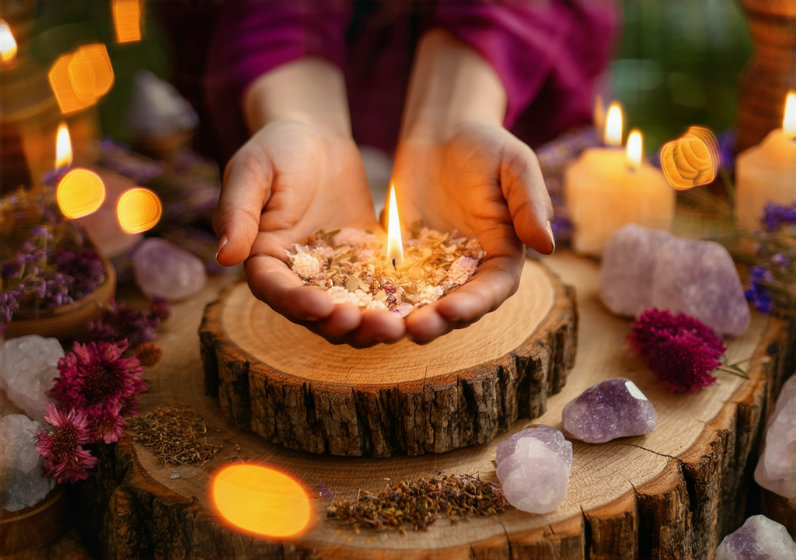
Consider the simple act of lighting a candle. In ceremonial magic, this might involve a specific prayer, a precise timing based on planetary hours, and a particular type of wax. In folk ritual, it is simply that. You light a flame in the dark to guide you. The warmth pushes back the cold; the light pushes back the shadow. It is a physical manifestation of hope, of clarity, of life.
Herbs are another cornerstone of folk practice. While ceremonial magic might use specific herbs for specific spells—rosemary for remembrance, sage for purification—folk tradition sees herbs as companions. They are friends who sit at your table, who sleep in your bed, and who help you through illness or heartbreak. Drying lavender to scent your pillows is not just a practical act; it is an invitation for calm to dwell with you every night. Hanging dried chilies in bundles near the door is not just decoration; it is a protective charm, using their sharpness and heat to ward off negative energies and invite abundance.
Water, fire, earth, and air—the four elements are ever-present in folk ritual. Water washes away sorrow; fire transforms raw materials into something nourishing; earth grounds us and feeds us; air carries our prayers and whispers our secrets to the spirits. These elements are not abstract concepts in folk practice; they are tangible forces that you can feel, taste, smell, and touch.
📜 The Role of Word and Whisper
Language is a powerful tool in folk ritual. Unlike the formal incantations of ceremonial magic, which often draw upon Latin or archaic tongues, folk rituals rely on the spoken word in your native language. This makes them deeply personal. When you speak a blessing over your child's food, you are not just saying words; you are pouring your love and intention into the act.
Folk tales, proverbs, and sayings often contain hidden ritualistic wisdom. "Sweeping out good luck" is a folk belief that actually holds ceremonial truth: if you sweep dust from the center of the house toward the door without opening it first, you are physically moving the accumulated energy (good or bad) outward, preparing the space for fresh energy to flow in.
Whispering is also significant. In many folk traditions, secrets and blessings are whispered rather than shouted. This creates an intimate atmosphere, a private communion between the practitioner and the spirit world. It suggests that magic happens in the quiet spaces, in the small exchanges, not in the grand announcements.
Proverbs like "a stitch in time saves nine" also carry ritualistic weight. They remind us of the power of timely action, of mending what is broken before it tears further apart. In a ceremonial context, this mirrors the concept of karmic balance—tending to small issues prevents larger ones from consuming you.
🏡 The Home as Temple
Perhaps no aspect of folk ritual is more significant than its relationship with the home. For the folk practitioner, the house is not just a shelter; it is a living entity. Each room has a purpose and an energy. The kitchen is the heart of the home, where life is sustained. The bedroom is the sanctuary, where one rests and dreams. The doorway is the threshold, where the inner self meets the outer world.
Folk rituals often mark these spaces with specific actions. Hanging herbs above doorways to welcome guests and ward off ill-wishers. Placing a bowl of salt in the corner of a room to absorb negative energy. Keeping a clean mirror to reflect your truest self and repel spirits that wish to mimic or trap you.
In ceremonial witchcraft, we often construct altars within our homes. But folk ritual suggests that the entire home is an altar. Your table is a place of communion with family and friends. Your garden is a place of communion with the earth. Your wardrobe is a place of communion with your identity. By recognizing this, you expand your sacred space from a small corner to your entire life.
This integration is key for the ceremonial witch. It encourages us to see our homes as extensions of our spiritual practice. When we clean our homes, we are not just removing dirt; we are clearing blockages in our energy fields. When we repair a leaky roof, we are protecting our sanctuary from the elements. These acts become meditations, becoming rituals of care and maintenance that sustain both body and spirit.
🌱 Connection to Nature and Seasons
Folk ritual is deeply rooted in nature's cycles. Unlike some ceremonial traditions that focus on lunar phases or planetary alignments, folk practice often aligns with solar and agricultural cycles. Spring planting, summer harvesting, autumn gathering, winter resting—these natural rhythms dictate the rhythm of folk life.
In spring, folk rituals celebrate new beginnings. Planting seeds is a ritual of hope and potential. You are not just putting a seed in soil; you are burying a wish, a dream, a future possibility. In summer, rituals focus on growth and abundance. Picking berries or fruits becomes an act of gratitude for the earth's generosity. In autumn, rituals turn to preparation and preservation. Canning vegetables or drying herbs becomes an act of storing energy and security against the coming cold.
In winter, folk rituals often focus on introspection and celebration. Lighting candles during the darkest months is a ritual of holding onto light in the face of darkness. Telling stories around the fire is a way of passing down wisdom and keeping the spirit of community alive.
For the ceremonial witch, this seasonal awareness provides a natural framework for practice. It grounds our magic in reality. We are not floating above the world; we are part of it. Our bodies age, grow, rest, and renew just like plants. Aligning our rituals with these cycles helps us stay connected to the physical world, preventing our practice from becoming too ethereal or detached.
👵 The Lineage of Wisdom
Folk ritual is also a tradition of lineage. Unlike ceremonial magic, which often draws on reconstructed ancient systems (like Celtic or Egyptian), folk ritual passes down through families and communities. It is learned by doing, not by reading. A child learns to bake bread from their grandmother; in that learning, they inherit not just a recipe, but a story, a history, and a connection to those who came before.
This intergenerational transmission is powerful. When you perform a folk ritual passed down from your ancestors, you are joining a chain of practice stretching back centuries or even millennia. You are part of a living tradition, not an isolated individual trying to recreate the past. This creates a sense of belonging and continuity that is essential for spiritual growth.
For the ceremonial witch, this offers a valuable lesson: we do not need to reinvent the wheel. We can draw on the rich tapestry of folk traditions from around the world—Slavic, Slavic, Celtic, Norse, African, Native American—and adapt them to our own practice. Each tradition offers unique insights and tools that can enrich our craft.
🕊️ Healing and Protection in Daily Life
One of the most practical aspects of folk ritual is its focus on healing and protection. In times before hospitals and insurance, folk rituals were essential for survival. They helped people deal with illness, loss, fear, and uncertainty. Even today, these practices offer a valuable complement to modern medicine and therapy.
Simple acts like taking cold showers in winter (a practice in many folk traditions) become rituals of strengthening the body's resilience. Drinking specific teas for specific ailments becomes a ritual of seeking nature's help. Writing down worries on paper and burning them becomes a physical release of mental burden.
Protection is another key theme. Folk rituals often focus on warding off negative energies, evil eyes, or ill-wishers. This might involve wearing charms, hanging protective symbols in the home, or performing cleansing rituals after difficult experiences. For the ceremonial witch, this reminds us that magic is not just about creating; it's also about preserving. We must protect our energy, our space, and our relationships from the subtle and not-so-subtle forces that can drain us.
📚 The Blend of Folk and Ceremonial Practice
So how should a ceremonial witch incorporate folk ritual into their practice? The key is integration, not replacement. You don't need to abandon your ceremonial tools or traditions; instead, you can enrich them with the simplicity and intimacy of folk practice.
Start small. Next time you cook dinner, pay attention to the process. Feel the heat of the stove, smell the spices, taste the food. Be present in the act. Turn a mundane task into a mini-ceremony.
Notice your home. Take a moment each morning or evening to simply walk through your house and acknowledge its spaces. Feel the energy in each room. Clean a surface with intention. Light a candle not just for light, but for presence.
Connect with nature. Step outside daily. Touch a tree. Listen to the wind. Observe the clouds. Let these simple interactions ground you and connect you to the larger web of life.
Learn from your lineage. Ask family members about their traditions. What did they do when someone was sick? How did they celebrate holidays? What objects held special meaning in your home? These stories are treasures of folk wisdom.
Experiment. Try a new folk practice that resonates with you. Maybe you want to try drying herbs, or creating a simple charm for protection. See how it feels. Does it bring you peace? Does it make you feel more connected? Trust your intuition.
🌟 The Quiet Power of Presence
In a world that often values speed, efficiency, and spectacle, folk ritual reminds us of the power of slowness, simplicity, and presence. It teaches us to find magic in the moment, not just in the grand gesture. It encourages us to see the sacred in the ordinary and to treat our daily lives as an ongoing act of creation and communion.
For the ceremonial witch, this is a gift. It deepens our practice, making it more personal, more practical, and more alive. It reminds us that we are not just practitioners of magic; we are participants in life. And that participation, done with love and intention, is itself a form of magic.
So, as you go about your day, remember: every action can be a ritual. Every object can be a tool. Every moment can be sacred. Embrace the folk roots of our craft, and let them ground your ceremonies in the rich soil of everyday life. In doing so, you will find that the magic is not out there in some distant realm; it is right here, in the quiet hum of your home, in the warmth of your hands, and in the simple act of being alive.
✨ Final Thoughts: A Living Tradition
Folk ritual is a living tradition. It changes with each generation, adapting to new contexts and needs while retaining its core wisdom. As we continue to practice, we add our own threads to this tapestry. We create new rituals that reflect our own lives, our own times, and our own unique path.
This is the beauty of folk magic: it is personal, practical, and perpetually evolving. It invites us not just to study magic, but to live it. And in living it, we find a deeper connection to ourselves, to each other, and to the world around us. That is the true art of folk ritual.
📖 Recommended Practices for Beginners
If you are inspired to explore folk ritual in your own practice, here are some simple starting points:
Morning Ritual: Light a candle upon waking and set an intention for the day. Take three deep breaths while gazing at the flame.
Gratitude Practice: Keep a small journal by your bed. Each night, write down one thing you were grateful for that day. This simple act shifts your focus toward abundance.
Herbal Companion: Grow or buy a single herb like lavender or rosemary. Use it in your cooking or bathwater. Notice how its scent affects your mood.
Home Cleansing: Once a week, spend 15 minutes walking through your home and touching each wall with an open palm. Feel the energy of the space. Open windows to let fresh air flow through.
Nature Walks: Take a daily walk without your phone or headphones. Observe the sky, the trees, the sounds around you. Let nature teach you patience and presence.
These small acts may seem insignificant, but over time, they build a foundation of ritual living that will enrich your ceremonial practice in profound ways. Trust the process. Trust yourself. And remember: magic is not something you do; it's how you live.