Most Modern Witchcraft Is Wrong (And Here's Why)
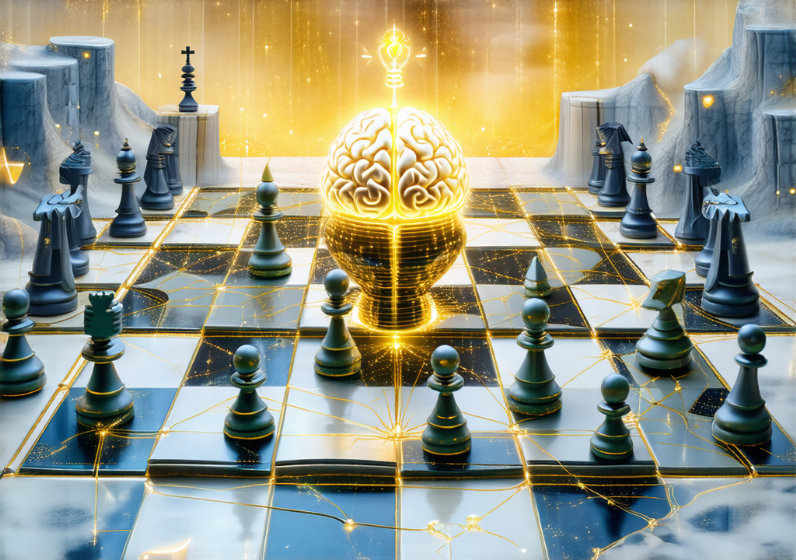
The Gilded Cage of Neo-Pagan Fashion
There was a time when to be a witch was to be whispered about in hushed tones. To speak your name openly invited suspicion, and to practice the old ways required a certain level of theatrical bravery. You did not post photos of your altar on social media. You did not explain your rituals with hashtags. You simply did, often in secret, guided by lineage, local tradition, or the quiet authority of a book pulled from a dusty shelf.
Today, witchcraft is everywhere. It has been unburdened from its superstitions and repackaged for consumption. It sits on the shelves of mainstream bookstores next to productivity guides and skincare routines. It is sold in sleek matte-black candles with minimalist labels. It is taught in weekend workshops at trendy co-working spaces. And because it has become so accessible, so aesthetically pleasing, and so socially acceptable, we have largely lost touch with what made it powerful in the first place. We have confused the packaging for the product.
Most modern witchcraft is not wrong in a moral sense; few witches are trying to deceive or harm others. But it is structurally, historically, and spiritually wrong because it has been stripped of its friction. It has become a lifestyle accessory rather than a ceremonial discipline. And like any accessory that requires no maintenance, it eventually loses its luster.
To understand why modern practice often falls short, we must look closely at the three pillars where contemporary witchcraft most frequently drifts from the ceremonial roots: the misunderstanding of ritual as performance, the flattening of sacred hierarchy, and the commodification of mystery.
Ritual Is Not Content Creation
One of the most visible shifts in modern witchcraft is the way rituals are conceived. In ceremonial tradition, a ritual is an act of creation. You are not demonstrating power; you are inviting it to manifest. The ritual is a bridge between two worlds, and its success depends on precision, intentionality, and often, a degree of discomfort.
In modern practice, however, the ritual has become something that is produced. It becomes content. Think about how many "rituals" in popular witchcraft are designed to be photogenic: beautiful candle arrangements, neat lines of herbs, aesthetic crystals arranged in geometric patterns. The ritual is optimized for observation—by yourself or by your audience on social media.
This subtle shift changes the psychology of the practitioner. When a ritual is meant to be seen, it becomes performative. You are not trying to move a force into action; you are trying to execute a beautiful sequence of steps that looks like witchcraft. The energy goes into making things look right rather than feeling right.
In ceremonial magic and traditional folk practice, the details that matter most are often invisible: the specific angle of your standing stone, the direction you face when invoking, the exact pause between words in an incantation, the temperature of the room, the state of your breath. These are not decorative choices; they are structural ones. They create a container for power to enter and act.
Modern witchcraft often treats these details as optional or interchangeable. If it looks good on camera, it works. And this is where the metaphorical gilded cage is born: you are locked inside an aesthetic of power without actually engaging with the mechanics of power. You have the costume but not the craft.
This is not to say that beauty has no place in ritual—beautiful objects can focus intention and elevate mood. But when beauty replaces function, when the arrangement of crystals matters more than the clarity of your intent, you begin to practice a kind of ceremonial fashion rather than ceremonial work. The altar becomes a set; the spell becomes a script; the witch becomes an actor in her own production.
The Flattening of Sacred Hierarchy
Traditional ceremony relies on hierarchy—not social hierarchy, but sacred hierarchy. There is an order to things: this comes before that, this is greater than that, this requires more preparation than that. Time itself is hierarchical: the solstices carry different weight than a random Tuesday evening. The four directions hold specific correspondences. The elements have distinct natures.
Modern witchcraft has largely flattened these hierarchies in pursuit of accessibility and inclusivity, which are admirable goals but have sometimes come at the cost of structural depth. We now treat a quick candle-lighting "ritual" with the same ceremonial weight as a full seasonal rite. A five-minute grounding exercise is presented alongside a three-hour temple working. The sacred calendar has been reduced to a list of "energy shifts" on a phone app, stripped of their mythological and astronomical depth.
This flattening is not merely an aesthetic issue; it is a functional one. Ceremony works partly because of contrast. A long preparation makes the moment of invocation more potent. A clear hierarchy of actions—preparation, opening, working, closing, grounding—creates a narrative arc that shapes the practitioner's state of consciousness. When you flatten all moments into equal intensity, nothing feels particularly intense.
Consider how a medieval alchemist or a ceremonial magician would structure a working: there is an approach, a preparation, an invocation, a transformation, and a release. Each phase has a different quality and requires a different state of mind. You do not meditate the way you chant. You do not prepare the way you close. The transition between phases is part of the work.
Modern witchcraft often collapses these transitions. We move from "set intention" to "light candle" to "do magic" in a linear, almost mechanical sequence that feels more like following a recipe than entering a sacred space. The ritual becomes procedural rather than ceremonial. And procedure, no matter how well-organized, does not carry the same weight as ceremony.
This is not a criticism of simplicity or accessibility. Many traditional practices were simple—a folk blessing, a household charm, a seasonal observance. But in modern practice, the absence of structure is often mistaken for the presence of it. We skip the preparation because it takes time. We shorten the closing because we are tired. We treat the sacred calendar as a suggestion rather than a framework. And so the ritual becomes lighter, easier, and—unintentionally—less resonant.
The Commodification of Mystery
Perhaps the most profound shift in modern witchcraft is what might be called the commodification of mystery. In traditional practice, mystery was something you approached with respect and patience. You did not fully understand your tools; you learned them through use. You did not know everything about your spirits or deities; you built a relationship over time. There were things you simply accepted because they came from tradition, lineage, or the quiet wisdom of those who walked this path before you.
Modern witchcraft has made everything explainable, purchasable, and consumable. Every herb has a "meaning." Every crystal has a "vibration." Every deity is reduced to a personality trait on a business card. Mystery becomes a product description rather than an experience. You buy a book and think you have acquired knowledge. You purchase a smudge stick and assume the smoke carries some inherent power rather than serving as a vehicle for your own intention.
This is not inherently wrong—knowledge is good, tools are useful. But when mystery is flattened into information, it loses its ceremonial function. Mystery in ceremony serves a specific purpose: it creates space for imagination to operate. When you do not fully understand the mechanism of your working, you must trust it. And that trust requires faith, attention, and a willingness to be uncertain—qualities that are harder to maintain when every aspect of your practice has been explained, labeled, and sold in a flat-lay photo.
Think about how a traditional folk healer would use a plant. She might know the plant's name, its common uses, but she would also carry a story—a memory, a family saying, a sense of which season it should be gathered, which part of the body it corresponds to, what feeling it evokes in her. The knowledge was embodied, not just informational. Modern witchcraft often separates these layers: you learn the "facts" about sage or rosemary, but you do not build a relationship with them through use, observation, and time.
The result is a practice that is intellectually informed but experientially thin. You know what things mean but you have not felt what they do. And in ceremonial work, the feeling—attunement, resonance, presence—is often more important than the explanation.
This commodification also affects how we relate to our own practice. We collect tools, books, and knowledge the way one collects objects. Our shelves fill with crystals, candles, and texts that may or may not be used. The practice becomes a display rather than a discipline. And like any display, it requires maintenance—or it begins to gather dust.
The Loss of Lineage and Local Rootedness
Traditional witchcraft was deeply local. Your practices were shaped by your geography, your climate, your family history, your community. A witch in the Scottish Highlands practiced differently from a witch in the American South or an Irish townland. They had different plants available, different stories to tell, different spirits to work with. Their ceremonies reflected their landscape.
Modern witchcraft is largely de-localized. It has become portable and generic. A witch in London practices much like a witch in Toronto or Sydney, because we all read the same books, watch the same videos, and use the same imported tools. The local spirit—the genius loci—has been largely abstracted into universal symbols: moon phases, zodiac signs, element correspondences.
This is a natural consequence of modernity and globalized information, but it represents a real loss. Ceremony is rooted in place because power is rooted in place. Your landscape, your community, your family history are not just context; they are participants in your practice. When you strip them out or treat them as interchangeable with any other landscape, your ceremony becomes less anchored and therefore less resonant.
This does not mean modern witches must abandon their globalized tools or lose access to a wider knowledge base—these are genuine benefits of the current era. But an awareness of local rootedness, even for those who have no ancestral lineage in witchcraft, can add depth to practice. What plants grow in your area? What stories exist in your community? What is the quality of light and silence in your specific place? These details make a ceremony yours rather than a copy of someone else's.
The Question of Authority
In traditional ceremonial tradition, authority came from lineage, study, and time. You learned from teachers, you read widely, you practiced consistently for years before you felt confident in your work. There was no shortcut; the craft demanded patience.
Modern witchcraft has democratized access to knowledge—this is genuinely wonderful. Anyone with an internet connection can learn about correspondences, ritual structure, and magical theory. But this easy access has also created a strange relationship to authority. We are encouraged to question tradition, personalize everything, and trust our own intuition above all else.
This is healthy in some ways—it prevents blind imitation and encourages genuine personal practice. But it can also lead to a kind of ceremonial anarchy where every detail is negotiable because you decide what matters. The book says one thing; the video says another; your gut says something else entirely. And so you pick and choose, creating a personalized system that works for you but may lack the structural coherence of a more rooted tradition.
This is not wrong—personalization is part of any living practice. But there is a difference between personalizing a structure and dissolving it. A good ceremony has certain non-negotiable elements: a clear opening, a defined working, a proper closing, time for integration. If you strip all of these out in the name of authenticity or intuition, you may find that your practice feels lighter but also less effective. The structure is not a cage; it is a vessel.
Toward a More Grounded Practice
None of this means modern witchcraft should be discarded or that traditional ceremony is superior in an absolute sense. Both have value. The goal here is not to gatekeep or judge, but to identify where common modern practices drift from the ceremonial roots and what can be recovered.
Some practical steps toward a more grounded practice:
Slow down. Most modern rituals are designed for speed because we live in a fast-paced world. But ceremony requires time. Give yourself space to prepare, to breathe, to settle into the work before you begin. Five minutes of quiet preparation is often worth more than an hour of rushed action.
Reduce your tools. You do not need fifty crystals or twenty herbs to practice effectively. Choose a few tools that you genuinely connect with and learn them deeply—their history, their qualities, how they feel in your hands. Depth over breadth.
Study structure, not just content. Learn the form of ritual as well as its content. What makes an opening effective? Why does grounding matter after a working? How does the sequence of actions shape your state of consciousness? This structural knowledge is what separates a procedure from a ceremony.
Engage with your local landscape. Walk outside. Notice the seasons in your specific place. Learn the plants that grow near you. Build a relationship with your neighborhood, your street, your garden. Ground your practice in this place rather than an abstract universal symbol.
Respect mystery. Not everything needs to be explained or optimized. Leave some room for things that work without full understanding. Trust the process even when you cannot articulate why it works. This is where imagination operates and where the deeper resonance of ceremony lives.
A Closing Reflection
Witchcraft, at its best, is a discipline of attention. It asks you to be present in a world that rewards distraction. It asks you to treat your actions with intentionality in an age of automation. It asks you to maintain a relationship with forces larger than yourself—forces that are not always comfortable or predictable or easy to explain.
Most modern witchcraft has softened these demands. It has made the path easier, more accessible, and more aesthetically pleasing. And those are genuine gifts from our time. But softness can become comfort, and comfort can become complacency. The gilded cage is beautiful, but it is still a cage.
To break through it does not require abandoning modernity or rejecting new tools. It requires only a shift in relationship: from consumption to creation, from performance to practice, from information to experience. It means treating your craft with the same respect you would give any other discipline—study it, maintain it, let it challenge you, and do not mistake the packaging for the product.
The old ways were not perfect; they had their own hierarchies, exclusions, and rigidities. But they understood something that modernity often overlooks: that power is not a product you purchase or a status you display. It is a practice you maintain, a relationship you nurture, a craft you refine over time.
Most modern witchcraft is wrong because it has forgotten this basic truth. Not because it lacks beauty or knowledge, but because it has confused the art of living with the art of looking like one who lives by art. And in that confusion, the gilded cage closes softly around us—beautiful, comfortable, and just a little bit too easy to break out of.