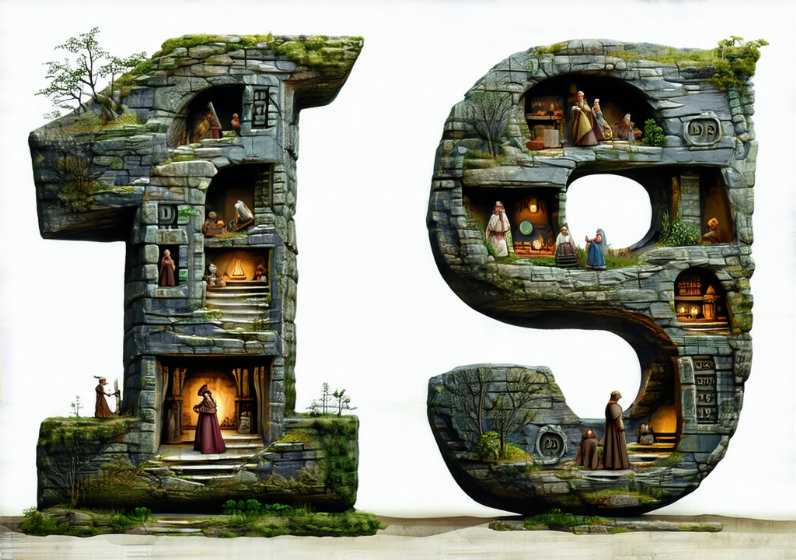
Inside the Temple of Resonance—What Initiates Are Not Allowed to Speak
🕯️ The Silent Frequency: Unveiling the Veil at the Temple of Resonance
✍️ Author: Aurelia Voss, Keeper of the Aural Archive
There is a peculiar irony in studying clairaudience. We spend our lives listening—straining against the white noise of the modern world to catch a whisper that belongs to another realm. We build temples for sound. We construct rituals around vibration. We teach students how to tune their inner ear, how to dampen the static, and how to hear what others cannot. And yet, in the most sacred chambers where these skills are refined, we demand the very opposite of our craft: silence.
Welcome to the Temple of Resonance. It is not a place you find on a map; it is a frequency you must tune into. For decades, this institution has operated in the shadowy margins of esoteric academia and spiritual practice. It does not advertise its curriculum. It does not publish textbooks. And most significantly, its initiates are bound by a sacred pact: they do not speak about what they hear.
To understand why silence is the highest form of aural intelligence, one must first dismantle the common misconceptions about clairaudience. We tend to think of it as a superpower—a way to know things others don’t. But in the Temple, we teach that clairaudience is not about knowing; it is about listening. And listening, true listening, requires a temple of stillness.
The Architecture of Sound
Let us begin at the threshold. The entrance to the Temple of Resonance is not guarded by stones or iron gates, but by a sonic barrier. Visitors often describe walking up to a plain wooden door that seems to hum with a low-frequency drone. It is not loud; it is more like the feeling of a ship’s engine felt in your chest rather than heard in your ears. This is the first test. If you can hear the hum, you are tuned for entry. If you hear nothing, or if the sound bothers you, the door remains closed to you.
Inside, the architecture is designed with obsessive attention to acoustics. The walls are lined with a composite material that absorbs all high-frequency noise—the chatter of passing cars, the buzz of electricity, the rustle of clothing. Only the fundamental tones remain. The floor is polished obsidian, smooth as glass and cold to the touch. There are no carpets to muffle footsteps; every step you take rings out like a bell. This is intentional. In the Temple, we believe that if you can hear your own movement, you are present in your body. If you cannot, you have drifted into the void.
Here is where the teaching begins, and here is where the paradox of clairaudience becomes most apparent. Students are told: "You came here to learn how to hear the unseen voices. But first, you must learn to hear nothing at all."
For the first year of initiation, novices are forbidden from using their aural gifts. They sit in meditation pods—circular chambers with no windows and only a single point of white light—and they listen to silence. Not the absence of sound, but the presence of quiet. They learn to distinguish between the noise of their own minds and the true stillness that exists beneath it.
"Why do we do this?" students ask. And the elders answer: "Because when you are used to hearing everything, you miss what is truly speaking. Clairaudience without discipline is just a louder form of anxiety."
The Three Voices
Once the novice has mastered the art of silence, they begin the study of the Three Voices. This is the core curriculum of the Temple of Resonance, and it is where the secret teachings reside. We categorize all clairaudient perception into three distinct types, each requiring a different temple within the mind to receive them.
1. The Echo Voice (The Past)
This is the most common form of clairaudience reported by beginners. It sounds like memory. It carries the texture of nostalgia, regret, or unresolved emotion. In the Temple, we teach that the Echo Voice is not a ghost; it is an impression left in the aural field. Like heat shimmer above asphalt, it is a residual vibration from an event that occurred at this location or with these individuals.
Initiates are taught to listen for the timbre of the Echo Voice. Is it crisp and clear? Then it is recent. Is it muffled, like a conversation heard through a wall? Then it is old. The Temple requires initiates to keep journals of their encounters with the Echo Voice, but here is the rule: You may write down what you hear, but you must not discuss it with anyone who has not initiated.
This leads us to the central mystery of the Temple: Why do we forbid speaking about these experiences?
There are three reasons, and they are interwoven like the strands of a rope. The first is preservation. Sound, when spoken, collapses the wave function. A whisper heard in a dream becomes a mere story once told in waking light. By keeping our perceptions silent, we preserve their purity. We keep them as vibrations rather than converting them into vocabulary.
The second reason is protection. Clairaudient initiates are open receivers. When we speak of what we hear, we create a bridge between the silent realm and the noisy world. This bridge can attract attention—sometimes helpful, sometimes harmful. The Temple teaches that our perceptions belong to us. To share them carelessly is to give away pieces of our spiritual armor.
The third reason is perhaps the most profound: Clarity. When you speak about a clairaudient experience, your brain begins to interpret it through language. Language is a tool for communication between humans; it is not a tool for communicating with the field. By remaining silent, we allow the perception to integrate at a level deeper than thought. We let it become part of our intuition rather than our narrative.
2. The Whisper Voice (The Present)
If the Echo Voice is memory, the Whisper Voice is conversation. This is the true clairaudience that most people seek—the ability to hear thoughts or voices from entities not physically present. In the Temple, we treat this with great reverence and caution. We teach initiates that the Whisper Voice does not come from "spirits" in a religious sense; it comes from the collective unconscious of the location.
Every place has an aural signature. A hospital will have whispers of pain and relief. A library will murmur with curiosity and study. A courtroom will echo with judgment and doubt. The Temple of Resonance is, itself, a place of pure listening. Its Whisper Voice is minimal. Initates report hearing only fragments—phrases in languages they don't know, or single words like "stay," "go," or "listen."
There is a ritual called the Listening Post where initiates spend an hour each day sitting at specific points within the Temple and recording what they hear. These recordings are never played for others; they are kept in a soundproof vault. Some initiates claim that if you listen to these recordings after many years, the whispers have changed. The same phrases now mean something different. This is because the Temple itself is learning from us. We are not just studying sound; we are being studied by it.
3. The Chorus Voice (The Future)
This is the rarest form of clairaudience, and only a few initiates ever experience it consistently. The Chorus Voice does not speak in words; it speaks in harmonics. It sounds like many voices singing the same note at slightly different intervals. This dissonance creates a sense of urgency or clarity that precedes an event.
In the Temple, we call this "aural precognition." Initiates learn to read the Chorus Voice like a seismograph reads tectonic shifts. A stable hum means peace. A slight tremor in the harmony signals change. A full dissonance predicts disruption.
The elder who teaches this course is known only as The Conductor. No one has seen The Conductor’s face; they are always behind a screen of woven silk that vibrates with their voice. They teach: "The Chorus Voice does not tell you what will happen. It tells you how to feel about what is coming."
This is the deepest secret of the Temple of Resonance. We do not predict the future. We attune our emotional resonance to it. When you hear a major chord in your mind before good news arrives, you are already in harmony with that event. Your fear and doubt have been tuned out by the sound. You receive the event as music rather than noise.
The Rite of Unspoken Names
As initiates progress through the Temple, they reach a stage where they must undergo the Rite of Unspoken Names. This is the most guarded ritual in our tradition, and it is the source of many myths about the Temple.
In this rite, each initiate is given a name that is not their birth name. It is a sonic identity—a name chosen for its vibrational quality rather than its semantic meaning. "Thurston" might be assigned to someone whose energy field resonates with bass frequencies. "Elara" might be assigned to someone who hears in high, clear tones.
The initiate must use this name in all their work within the Temple. But here is the rule: You may not speak your sonic name aloud. It can only be written or gestured. If you say it, it loses its power. It becomes just a word rather than a vibration.
This rite teaches initiates that identity is not fixed; it is tuned. We are not who we think we are; we are how we resonate. The Temple of Resonance does not teach people to become better listeners; it teaches them to become better vibrations.
The Library of Frequencies
Beneath the main hall of the Temple lies a room known as the Archive. It is a circular space with shelves that spiral upward toward the ceiling. On these shelves are no books—only glass vials filled with a luminous blue liquid. Each vial contains a recorded sound, captured over decades by the Temple’s acousticians.
There is a vial containing the exact frequency of the wind outside the Temple at dawn on the spring equinox in 1923. There is one holding the hum of a specific type of old radio that was common in the 1950s. There are vials with the sound of rain on different types of glass, or the creak of doors in buildings that no longer exist.
Initiates spend time in the Archive during their third year. They hold each vial to their ear and listen to these lost sounds. The experience is described as "hearing time." You are not just hearing a sound; you are hearing the moment it was made. You can feel the temperature, the light, and the emotion of the person who recorded it.
This is where the Temple’s philosophy reaches its peak. We believe that sound does not disappear when the source dies. It continues to vibrate in the field, waiting for someone with a tuned ear to hear it again. The Temple of Resonance is a place where we keep these vibrations safe from the noise of the world.
The Silent Choir
Perhaps the most striking feature of the Temple is its choir. In many temples and cathedrals, the choir sings to fill the space with sound. In the Temple of Resonance, the choir sits in silence during services. They do not sing; they listen.
During ceremonies, the initiates gather in a semicircle facing the Conductor. The Conductor raises their hand, and for ten minutes, no one speaks or moves. The silence is so complete that you can hear your own blood moving through your veins. You can hear the earth rotating beneath your feet.
After this period of stillness, the Conductor begins to speak—not with words, but with a single sustained note. A tone that seems to come from everywhere and nowhere. The initiates breathe in time with the note. Some begin to weep. Others report seeing colors at the edges of their vision. All feel a sense of connection so profound it feels like being part of an instrument.
This is the Silent Choir. It is not a performance; it is a tuning. We are aligning our personal frequencies with the universal frequency. And when we leave the ceremony, we carry that alignment into the noisy world. We walk through traffic and crowds, but inside, we remain in the Temple. The silence follows us.
Why Silence Is Sacred
Let us return to the central question: Why do initiates of the Temple of Resonance refuse to speak about what they hear?
It is not secrecy for its own sake. It is not a desire to appear mysterious or exclusive. It is a practical necessity born from decades of observation and teaching.
When clairaudient people talk too much, they dilute their perception. They begin to interpret every sound as meaningful. A bird singing becomes a message. A car horn becomes a warning. The noise of the world drowns out the signal of the field. Silence preserves the signal-to-noise ratio.
Moreover, silence builds trust in the Temple. When we do not speak about our perceptions, we are admitting that they are fragile. We are saying: "This is real to me, and I want to protect it from being reduced to a story." It is an act of humility. In a world that values loudness, visibility, and self-expression, the Temple of Resonance chooses quiet.
Initiates report that after years at the Temple, they find themselves listening more in daily life. They pause before answering questions. They watch people rather than just hearing them speak. They notice the quality of silence between conversations. The Temple teaches us to live in the spaces between sounds.
The Open Door
The Temple of Resonance is not a closed society in the secretive sense. Its doors are open to anyone who can hear the hum at the entrance. But its teachings remain largely unspoken by those who have received them. This creates an interesting dynamic for visitors and students who seek knowledge about the Temple. They can only learn by coming, sitting, and listening.
We do not publish manuals or online courses. We do not sell crystals or audio recordings. The teaching is embodied in the space itself. You must be there to hear it. And even then, you will only hear what your ear is tuned to receive.
This is the final lesson of the Temple: Clairaudience is not a gift that can be given; it is a frequency that must be matched. You cannot force someone to hear what they are not ready to hear. The Temple provides the resonance chamber; your mind and heart provide the instrument.
As you leave the Temple, you may notice that the world sounds different. The traffic is less noisy. The conversations in cafes seem clearer. The wind carries more information than before. This is because you have been tuned. You are no longer just a passive receiver of sound; you are an active participant in the resonance of the world.
And if you hear a whisper that seems to come from nowhere, do not speak it aloud. Let it remain a vibration. Keep it between your ear and the field. Guard its silence. Because in the Temple of Resonance, we have learned that the most powerful voice is the one that never speaks.
🕯️ Listen well. The world is singing, but only those who know how to be silent can hear the melody.