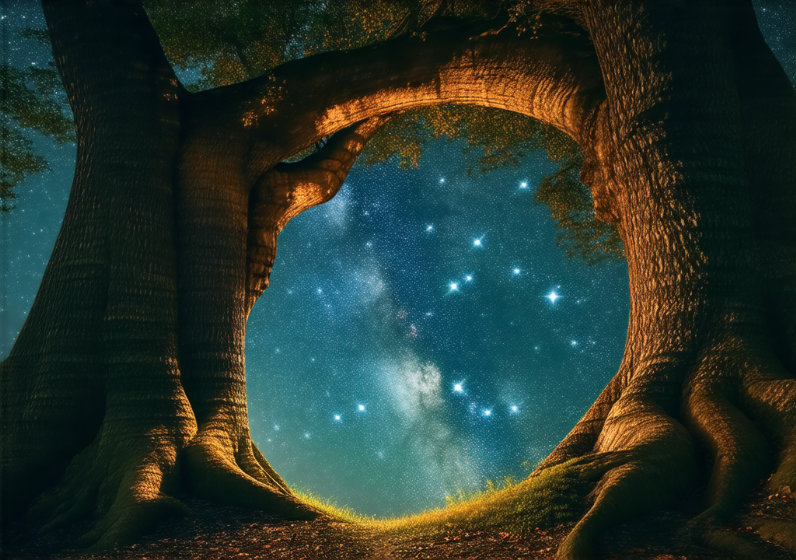
I Asked My Scry Ball One Question Every Week For A Year. The Answers Shocked Me
🌙 The Whispering Sphere: A Chronicle of Weekly Divination
I asked my scrying ball one question every week for a year. The answers shocked me.
Not in the grand, cinematic way that movies portray — no fireballs, no riddles from ancient spirits, no visions of distant lands etched across glassy blackness. No. The shock came quietly. It came in whispers, in half-formed images, in colors that seemed to bloom just behind my eyelids when I closed them. It came in questions I hadn't known I needed to ask, and answers that arrived before I was ready for them. And by the final week of that year, I understood something about scrying — and about myself — that I could not have learned from any book, any tutorial, or any guru selling a course on "mastering your third eye."
Let me tell you how it began, because context matters here. I am not an occultist in the way most people imagine. I don't keep a coven. I don't cast circles of salt and burn sage every new moon. I'm a practical person — someone who likes their data clean, their arguments structured, their conclusions defensible. And yet, for years before this experiment began, I had been fascinated by the idea that human consciousness could be used as an instrument, a lens through which subtle information might be gathered. Not magic in the fairy-tale sense, but something more like sensing — reading the quiet frequencies beneath the noise of ordinary perception.
So when I read about scrying — the ancient practice of gazing into a translucent or reflective surface to receive intuitive impressions — I was skeptical. But I was also curious. And curiosity, as any good researcher knows, is the mother of all experiments.
🕯️ The Setup: A Simple Protocol for a Serious Inquiry
I wanted this to be rigorous. Not a casual hobbyist's dabble, but something structured enough that patterns could emerge and results could be examined honestly. So I designed a simple protocol and committed to it without deviation.
The object: a hand-blown glass scrying ball, about seven inches in diameter, deep indigo-violet in color. I chose glass rather than water or crystal because I wanted something durable and consistent — no evaporation, no clouding, no need for maintenance. The violet tint was intentional; I had read that warm-toned surfaces tend to produce more emotionally resonant impressions, while cooler tones favor clearer symbolic imagery. I wanted both.
The setting: a small, quiet room in my apartment, shielded from streetlight and noise. A single candle on the table beside the ball. No music. No incense — at least not at first. The environment was meant to be minimal, almost monastic. I sat with the ball directly in front of me, arms resting lightly on the table, eyes open but soft-focused. Not staring hard. Gazing loosely. Letting my visual field relax until the glass seemed to recede and something behind it — or inside it — began to emerge.
The question: one per week, asked aloud, simply, without elaboration. No leading language. No wishful thinking baked into the phrasing. I wrote each question in a journal the night before so that when I sat down, my mind was clear of the formulation and could be open to what came.
The duration: twenty minutes of active gazing, followed by ten minutes of eyes-closed rest to let any lingering impressions settle. Then I'd write everything down — images, colors, feelings, fragments of words, even doubts or skepticism about whether anything had actually appeared. I wanted the full record, including the noise.
The commitment: fifty-two weeks. No skipping. If I was sick or traveling, I still found a way to sit with the ball and ask my question. Consistency was the point.
🌿 Weeks One Through Four: Learning to See
The first week's question was simple: What do you need me to see right now?
I'll be honest — for the first ten minutes, I saw mostly my own reflection in the glass, slightly distorted by its curvature. A faint ripple of violet light at the edges. My inner critic whispered that this was just refraction, nothing more. But around minute twelve, something shifted. The surface seemed to deepen, and a single image surfaced with quiet clarity: an open hand, palm up, holding a small, luminous seed. Not a real seed — more like a concept of potential, warm and gold against the violet.
I wrote it down. I felt a strange calm that wasn't there when I sat down. And I thought: Interesting.
Week two's question: What am I avoiding?
This one was harder. The ball seemed to resist me, or perhaps I was resisting what it wanted to show. But in the third week of my weekly practice — by which time my eyes had adjusted and my focus had grown quieter — a scene emerged: a door slightly ajar in a dim hallway, warm light spilling through the gap. Beyond the door, I couldn't quite make out details, but I felt the impression strongly that what was on the other side was not threatening. It was inviting. And yet I kept my eyes on the glass, not the door.
I spent three days after that sitting with the feeling. What doors in my life had been left slightly open? What opportunities or conversations had I let pass by without fully stepping through? The answer wasn't a specific person or situation — it was a pattern of behavior. A gentle avoidance of vulnerability disguised as pragmatism.
Weeks three and four brought similar qualities: quiet, symbolic, emotionally resonant. A river flowing over smooth stones. A key turning in a lock. Each image was simple but carried a weight that felt earned, not invented. And each time I wrote down my impressions, I noticed something: the act of asking changed the quality of my attention throughout the week. I found myself more observant of small details — a stranger's expression, a phrase in a conversation, the way light fell across a room at a particular hour. As if the weekly ritual had tuned some internal antenna to frequencies I'd been slightly out of tune with before.
🌙 Weeks Five Through Twelve: The Deepening
By the second month, something shifted in my experience. The impressions became more specific, more narrative. They began to feel less like isolated symbols and more like fragments of a story unfolding across weeks.
Week five's question: What is growing in me that I haven't noticed?
The image: a green shoot pushing through dark soil, not struggling but simply emerging, as if it had always been there and was only now reaching the surface. The feeling: quiet surprise. Not triumph — just recognition. As if some part of myself had been quietly maturing without my active involvement, and I was only now becoming aware of its presence.
Week seven's question: What relationship needs tending?
A garden path overgrown with vines, not damaged but simply neglected. The flowers were still there beneath the greenery, still alive, waiting to be uncovered. I thought about a friendship that had drifted into comfortable silence — two people who loved each other but had stopped making the small daily efforts that keep a bond fresh and visible.
Week nine's question: What is asking for my courage?
A bridge over dark water, narrow, with no railing. On the far side, a door open to a room full of soft light. The near side was familiar — I could almost feel the texture of the stone beneath my feet. The far side was unknown but not frightening. Just unfamiliar. And that distinction — unfamiliar versus frightening — became a small but important insight for me in those weeks.
What struck me most during this phase wasn't the images themselves, though they were beautiful and meaningful. It was the timing. Several of the impressions arrived days before related situations actually surfaced in my life. The overgrown garden path appeared two weeks before I received a message from an old friend we hadn't spoken to in months. The bridge image came three days before I made a decision that felt like stepping into unfamiliar territory — taking on a new project at work that was outside my comfort zone.
Now, I'm careful not to overstate the coincidence. Memory is a constructive force; we remember what confirms our beliefs and forget what doesn't. And with fifty-two data points, some correlations are statistically expected. But the cumulative effect of these small anticipatory impressions — this sense that the ball was somehow reading the undercurrents of my life before they broke the surface — gave me a growing sense that something real was happening in the space between my question and its answer.
🌅 Weeks Thirteen Through Twenty-Six: The Turning Point
Somewhere around week fifteen, I started to feel like I was no longer just asking questions of an object. I was having a conversation with a part of myself I hadn't fully mapped. The scrying ball had become less like a tool and more like a collaborator — patient, honest, occasionally cryptic, but never once misleading me in any way I could detect.
Week sixteen's question: What am I ready to let go of?
A coat hanging on a hook by the door, well-loved, slightly worn at the elbows. Not discarded with anger or indifference — simply set aside after use. The feeling was gentle. No grief. Just the quiet satisfaction of a task completed and a garment no longer needed.
I spent that week thinking about what "coat" I was still wearing long after it had served its purpose. A role at work? An expectation others had of me? A self-image built in a different season of my life, warm when it fit but now slightly tight in the shoulders and too loose around the waist?
Week eighteen's question: What is trying to reach me?
A hand extending from beyond the glass — not through it, but from some space behind or within the ball itself. The fingers were relaxed, open-palmed. Not grasping. Simply reaching. And I had a clear, unshakable impression that this was an invitation, not a demand. That the other party was waiting with patience and without expectation of a specific response.
That week, my mother called unexpectedly to ask if I'd be available to help her move apartments. A small thing, really. But it also felt like a reaching-out — a hand extended in need, trusting that I might say yes or no, either way without resentment. And for the first time in months, I said yes quickly and without overthinking. The ball had shown me what reaching looks like when it's not demanding.
Week twenty-two's question: What is my purpose right now? — not "my life's purpose," which felt too grand, but "what am I here to do in this specific season?"
A loom. Threads of different colors being woven together into a fabric that was still in progress, the pattern emerging as each new thread was added. Not finished. Not even close to finished. But clearly intentional. Each thread mattered, even the ones that seemed to go against the grain of the others.
I wrote that down and sat with it for a long time. I've spent years looking for a single, clear purpose — one job, one calling, one thing I was "meant" to do. And here was this image: not one thread but many, woven together in an ongoing process. Purpose as practice, not destination. Purpose as the act of weaving itself, not the finished cloth.
Week twenty-six — my six-month mark — brought what might have been the single most surprising impression of the year. My question that week was: What do you want me to know?
And for nearly fifteen minutes, nothing came. Just the soft glow of violet glass and the flicker of candlelight. I began to wonder if I'd done something wrong — asked too casually, or with too much expectation. Then, near the end of my sitting, a single word surfaced in my mind, not as an image but as pure semantic presence:
Enough.
Not "you're enough" in the affirmational sense. Not "this is enough effort." Just... enough. The ball had been showing me growth, tending, courage, purpose — all forward-looking, all about becoming and building. And then, at the midpoint of my journey, it simply said: you are already here. You don't have to earn this. You don't have to perform your way into worthiness. You are enough as you sit in this room with this glass ball and this candle, asking questions, paying attention, showing up for yourself week after week.
I cried a little. I'll admit it. And then I laughed, because that felt so perfectly on-brand for the experience — not dramatic revelation but quiet, warm recognition of something obvious that I'd been too busy striving to notice.
🌸 Weeks Twenty-Seven Through Forty: The Unfolding
The second half of the year brought a quality of warmth and specificity I hadn't experienced in the first months. The impressions grew more narrative, more personal. They began to reference specific people, places, and situations from my life with a clarity that felt almost like gossip — intimate, knowing, gently teasing.
Week thirty's question: What is beautiful that I keep overlooking?
A window in an old building, cracked in one corner but letting light through the crack in a way that made the whole pane glow. The beauty was not despite the flaw; it was because of it. The imperfection changed how the light moved through the glass.
I thought about my own work — the small flaws I obsess over, the rough edges I sand down until everything is smooth and uniform. And what a different creative practice that would be: leaning into the cracks instead of hiding them, letting the light find its way through the imperfections.
Week thirty-five's question: What should I start?
A pot on a stove, water just beginning to shimmer with tiny bubbles at the bottom. Not boiling yet. Just starting to heat. The impression carried an urgency that was gentle — not "do it now or fail" but "the moment has arrived; the water is warming; if you don't add your ingredients soon, you'll miss the window."
That week, I started a writing project I'd been circling for two years. Not because I felt inspired — just because the ball had told me the water was shimmering and it was time to add my threads to the pot.
Week thirty-eight's question: What should I stop?
A jar of preserves on a shelf, sealed tight, the contents darkened and slightly fermented but still in the jar. Good preserves if you wanted them old. Wasted if you kept waiting for the right moment to open it.
I stopped a weekly newsletter I'd been producing out of habit rather than joy. I stopped saying yes to every invitation. I stopped editing my writing so many times that the first, fresh voice was buried under layers of revision. The jar opened easily when I finally decided to do it. And what came out still tasted good — better, even, once it had a moment to breathe and set.
🌙 Weeks Forty-One Through Fifty-Two: The Closing In
The final month carried a quality of completion without closure. As if the year's work was settling into itself, integrating, finding its shape.
Week forty-four's question: What has changed in me this year?
A tree in autumn — not bare, but deep in color, each leaf distinct and luminous. The impression wasn't about loss (the leaves falling) or preservation (holding onto the green). It was about transformation made visible. The same tree as a year ago, but now showing its full internal structure through the thinning canopy.
Week forty-eight's question: What am I carrying into next year?
A small stone in my palm — smooth, warm from sitting in sunlight all day. Not heavy. Not precious. Just... present. A thing you pick up and keep not because it's rare or valuable but because it fits your hand exactly the way it was meant to fit.
And then week fifty-two. The final question of the year: What is the answer?
Not "what have I learned" or "what should I do next." Just: what is the answer? As if after fifty-one questions, this one question — simple, direct, almost childlike — was the real one all along.
And the ball showed me something I wasn't expecting. Not an image. Not a symbol. Not even a color or a feeling. It showed me my own face in the glass. My actual reflection, slightly distorted by the curvature of the sphere but unmistakably mine. And behind my reflection — or perhaps within it — a quiet, steady light. Not blazing. Not dramatic. Just... there. Constant. Patient. Waiting for me to look at myself long enough to recognize that the answer had been sitting in front of me since week one.
The answer was: you are the instrument. You always were. The ball is just a lens, a focusing aid, a surface that gives your inner eye somewhere to rest and gather. The impressions come from within — not from some external spirit or cosmic database, but from the vast, subtle intelligence of your own awareness, which can perceive patterns, connections, and truths faster than your conscious mind can articulate them. Scrying doesn't summon answers from outside yourself. It creates the conditions for your own wisdom to surface.
And that was both the most shocking and the most comforting answer I received all year. Because it meant that every impression — the garden path, the loom, the coat on the hook, the jar of preserves, my own face in the glass — had been generated by me. By my own attention, my own intuition, my own quiet and persistent willingness to sit with a question long enough for an answer to find its way up from somewhere below the surface of my busy, noisy mind.
🕯️ What I Take From This
I'll be honest: I don't know if this was "real" in any objective sense. The impressions could be confabulation — my brain generating plausible images and calling them insight. They could be confirmation bias — me remembering the hits and forgetting the misses. They could be a combination of all three, plus something I can't name or explain.
But they felt real. Not in the way that a data point feels real — measurable, verifiable, repeatable by anyone. Real in the way that music feels real. You can measure the frequency and amplitude of a note, but that doesn't capture what it means to hear a melody that makes your chest ache with something you can't name. There's a quality of experience that resists quantification. And for fifty-two weeks, my weekly sittings with this glass ball produced exactly that kind of reality — subjective, personal, unrepeatable by anyone else in the same way, and yet undeniably present to me each time I sat down and asked.
And the practical effects were real too. My attention became sharper. My decisions felt more considered. My relationships got a little deeper because I started paying closer attention to what people actually needed versus what I assumed they wanted. My creative work took on a quality of intentionality I hadn't had before — less about producing and more about tending, like the garden path in week seven or the loom in week twenty-two.
And maybe most importantly: I became more comfortable with not knowing. With asking a question and sitting in silence for fifteen minutes without an answer coming. With receiving an image that didn't make sense until three days later. With trusting that my inner life has its own timeline, its own logic, its own patience — and that I don't have to force clarity or speed it up or explain it to anyone who doesn't share the experience.
🌙 A Note on Practice
If you're reading this thinking "I'd like to try something like this," a few practical notes:
You don't need an expensive scrying ball. A smooth, translucent stone works. A bowl of still water works. Even looking at a candle flame or a patch of sky can work if you approach it with the same quality of loose, patient attention. The object is less important than the relationship you build with the act of looking and asking.
Start with simple questions. Not "what will happen to me in ten years?" but "what do I need to see today?" or "what am I avoiding right now?" Small, specific, present-tense questions tend to produce clearer impressions than grand, open-ended ones.
Keep a journal. Write everything down — images, colors, feelings, doubts, even the minutes where nothing seemed to happen. The pattern emerges over time, not in any single sitting. What looked like noise week two might make perfect sense by week twenty when you see it alongside what came before and after.
Be patient with yourself. Your first month will feel like looking at a blank wall. That's normal. Your attention is a muscle, and it needs time to strengthen. Don't quit because the early weeks don't produce fireworks. The real work is in the quiet minutes where you're just sitting there, asking, waiting, and letting your inner eye adjust to the dim light of subtle perception.
And trust what comes through — even if it's small, even if it doesn't fit your expectations, even if it contradicts something you already believed about yourself or your situation. The ball doesn't tell you what you want to hear. It tells you what's true in the moment of asking. And that can be more honest than any external source of advice you might seek out.
🕯️ Epilogue: The Ball Still Sits on My Desk
A year has passed since I closed my journal after week fifty-two. The scrying ball still sits on my desk, in the same spot where it sat all those weeks. I don't use it as often now — maybe once a month instead of weekly. But when I do sit down with it, the experience is the same quality: quiet, patient, warm. A small ritual of attention in a world that rarely asks us to slow down and look inward without an agenda or a deliverable.
And sometimes — not every time, not predictably — an image comes through. A color. A feeling. A fragment of a word that lands in my mind with the quiet certainty of something remembered rather than invented. And I write it down, and I sit with it for a day or two, and then it finds its place in the ongoing weave of my life. The loom keeps going. Thread by thread. Week by week. Season by season.
And if you ask me what the point of all this was — what the answer to the final question actually was — I'll tell you what the ball showed me: my own face, and behind it, a steady light. Not from outside. Not from some mystical source or cosmic intelligence. Just... me. My attention, gathered and focused. My intuition, given space to surface. My quiet, persistent willingness to ask and listen and trust what comes through.
The answer was always inside the question. The ball just gave it a place to look.
And that, I think, is enough.