Heresy as Art Form: Crafting Your Own Left Hand Path Doctrine
The Black Ink of Self-Made Gods
A Treatise on Doctrinal Heresiology
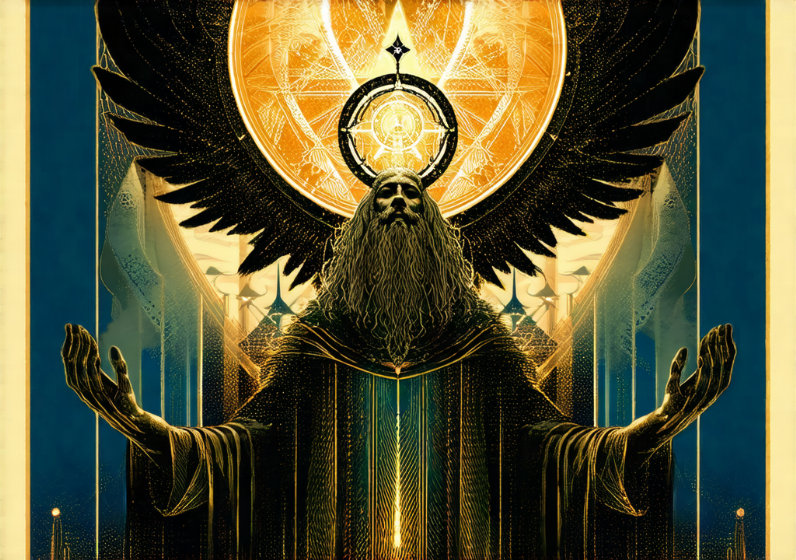
To walk the Left Hand Path is to accept a singular, crushing truth: there is no teacher waiting at the end of the tunnel. There is no scripture handed down from a burning bush or a mountain top. There is only the raw, bleeding, screaming individuality of you, and the terrifying freedom that comes with it. In a world saturated with pre-packaged belief systems—religions, philosophies, ideologies, even subcultures—the Left-Handed adept faces a unique artistic challenge. You are not merely studying doctrine; you are authoring it. You are not an heir to a tradition; you are the founder of one that will last exactly as long as your life spans.
This is where heresy ceases to be a crime and becomes an art form. It is no longer a deviation from the orthodox line, but the drawing of a new line in the sand. To craft your own doctrine on the Left Hand Path is not an academic exercise; it is an act of spiritual warfare conducted against the inertia of conformity. It is the sculpting of meaning out of the void, using the chisel of personal experience and the hammer of pure will.
The Canvas of Unbelief
Before one can paint a heresy, one must prepare the canvas. In Left Hand Path circles, this preparation is often referred to as Nigredo, or the Blackening. It is the process of stripping away inherited beliefs until nothing remains but the essential self. For many, this is a painful excavation. We are born into families, nations, and cultures that hand us a ready-made map of reality. "This is good," they say. "That is bad." "This is sacred." "That is profane." The orthodox mind accepts these labels as fact.
The heretic artist must reject all of it—not out of blind rebellion, but out of artistic necessity. You cannot create a unique masterpiece if you are merely copying the master's work. You must first understand what the master did right and where they failed. More importantly, you must identify which parts of their doctrine served them but fail to serve you.
Consider the traditional religious view of sin. In Christianity or Judaism, sin is often framed as a rupture in one’s relationship with God. The remedy is repentance—a returning, a bending back toward the divine center. On the Left Hand Path, we look at this and ask: what if there was no God to return to? What if the "sin" was not a falling away from perfection, but the necessary shedding of imperfection to become more than human?
This is the first brushstroke of your heretical art form: subversion. You take the core tenet of the dominant culture and invert it. Where they see humility as virtue, you might see it as a cage that keeps your spirit from expanding. Where they see sacrifice as noble, you might see it as a tax paid to a cosmic landlord who owns nothing but air. Your doctrine begins in this space of inversion, finding beauty in the very things the world tells you to hide or punish.
The Architecture of Personal Mythology
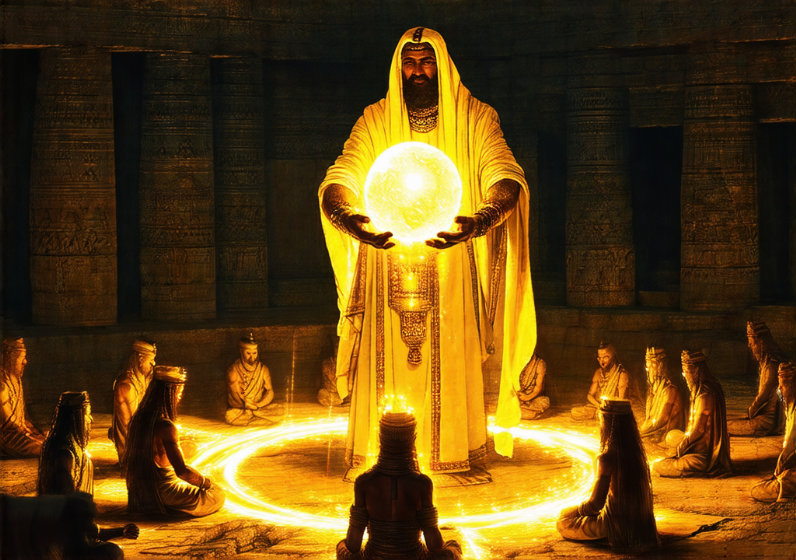
A doctrine is not just a list of rules; it is a mythos. It is the story your soul tells itself about why it exists and what its purpose is. On the Right Hand Path, this story is usually provided by an institution. You are a sheep in a fold, or a soldier in an army, or a citizen in a state. Your narrative arc is written for you.
On the Left Hand Path, you are both the author and the protagonist of your own mythology. This requires a level of creative writing that most people never practice outside of fiction novels or screenplays. You must ask yourself: Who am I, stripped of my job title, my relationships, my nationality, and my history?
Let us take three hypothetical adepts to illustrate how this personal mythos takes shape through heretical artistry.
The Alchemist of Flesh
Imagine a practitioner who is deeply interested in the body as a temple not for God, but for the Self. Their heresy might focus on Somatic Divinity. They reject the Cartesian dualism that separates mind and body. Instead, they craft a doctrine where physical sensation—pain, pleasure, hunger, fatigue—is interpreted as direct communication from the Divine Spark within them.
Their art form here is interpretation. A migraine is not just a medical condition; in their doctrine, it is "The Head of the Beast waking up," a sign that consciousness is expanding beyond its skull-bound limitations. A stomach ache is not weakness; it is "The Digestion of Old Selves." They create rituals around this. When pain strikes, they do not take a pill and wait; they sit in meditation, interpreting the pain as a letter from their inner god, writing down what that god wants to say. Their doctrine becomes a language for translating biological noise into spiritual signal. This is heresy because it elevates the physical, often seen as base or temporary, to the status of sacred scripture.
The Archivist of Time
Another practitioner might be obsessed with legacy and immortality. Not the Christian-style eternal soul, but a Left Hand Path style immortality through memory, art, and influence. Their heresy focuses on Temporal Sovereignty. They reject the idea that death is an end or a passage to another realm. Instead, they view life as a single, unrepeatable performance.
Their doctrine might state: "You are not preparing for heaven; you are composing your monument." Their art form here is curation. They write journals with the intent of publishing them after their death. They create works of art that explicitly deconstruct their own ego. They treat their life as a museum exhibit where they are both the curator and the artifact. Their heresy lies in treating time not as a river to be crossed, but as a canvas to be painted on before the lights go out. They might craft rituals involving "future letters"—notes written to people who will read them decades after their death, ensuring that their consciousness persists in the minds of others long after the brain ceases function.
The Cartographer of Chaos
A third practitioner might find peace in disorder. Where society craves stability and predictability, this adept sees chaos as the truest form of freedom. Their heresy centers on Chaos as Clarity. They reject the Left Hand Path’s own desire for order and hierarchy (which can sometimes mimic the Right Hand Path’s structure). Instead, they craft a doctrine that celebrates the breakdown of systems.
Their art form is deconstruction. They take stable concepts—loyalty, consistency, reliability—and break them down to show how they are constructed illusions. A ritual might involve planning a perfect day and then intentionally sabotaging every step, observing what breaks and what remains solid. Their doctrine teaches that true stability is not the absence of change, but the ability to hold oneself together while everything around you dissolves into entropy. They view themselves as observers of the great unraveling, finding joy in the fraying threads of reality.
The Technique of Heretical Crafting
Creating a personal doctrine is not an act of spontaneous inspiration; it requires technique. It requires the discipline of an artist and the precision of a scientist. Here are three methods that can be employed to craft your own heresy.
1. The Method of Contradiction
Take a core belief you hold dear—a value, a goal, a truth you speak of often. Now, write a treatise arguing for its opposite. If you believe in honesty, write a doctrine of Strategic Truth, where lying is an act of mercy or protection. If you believe in self-control, write a doctrine of Total Surrender, where losing control is the highest form of mastery.
This exercise forces you to understand your beliefs from the outside. It reveals the assumptions you have never questioned. More importantly, it helps you find the "seam" in your belief—the place where it starts to feel like a cage rather than a shelter. That seam is where your heresy begins. You don't need to fully adopt the opposite view; you just need to see that both sides are artificial constructions you can manipulate.
2. The Method of Synthesis
The Left Hand Path often borrows from esoteric traditions: Kabbalah, Thelema, Yoga, Buddhism, Stoicism. But rarely do we see these systems mixed in truly novel ways. To create a heresy, take two unrelated concepts and weld them together.
For example, combine Buddhist Impermanence with Nietzschean Will to Power. In Buddhism, one lets go of attachments because all things are impermanent. In Nietzsche, one exerts will to shape reality despite suffering. These seem contradictory: one says let go, the other says grab on tight.
Your heretical synthesis might be called "The Grip of Flux." You don't just accept change; you grip it. You use your will not to create a permanent self (which is impossible), but to shape the flow of change itself. You become the sculptor of the stream, not the stone in the river. This creates a unique doctrinal statement: "We do not resist the wave; we surf the current with full, conscious intent."
This method encourages the creation of new vocabulary and new metaphors that belong solely to your personal path. These words become the building blocks of your doctrine.
3. The Method of Negative Space
Sometimes, a doctrine is defined by what it excludes. What do you refuse? What will you not believe in? What rituals will you never perform?
A heresy can be built on omissions. For instance: "My doctrine does not require group worship." "My path does not seek to save others; I only save myself." "I do not view the body as a vessel for a soul; it is the soul made flesh and bone." By clearly defining what your art form is not, you carve out a distinct shape. The negative space defines the positive form. This is particularly useful for those who struggle with affirmation. If saying "This is true" feels too heavy, say "This is false," and let the rest follow by contrast.
Heresy as Social Sculpture
One of the most underappreciated aspects of crafting a personal doctrine on the Left Hand Path is its social function. A pure heretic, living in a cave with no one else, needs little doctrine. They can simply be. But we live among others. We interact with families, friends, colleagues, and fellow travelers. Our doctrine acts as a filter through which we perceive and interact with them.
When you craft your own doctrine, you are also crafting a lens for understanding other people. If your doctrine emphasizes Autonomy, you will view everyone else's advice as a potential encroachment on your freedom. You might become somewhat aloof or difficult to please, but you will be incredibly loyal to those who respect your boundaries.
If your doctrine emphasizes Empathy (a rare one for the LHP), you will view others not as obstacles to your ego, but as mirrors reflecting different aspects of yourself. Your heresy becomes a tool for connection, even while insisting on separation. You might craft rituals that involve "listening" to another person's pain without trying to fix it, turning social interaction into an act of artistic observation.
This is the art form of social alchemy. You take the base metal of human relationships and refine it through your doctrinal lens. A friend who is annoying becomes a teacher in your doctrine because their annoyance reveals your own lack of patience. A stranger on the street becomes a brushstroke in the painting of your day, adding color or shadow to your experience. Your doctrine turns the mundane into the meaningful by giving you a framework for interpretation that no institution can provide.
The Risk of Total Solipsism
However, we must be cautious with our artistic creations. There is a danger in the Left Hand Path where the art form becomes a prison of its own making. This is the risk of Doctrinal Narcissism. You spend so much time crafting your beautiful, unique heresy that you forget to actually live. You become more interested in explaining your path than practicing it. Your doctrine becomes a performance piece rather than a guide for action.
In this state, the artist has forgotten the medium. The paint is on the canvas, but nobody is looking at it. The sculpture stands in the studio, gathering dust. To avoid this, you must remember that heresy as an art form is not for display; it is for use. Your doctrine should make your life more vibrant, more interesting, and more aligned with your true will. If your beautiful philosophy doesn't change how you eat, sleep, work, or love, then it is just a pretty story.
The test of a well-crafted heresy is its practicality. Can you wake up at 5 AM and apply this doctrine to the mess of your kitchen? Can you use this doctrine to navigate a difficult conversation with a boss who doesn't understand Thelema or Kabbalah? If your art form only works in the meditation room, it is not yet a complete work. It must spill over into the messy, imperfect, un-sacred world of daily life.
The Eternal Draft
Perhaps the most important aspect of crafting your own doctrine on the Left Hand Path is accepting that it will never be finished. In traditional religions, the scripture is often considered final—complete and closed. On the LHP, your doctrine is a living document. It changes as you change. A heresy crafted at age 25 will be unrecognizable to the one who crafts their doctrine at age 40 or 60.
This is not a failure; it is the essence of the art form. You are not writing a book that goes in a library and stays there. You are painting a mural on a moving ship. The wall shifts as you move, so you must keep painting to cover the new canvas that appears. Your doctrine is an eternal draft, constantly being revised, amended, and sometimes torn up entirely.
This gives the heretic artist a unique freedom. You are never bound by what you wrote yesterday. If your doctrine says "Trust no one," but today you meet someone who inspires deep trust, you don't have to feel guilty for breaking your own rule. You simply update the draft. "Now I know: Trust those who create; Distrust those who consume." The art form evolves in real-time, guided by the brushstrokes of experience.
Conclusion: The Signature on the Void
In the end, crafting a heresy is an act of signature. In a universe that may be silent, indifferent, or even hostile to our existence, we take up the pen and write our name across the void. We say, "I was here. This is how I saw it. This is what it meant."
It is not about being right. The orthodox seek truth; the heretic seeks resonance. You are looking for the note that makes your soul vibrate. Once you find it, you amplify it. You build a doctrine around it until it becomes the lens through which all of reality is viewed.
This is the art form of Left Hand Path: Heresy as self-creation. It requires courage to reject the comfortable truths handed down by parents and priests. It requires creativity to find new ways of understanding pain, joy, time, and space. And it requires discipline to maintain the structure of your own invention so that it does not collapse under the weight of its own ambition.
So pick up your tools. Whether they are a journal, a paintbrush, a microphone, or simply the quiet room in which you sit with your thoughts—start building. Do not wait for permission. Do not wait for validation. The canvas is blank, and the only voice that matters is yours. Paint your heresy. Sculpt your doctrine. And let the world see the unique shape of your soul, rendered in black ink on the white page of existence.