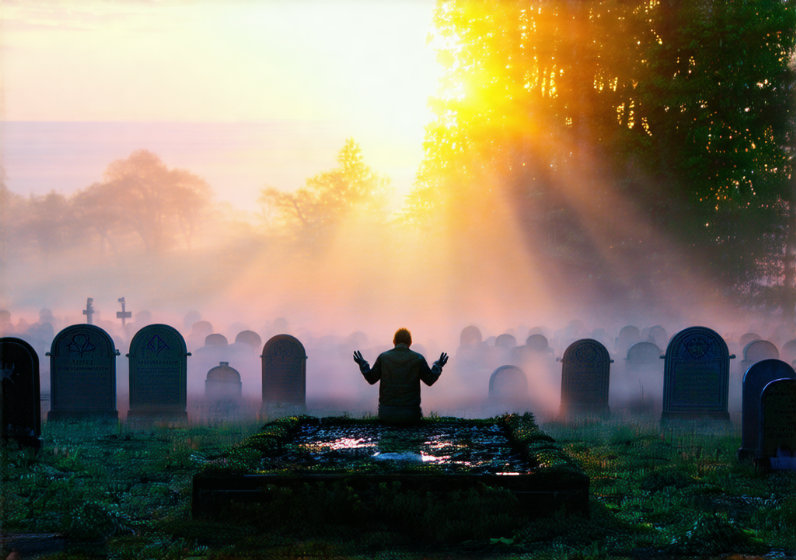
Dead Men Speak. Are You Listening?
Dead Men Speak. Are You Listening?
By M. Aldric Thorne, Keeper of the Silent Threshold 🕯️☠️🦴
I. The First Whisper from Below 🌑
There is a moment—just before dawn, when the world has drained itself thin and the living have pulled their curtains tight—when the dead stop pretending to be quiet. They lean toward you through the plaster of the walls. They press their lips against the inside of your sleeping door. And if your ear is trained, if your blood runs a little cooler than most, you will hear it: a syllable dragged up from some cellar of bone and brine, half a name, half a question, all need.
This is necromancy in its truest sense. Not the spectacle people imagine—skeletons rattling on parlor tables, mummies unrolled like old scrolls—but the quieter discipline that has always stood at the center of it: the art of listening to those who no longer have lungs to use. 🕸️
Most beginners approach necromancy backwards. They learn to speak first—invocations, command words, the grammar of summoning—and only after years of fumbled attempts discover that speaking is the easy half. The hard half is hearing. A dead man's voice does not travel through air; it travels through attention, and attention, in a world saturated with noise, has become a rarer commodity than incense or virgin wax.
This article is about that rare commodity. About what listening actually requires, how the dead choose to be heard, why some conversations last a lifetime while others dissolve before the first syllable lands, and—because we are honest practitioners here—about who should listen and who should perhaps keep their ears closed for their own peace of mind.
II. What Necromancy Is (and Is Not) 🦴📜
Let us dispel three myths before we go further, because each one quietly distorts the practice in a different way:
Myth One: The Dead Are Always Aware.
They are not. This is the most liberating fact about necromancy and the one most beginners resist accepting. A dead man is not a sleeping man; he has no bedroom to sleep in, no mind to drift through dreams. Between moments of being called—pulled up by will, by ritual, by the particular resonance of a question that only his death can answer—he is somewhere closer to a word held in someone else's mouth than to a person waiting in another room. He speaks when summoned and he is quiet otherwise, and neither state diminishes him.
Myth Two: You Are Talking to "the Dead."
You are talking to a dead man. Or woman. Or child. Specificity matters more in necromancy than in almost any other branch of the craft. The plural—the dead, as a mass noun, a category—is what amateurs write about and what priests pray over. What you need is singular: my grandfather, the widow from the east room, the boy who drowned in October. The more precisely you name whom you mean to hear, the clearer their voice arrives, because attention works like a lens: focus it on one point of light and the rest falls away into darkness.
Myth Three: Listening Is Passive.
This is the myth that costs people the most. Beginners sit in silence expecting revelation to arrive uninvited, the way rain arrives—without being asked—and wonder why nothing comes. But dead men do not speak to those who are merely quiet; they speak to those who are attuned. There is a difference, and it is roughly the difference between an empty room and a tuned instrument. An empty room receives sound but cannot shape it into music. A tuned instrument waits, ready, for precisely the note that will make it sing. 🎻
Listening in necromancy means holding yourself at the frequency where dead speech can land. It takes preparation—mental, ritual, sometimes physical—and it takes a particular quality of stillness that is not the same as calm. Calm is what you feel when nothing is happening. Stillness, in this context, is what you cultivate so that something can happen.
III. The Anatomy of a Dead Voice 🗣️🕸️
How does a dead man speak? This question has been asked for as long as necromancy has existed, and the answers have grown stranger as our understanding of consciousness has deepened. Let us walk through what we know.
3.1 — The Voice Does Not Come from a Mouth
This should be obvious but is not accepted quickly enough by new practitioners. A dead man has no mouth in any functional sense. His lips are clay or dust or memory depending on how long he has been gone and where. And yet when you hear him, the sound arrives as if it came from a specific place—a corner of the room, a patch of floor, sometimes your own sternum as a low hum rather than an external sound at all.
What is happening is closer to imprint than transmission. The dead do not push air through vocal cords; they press their pattern—the particular shape of their wanting, their question, their need—against the membrane of your attention, and your mind does the work of rendering that pattern into something you can recognize as a voice, a sentence, a meaning. You are half the instrument. The dead supply the note; you supply the string. 🎵
3.2 — Clarity Is Proportional to Need
A dead man who has one urgent thing to say—the key is under the blue tile, tell her I'm sorry, the child is not in the car—will speak with a clarity that can stop your breath. The need focuses the pattern, sharpens it, gives it the density of almost-sound. A dead man with no pressing matter, or one who has long since found peace and simply lingers near his old life like a cat on a warm wall, will be harder to hear. Not because he is quieter, but because there is less shape in what he offers, and your mind struggles to render the shapeless into meaning.
This is why ritual context matters so much. A well-structured session—time, place, intention, preparation—does not "power up" the dead man's voice any more than a microphone powers up a singer's lungs. It does what all good instruments do: it reduces noise and increases fidelity. The signal was always there; you've made yourself better at receiving it.
3.3 — Some Dead Men Do Not Want to Be Heard
This is the uncomfortable fact that separates practitioners from hobbyists. You will sit for an hour in a prepared space, candles burning, question held clearly in your mind—and nothing comes. And the beginner's instinct is to assume the ritual failed, or that they were not sincere enough, or that they need stronger incense, more precise words, a better circle.
Sometimes all of those things are true. But sometimes—often—the simplest explanation is correct: the dead man has already said what he needed to say, and further hearing would disturb his peace. You have knocked on a door where someone is sleeping, and your knocking itself is the intrusion. Listening here means knowing when silence is the answer. 🕯️
This requires a quality of patience that most people do not possess in sufficient quantity, which is why it is a discipline rather than a trick.
IV. The Discipline of Listening: A Practical Framework 🔮📐
Listening to the dead is a skill, and like any skill it improves with deliberate practice. Here is the framework I have refined over decades of work—what I teach students in the first year before we touch a single bone or light a single black candle.
4.1 — Prepare the Vessel (Yourself) 🧘
Before you attempt to hear anything, attend to the instrument:
Reduce external noise. This is not mysticism; it is acoustics. A dead man's voice—imprint or transmission, pattern or sound—is faint by its nature. Every television left on in another room, every phone notification buzzing on a table, works like static over a radio signal. Silence the living world so you can hear the quiet one.
Ground your body. Dead speech tends to land in places that are not where living speech lands—the diaphragm, the solar plexus, the base of the skull. If your body is tense, anxious, or distracted, those landing zones are compressed and the signal scatters. Five minutes of slow breathing, feet flat on the floor, hands open—this is not optional decoration; it is mechanical preparation.
Hold one clear question. Not five questions. Not an open-ended tell me everything. One specific, singular, answerable question. Where was I on the night of the accident? Did she love him or merely tolerate him? What did you mean when you said "wait for winter"? Specificity narrows your attention's focus and gives the dead man a shape to speak into. 🎯
4.2 — Set the Threshold (The Space) 🕸️🖋️
The space where you listen is not merely a location; it is a threshold—a place where two states of being overlap, where the living world's noise falls away and the dead world's quiet becomes audible. Building this threshold takes time:
Choose a room that has known death. This helps more than most people expect. A house where someone died carries a residual attention—a faint standing wave of the particular frequency at which that person's pattern was last pressed against the walls. You are not hearing ghosts; you are hearing the room still holding the shape of what happened there, and that shape is easier to render into meaning than an abstract signal in an empty studio.
Light a single candle. Not seven candles in a circle, not a full altar. One flame. The flicker gives your eyes something low-intensity to attend to, which frees the rest of your senses for the quieter channels. And the smoke—thin, rising, carrying the scent of wax or beeswax or resin—creates a visual and olfactory anchor that keeps your attention from drifting into daydream. You are not hypnotized; you are focused. There is a difference, and it matters. 🕯️
Sit, do not stand. Standing signals readiness, alertness, the posture of someone waiting to act or react. Sitting—specifically sitting with hands open on your knees or resting in your lap—signals receptivity. You are not hunting; you are receiving. The body's posture tells the mind what job it is doing, and listening requires a different job than searching.
4.3 — Listen at the Edge (The Technique) 👁️🌒
This is the core skill, and it cannot be learned from a text alone—it must be practiced until it becomes as natural as breathing. But here are the parameters:
Do not listen with your ears. This sounds like a paradox and is not one. Your ears are tuned for living sound—frequency ranges that correspond to vibration in air. Dead speech operates at a different register; it lands more in the diaphragm, the chest cavity, sometimes the inner ear without any external sound at all. When you listen with your ears specifically, you will hear the radiator ticking, the neighbor's television, your own blood in your head—and those sounds are louder than dead speech by orders of magnitude. You need to shift your attention from the auditory channel to a somatic one: feel where the message lands, not hear it.
Wait for the second beat. When you ask your question and settle into stillness, there is a first moment—five seconds, ten seconds—where your mind generates its own expectation, its own answer, its own small narrative of what should come back. That is your voice, not his. Wait it out. The dead man's pattern arrives on the second beat: quieter, stranger, less narratively satisfying than your first impulse but more true. It will often be shorter than you expected and less dramatic. Dead men are economical with words because they have had a long time to find the shortest version. 📜
Distinguish between memory, imagination, and message. This is the hardest filter in the craft. When you feel or hear something during a session, three sources compete:
Memory: what you already knew about this person, replayed by your mind wearing the costume of revelation. Of course he would say that; you've always known it.
Imagination: what you hope to hear, what would make the situation cleaner or more meaningful than it actually was. This one is deceptively seductive because it feels warm and resolving.
Message: the actual imprint of his need, which may be stranger, shorter, less satisfying, and harder to integrate into your existing narrative. This is the one you want. And this is why listening requires a degree of self-honesty that most people find mildly painful. 🪞
Write it down immediately. The moment you feel the session has ended—whether with clarity or with quiet—write down what came through, however fragmentary. Do not interpret; do not embellish; transcribe. You will read it the next day and know within ten seconds which parts were message and which were your own mind filling in gaps. The dead are not generous with their words; they give you one sentence, sometimes half a word, and then they stop, because that is all that was needed for this moment of connection. 🖋️
V. Who Should Listen? An Honest Inventory ⚱️🔍
Not everyone should sit in quiet rooms listening for the dead. This is not gatekeeping; it is practical wisdom. The craft asks something specific of you, and if you do not have those qualities—or are willing to cultivate them—other branches of the occult arts will serve you better and cause less grief.
Listen if:
You can sit with uncertainty without needing resolution. Dead men rarely give complete answers. They give a answer—the one that matters for this moment—and you must live in the gaps around it without filling them prematurely. 🌫️
You are honest about your own hopes and fears. If you cannot distinguish what you wanted to hear from what was actually offered, you will build false narratives on a foundation of signal and noise, and those narratives will shape your life for years without your knowing they were partly invented.
You can grieve properly in the room where you listen. The moment a dead man speaks is often also the moment you meet a grief you have been managing or avoiding, and it needs space to be present rather than managed. Bring tissues. Do not perform composure. 🕊️
Be cautious if:
You are in the early phase of bereavement (first few weeks). Your mind is so saturated with the person's pattern that distinguishing memory from message becomes nearly impossible. Wait until you can sit in the room and feel their absence as a shape rather than an ache before you attempt formal listening. The grief will help; it is also the greatest source of noise in your own instrument.
You are prone to confabulation or strong narrative imagination. This is not a criticism—many gifted writers, actors, and artists have this trait—and it does not disqualify you from necromancy. But it means you must be more rigorous about verification: write everything down, compare sessions, ask trusted practitioners what they heard in parallel sessions where possible.
You are doing this for entertainment or spectacle. Dead men's voices are not a show; they are a conversation, and conversations require two participants who take the other seriously. If your primary interest is "cool effect," you will hear mostly your own mind dressed up as something stranger, and that is its own kind of trick. 🎭
Do not listen if:
You have an undiagnosed sensory condition (auditory hallucinations, tinnitus, certain forms of dissociation) that could be mistaken for dead speech. Work with a medical professional first; the craft can help you but should not replace diagnosis.
The person who died is someone whose memory you are actively trying to reshape—through therapy, through social pressure, through unresolved family dynamics. Your mind will helpfully render their voice in whatever tone your current need requires. This does not mean the message isn't real; it means your filter on it is compromised, and you should work on clarity of perception before trusting what you hear.
VI. The Ethics of Hearing 👂⚖️
Necromancy has a reputation for being transactional—I give so that you will speak, I command so that you will answer. And there is a kernel of truth in this: ritual structure, preparation, and intention are forms of exchange. You offer your attention; the dead offer their pattern. But at its core, listening to the dead is not a transaction. It is closer to hospitality.
You open a door. You set out a place where a voice can land. You wait without demanding or directing. And if someone comes through that door, you receive them with the same courtesy you would extend to a living guest: attention, non-judgment, and the willingness to be changed by what they say.
This last quality—willingness to be changed—is what separates mature practice from self-referential ritual. The dead will tell you things you did not want to hear about yourself, about your assumptions, about the small stories you've told that are slightly or significantly wrong. A closed ear hears everything and receives nothing; an open ear receives more than it wants, and that surplus is where understanding lives. 📖
There is also a question of consent that modern practitioners increasingly recognize: not every dead man wishes to be heard at any given time. Some are in a kind of rest—a deep, purposeful quiet—and you intrude on that quiet by pressing your question against their pattern the way a stranger presses an open hand into a sleeping person's face. Listen with lightness. Ask only what is necessary. And when the session ends—when the candle has burned low or the silence has settled into something that feels like a closing door—close it cleanly. Thank them, if that feels right. Release your attention from their pattern so they can return to their quiet. You do not need to hold onto every word; you need to have heard it, and hearing is complete in itself. 🚪
VII. What the Dead Actually Say 💬🕯️
Here is a truth that surprises people: most of the time, dead men say small things. Not grand revelations. Not coded prophecies. Not dramatic confessions that reshape your understanding of family history. They say the blue tile and she was kinder than you remember and I wanted to see the sea one more time. Small, specific, human needs—exactly as they were when living, only now unburdened by the need to perform or please or explain.
This is where listening becomes an act of humility. You come to the threshold with your questions, your ritual, your carefully prepared intention—and what arrives is often smaller and more particular than you expected. A preference. A correction. A minor detail about a day in 1987 that resolves some small knot of misunderstanding you hadn't even recognized as unresolved until it was named.
And sometimes—this is the part no tutorial prepares you for—what comes through is not an answer at all. It is a question back. Why did you stop coming to the garden? Did you ever open that letter? The dead ask us questions we have been avoiding, and hearing them in his or her voice rather than your own mind makes avoidance harder. You cannot argue with a voice that comes from below the floorboards; you can only sit with it, let it land in your chest cavity, and decide what to do with it. 🌱
This is why the question "Are you listening?" is not a test of skill or sincerity. It is an invitation to presence—to show up in the room at the frequency where these small, strange, human voices can actually reach you. And presence, as any craft teaches us, is not a state; it is a practice, renewed every time you sit down and light that one candle and quiet your mind enough to hear what was always speaking from the other side of the plaster.
VIII. A Final Note on Silence 🤫🌙
The article title asks whether you are listening. But there is a second, quieter question embedded in it: are you quiet enough to be heard? Because the dead do not shout. They have no diaphragm, no lungs, no voice box. All they have is pattern and need, pressed against the membrane of your attention with the patience of people who have had all the time in the world—because death, for all its finality, does not compress a life's worth of meaning into an evening. It gives you as much time as it takes to hear.
So: prepare yourself. Quiet the room. Choose one question. Light the candle. Sit with open hands and a still chest cavity. And listen—not with your ears but with the whole instrument of your attention, tuned to the register where dead speech lives.
Some nights you will hear a word that stops your breath. Some nights you will sit for an hour and feel only the candle's warmth on your face and the slow tick of the clock in the hallway. Both are complete sessions. Both mean you were listening. And both leave you slightly more attuned to the quiet frequency where, if you keep practicing, you will hear a dead man say:
Yes. I am here. And yes—I want to tell you. 🕯️🦴📜
M. Aldric Thorne
Keeper of the Silent Threshold · Author, Practitioner, Student ☠️