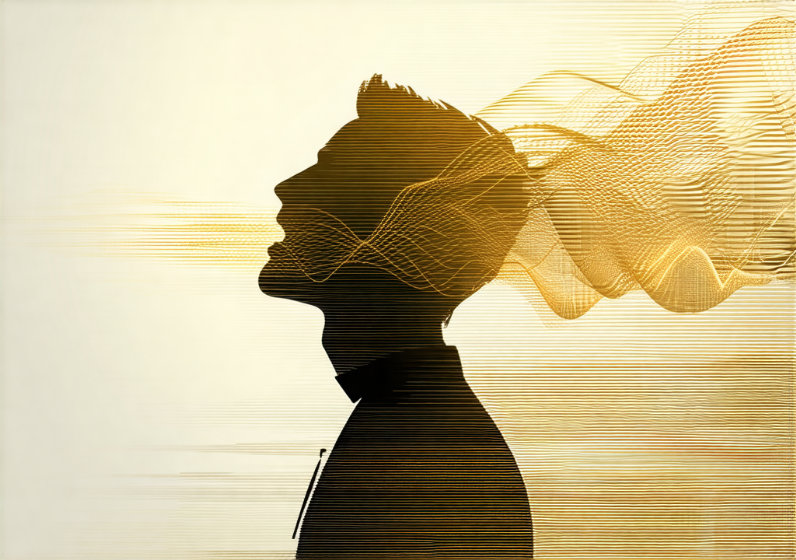
Clairvoyance — See Beyond Sight
By Dr. Elara Vane, Occultist & Author of The Third Sight
They call it the “fourth sight.” But naming is a trap — for language pins wings to what was never meant to be caged. Let us speak plainly: there are those who perceive without eyes, who know before knowing, and whose gaze rests not on the surface of things but upon the membrane behind them. To understand clairvoyance, one must first abandon the assumption that vision belongs only to the optic nerve.
The word itself is a whisper from Latin roots — clarus, clear; videre, to see. Not “seeing clearly,” as the translators would have you believe, but “the seeing made luminous.” The distinction matters. Ordinary sight is dimmed by glare, by distraction, by the relentless noise of the visible world. Clairvoyance is that which has been cleared — scrubbed of mist — until what remains is sharper than anything the physical eye could ever resolve.
☽ On the Nature of the Inner Eye
Hermes Trismegistus wrote in the Emerald Tablet: “What is below corresponds to what is above.” The inner eye does not look outward so much as it looks inward, and from that inwardness, the outer reveals itself like a photograph developing in chemical light.
The clairvoyant perceives along channels no physicist has yet mapped: through astral resonance, through sympathetic vibration, through the direct communion of soul with soul across distance. When Madame Blavatsky described “the psychic faculty,” she did not mean some ghostly extension of the nervous system. She meant something older — a faculty as real to the soul as sight is to the body, dormant in most people but kindled by discipline, shock, or lineage.
✦ The Ladder of Perception
To speak of clairvoyance without hierarchy is to surrender precision. And yet practitioners often stumble on this very point: they call any strange perception “vision,” and so the term collapses into mush. Let us distinguish carefully:
Sensation. A sudden heat in the chest when a distant friend is dying. This is the crudest grade — barely more than nerve-electricity. The body responds to forces it cannot parse. It is clairvoyance’s shadow, not its substance.
Astral Sight. Here the perceiver sees forms, colors, and movements in the astral plane. The dead appear as luminous figures; emotions manifest as hues — grief a bruise of violet, anger a flare of red-orange. This grade is common among the medium and the initiates of occult orders, yet few can describe it with precision. Most mistake it for imagination.
Discernment. A rarer faculty. Here the seer does not merely see but reads — as one reads a manuscript by observing its ink and paper. They perceive not only forms but their causes: why this person is dying, why that building will collapse, why the stranger in the corner will speak three words before disappearing into sleep forever. Discernment requires patience; it is slow, cold, and frequently unkind.
Intuition. The summit. In intuition, seeing dissolves entirely. There are no images to describe. Only knowing. The seer knows the outcome of events as one knows that fire burns, without having seen the experiment. It carries its own authority — not argumentative but gravitational. You either believe or you do not; there is no middle ground.
⚶ The Price of Sight
Every faculty exacts a toll. Clairvoyance is no exception. To see beyond sight is to be perpetually on stage, unblinking, while the world performs its endless pantomime. The clairvoyant cannot turn away. They absorb every grief in the room as though it were their own; they carry burdens of strangers like stones sewn into their coat pockets.
The great danger, moreover, is selectivity. Nature offers a full panorama of truth — brutal, undecorated, unflinching. But the human spirit can endure only fragments. So the clairvoyant learns to filter: taking in what serves them, rejecting what threatens to shatter their equilibrium. And slowly, without malice or intent, they become biased — not by will but by survival.
Hence the old warning whispered in esoteric circles: The clearer the sight, the more dangerous it becomes. For a man who sees only half of truth may be safer than one who sees all of it and must live among those who see none.
☉ The Practice — Or Rather, Its Absence
There is no single technique that opens the inner eye. There are thousands.
Some meditate upon their third eye until they feel pressure behind their brow like a sun rising in miniature darkness. Others fast for days and listen to silence with ears attuned beyond hearing. Some work through dreams — sleeping at odd hours, entering the twilight state where waking dissolves into something older than memory. Still others practice what Theosophists call “the quieting of the lower nature,” stilling desire and appetite until only perception remains — pure reception, like a seashell held against the sea.
But every path shares one prerequisite: discipline. Not discipline as drudgery, but discipline as attention. You cannot see clearly while your mind is a storm. You must become the clear sky in which visions may arise and pass without distortion.
✧ A Final Word on Certainty
The skeptic will say: “Show me evidence.” And they are right to demand it — yet certainty belongs to science, not to spirit. Clairvoyance stands beyond proof as music does beyond mathematics. You cannot prove a symphony is beautiful by measuring its frequency; you can only hear it and be changed.
So if you seek clairvoyance, begin where all real seeing begins: stop looking with your eyes alone. Let the darkness inside you become an instrument of perception rather than mere absence. And when — one quiet moment in a crowded room or a lonely night — something passes behind the veil that has never been visible to the ordinary sight…
…you will know, without proof, that the eye which truly sees is not the one they gave you at birth.
Dr. Elara Vane writes from an attic studio overlooking the Channel, where fog and revelation arrive together.