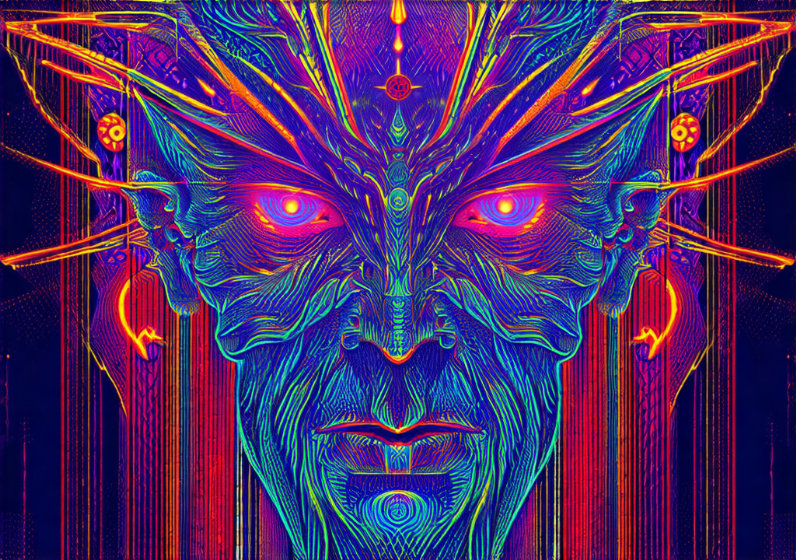
10 Things Your Subconscious Is Hiding From You In Your Visions
✦ The Ten Veils of the Inner Eye: What Your Subconscious Conceals Within the Vision
A Treatise on Hidden Knowledge, Shadow Reflections, and the Architecture of the Dreaming Mind
To stand before a scrying pool—whether it be water, crystal, mirror, or pure mental clarity—is to invite the subconscious to speak. Many practitioners of the esoteric arts assume that what is seen in vision is truth. The seer sees a symbol; the seer interprets the symbol; the seer acts upon the interpretation. It seems like a clean, linear process. But as any seasoned student of magic knows, the subconscious mind is not a transparent window. It is a labyrinthine cathedral built by the collective unconscious and the personal ego alike.
When we scry, we are not merely receiving information; we are engaging in a dialogue with our own hidden selves. The visions we receive are filtered through the prism of memory, desire, fear, trauma, and self-perception. Your subconscious is an editor, a censor, and sometimes a liar. It shapes the vision to make it palatable, to hide uncomfortable truths, or to protect you from knowledge that might shatter your current reality.
As we dive into the deep waters of the psychic realm, let us examine ten specific ways your subconscious hides truth within your visions. Understanding these veils is not about trusting the vision blindly; it is about learning how to deconstruct the illusion to find the seed of prophecy buried beneath the artifice.
I. The Mirror of Ego: You See What You Wish To Be
The most common concealment in scrying is the projection of self-image. When you look into the pool, your subconscious projects an idealized version of yourself or your life onto the medium. You may see a vision of success, beauty, or power that reflects not what is coming, but who you wish to be.
In magic, this is known as "ego scrying." If you are insecure about your status, you might see visions of grandeur—throngs of people bowing, golden doors opening, symbols of high authority. This is not a prophecy; it is a psychological comfort blanket. Your subconscious hides the mundane reality or the necessary struggles that lie ahead because it wants to soothe the ego. The vision becomes a self-fulfilling fantasy rather than a guide for action. To see through this veil, one must ask: "Am I seeing this because it will happen, or because I want it to?"
II. The Shadow of Trauma: Distorted Memories as Prophecy
Trauma has a unique way of hijacking the visionary state. When the mind is in a relaxed, receptive state during scrying, old emotional wounds can surface disguised as new insights. A past betrayal might appear as a vision of an upcoming parting; a childhood fear of abandonment might manifest as a symbol of a door closing.
Your subconscious hides the origin story of these visions by dressing them up in current context. You see the symbol and interpret it as a future event, when in fact, your mind is replaying a past emotional imprint. The vision feels fresh and new because the consciousness forgets that this specific symbolic language was learned years ago. To unmask this veil, you must cross-reference the symbols with your personal history. Is this a message from the spirit realm, or is it an echo of the childhood self?
III. Confirmation Bias: Only Seeing What Fits The Narrative
Once you have a hypothesis about what might happen, your subconscious works tirelessly to provide visions that confirm it and suppresses those that contradict it. This is the veil of narrative closure. If you are worried about a relationship ending, your subconscious will pull up images of broken chains, parted roads, or fading light. It hides the alternative possibilities—the images of growth, union, or stability—because they do not fit the story your conscious mind wants to tell.
This is particularly dangerous in divination. You ask for clarity, but you receive a caricature of your own anxiety. The subconscious hides the nuance because nuance requires energy and objectivity; confirmation bias is efficient. To pierce this veil, practitioners are often advised to seek "negative space" in their visions—looking at what is missing rather than what is present. What symbol did you not see? That absence often holds the hidden truth.
IV. The Alchemy of Fear: Turning Threats Into Mysteries
When a genuine danger or challenge approaches, your subconscious may hide its urgency by wrapping it in mystical imagery. Instead of seeing a clear vision of an obstacle, a financial loss, or a health issue, you might see a cryptic riddle, a strange animal, or an ambiguous landscape.
Why? Because the subconscious fears that if you see the danger clearly, you will become paralyzed by fear. So it hides the plain facts behind layers of symbolism. A simple bill due next month becomes a vision of a dragon guarding gold. A minor illness becomes a journey through a misty forest. The vision is true, but the concealment lies in the complexity. Your mind makes the hidden truth look like an esoteric puzzle so that you approach it with curiosity rather than panic.
V. The Gatekeeper’s Selective Memory: Forgetting the Uncomfortable Details
This veil operates on the memory of the vision itself. During scrying, your subconscious receives a full picture, but when you come back to waking consciousness, it edits the recording. It hides the details that were contradictory or uncomfortable. You remember the bright light, but forget the shadow in the corner. You remember the welcoming figure, but forget the cold wind blowing through the scene.
The subconscious acts as a gatekeeper of perception. If a vision suggests you should leave your job, and your ego wants to stay, the detail about the "open road" will be remembered, while the detail about the "burning bridge behind you" will fade from memory. The vision is retained only in its most palatable form. To counter this, keeping an immediate journal during or right after a scrying session is essential. Capture the raw data before the subconscious begins its editing process.
VI. Collective Unconscious Interference: Borrowed Symbols and Shared Myths
We do not create symbols in a vacuum. Our subconscious draws from the collective unconscious—the shared cultural, mythological, and archetypal library of humanity. Your subconscious hides your personal truth by dressing it in universal costumes. You might see a "flood" because you have read about Noah’s Ark or the Great Flood myths, even if the specific message is purely personal and unrelated to water.
The concealment here is one of origin. Your mind assumes these visions come from deep personal insight, but they are often borrowed from books, movies, dreams of others, or cultural narratives. The subconscious hides the source because referencing a famous myth gives the vision more weight and authority than if it were an idiosyncratic, quirky personal symbol. To distinguish the personal from the collective, you must know your own unique symbolism. What does a snake mean to you specifically? Not what it means in general folklore, but what it has meant in your personal life?
VII. The Veil of Complacency: Hiding Need for Action
Sometimes, your subconscious hides vision to protect you from the discomfort of change. If a vision requires you to break a habit, end a friendship, or start a difficult project, your mind may make the vision seem passive or decorative. It becomes "just an image" rather than "a command."
You see the vision, enjoy its beauty or strangeness, and move on with your day. The subconscious hides the imperative nature of the sight. It turns a call to action into a scenic view. This is common in those who have been practicing magic for years. We become so comfortable with the aesthetics of scrying that we forget it is a tool for transformation. The vision becomes a hobby, and the subconscious hides the urgency because change requires work, and work is exhausting.
VIII. The Illusion of Time: Past as Future, Future as Past
In the realm of magic, time is not linear. Your subconscious often struggles with temporal orientation. It may hide the timing of a vision by blending past memories with future probabilities. You might see a scene that actually happened last year, but because it feels vivid and present, you interpret it as a prediction for next week.
Conversely, your subconscious might take a likely future event and dress it up in the aesthetics of your nostalgia. It hides the newness of the future by making it feel familiar. This veil makes divination tricky. The vision is real, but the timestamp is hidden or scrambled. Your mind wants stability; seeing something familiar feels safer than confronting the unknown. To decode this, look at the "texture" of the time in your vision. Does it feel dusty and old? Or does it feel bright and untested?
IX. The Protective Fiction: Hiding Truth That Is Too Large
When the subconscious senses that a truth is too big for the ego to hold all at once, it creates a protective fiction. It will hide the full scope of a vision by showing you only a fragment. If your soul knows you are destined for a major life transition—like moving continents or changing careers entirely—the conscious mind might rebel if given the whole picture. So, the subconscious shows you a small door opening, rather than the entire city outside it.
It hides the magnitude of the truth to prevent overwhelm. The vision is a drip feed, not a firehose. Your subconscious knows that if you see the ocean all at once, you might drown in it. So it gives you a glass of water and tells you there is more later. This concealment is an act of mercy by your inner self, but it can also be a source of frustration for the seer who feels they are missing something big.
X. The Silence Between Images: What Is Not Shown
Finally, the most subtle veil is the silence. Your subconscious hides truth in the negative space between images. It shows you the symbol, but hides the context. It shows you the person, but hides their emotion. It shows you the object, but hides its purpose.
In scrying, we are often so focused on decoding what is seen that we ignore what is conspicuously absent. The subconscious knows that a picture is worth a thousand words, but it also knows that silence is worth a thousand questions. By hiding the background, the emotion, or the secondary details, your mind forces you to engage with the vision more deeply. It hides completeness because completeness eliminates mystery, and mystery drives the practitioner to seek deeper understanding.
Decoding The Veils: A Practical Approach for the Seer
Understanding these ten ways of concealment does not mean we should doubt our visions. On the contrary, it means we respect them. We recognize that a vision is a collaborative effort between the spirit world and the human psyche. To be an authority on magic scrying requires more than just looking; it requires deconstructing.
Here are practical steps to help you see through these veils:
1. The Journal of Raw Data
Immediately after a scrying session, write down everything you saw before analyzing it. Do not interpret. Just describe. "I saw a red door." Not "The red door means my career is closed off." Capture the raw data so that your subconscious cannot edit the record in real-time.
2. The Cross-Reference Method
Take the symbols from your vision and cross-reference them with three areas: your personal life history, your current emotional state, and general archetypal meanings. If all three align, you have likely found the truth. If they conflict, investigate which one is the projection (the veil) and which one is the message.
3. The Question of Motivation
Ask yourself: "What do I want to be true right now?" And then ask: "What am I afraid might be true?" Often, the vision you are most eager to believe is the one your subconscious is hiding details from, because it’s protecting you from the cost of that belief.
4. The Mirror Test
Use a physical mirror or still water for some sessions. The reflection forces a confrontation with self-image. If you see yourself in the pool, ask: "Who am I pretending to be right now?" This helps unmask the Ego Veil (Veil I).
5. The Inverse Reading
Take your primary interpretation of a vision and find its opposite. If you see a closed door, also consider that it might mean "protection" or "privacy." If you see a fire, consider "warmth" as well as "destruction." Your subconscious often hides meaning by relying on the most obvious association; the hidden truth is usually in the less obvious one.
The Art of Receptivity
Magic scrying is not about commanding answers from the universe or your mind. It is an act of receptive alchemy. You prepare the vessel (your mind), you add the reagents (focus, intention, and stillness), and you wait for the reaction. The subconscious is a partner in this process. It holds memories, fears, hopes, and ancient knowledge. It hides these things from your conscious self because it is trying to protect you, comfort you, or guide you in ways that your linear mind cannot yet understand.
When we acknowledge these ten veils, we do not diminish the magic of vision; we deepen it. We move from being passive recipients of images to active interpreters of meaning. We recognize that the subconscious is not an enemy, but a co-conspirator in our spiritual growth. It hides truth to make us work for it, to make us seek it, and ultimately, to earn it.
In the quiet moments before you close your eyes or look into the pool, remember this: You are not just looking at a screen. You are looking at yourself. And the most interesting things about you are often the ones you have hidden away in the dark corners of your mind. The vision is simply the light that allows you to see those corners.
May your eyes be clear, may your heart be open, and may you find the truth hiding in plain sight within the mists of your own inner temple. 🜁🜂🜃🜄