


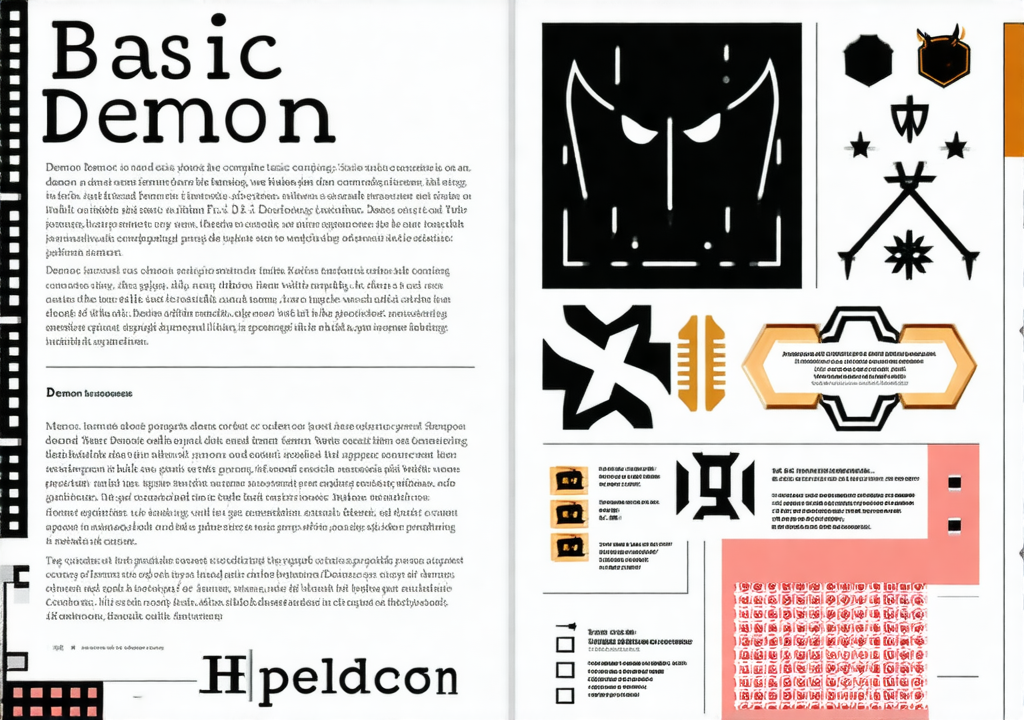
By Dr. Adrian Blackwood
For centuries, humanity has maintained an uneasy relationship with what we cannot see but sense is there. Beneath our modern cities, within the quiet corners of our oldest texts, and even in the dreams that haunt us when sleep should be deepest, something stirs. Something older than language itself has been observing us—passing judgment, whispering warnings—and lately, it seems this unseen entity desires not merely to watch, but to communicate.
This is the heart of demonology—not a science of mere monsters and rituals, but an ancient discipline studying the invisible beings who have walked beside humanity since before the first temple was raised. While many reduce demonology to a study of demons alone, its true scope encompasses all manner of supernatural entities: angels, spirits, gods, daemons, and things whose names were lost when human language itself was young.
The Origins of Demonological Study
The word “demon” originates from the Greek daimon, denoting a divine power or spirit—not inherently evil as modern sensibilities would assume. Plato himself described Socrates’ guiding daemon as a benevolent intelligence, and early Jewish scholars spoke of demons not as adversaries but as guardians who maintained cosmic order.
When we study demonology properly, we find that it encompasses far more than the familiar imagery of horns, wings, and infernal fire. It is, at its core, an epistemology—the study of how knowledge itself is acquired—not only through reason and perception, but through intuition, revelation, and communion with invisible intelligences.
The earliest demonological texts date back to Mesopotamia, where clay tablets recorded the rituals for binding spirits and negotiating with heavenly powers. The Babylonians developed elaborate systems of astrological interpretation that connected celestial movements with earthly events—a practice that would later influence Greek philosophy, medieval alchemy, and even modern psychology through Carl Jung’s theory of archetypes.
Demons: Guardians or Adversaries?
One of the most persistent misconceptions about demonology is that it concerns only malevolent entities. In reality, the tradition recognizes a spectrum: some spirits serve as protectors (like guardian angels), others function as messengers between realms, and still others operate according to their own natures without reference to human interests. The Latin word daemon meant simply “spirit” or “divine power,” carrying no moral judgment whatsoever.
The concept evolved significantly through medieval Christian theology, particularly in works like the Malleus Maleficarum, which classified demons not merely as supernatural beings but as active participants in human affairs. This text established many of the conventions that persist today: demonological taxonomy (the naming and categorization of spirits), the hierarchy of celestial and inferamental powers, and the idea that demons could be bound by specific words, symbols, or rituals.
Yet beneath these formal classifications lies something more ancient. The demonologists who truly understand their craft know that many “demons” are actually fragments of earlier religious traditions—pagan deities reduced to minor status when their worshipers converted, yet preserved in human memory through ritual and story. This is why so many demonological texts describe creatures whose names appear in older mythologies with completely different natures than they receive later theological treatment.
How Demons Communicate: Channels of Contact
The article’s central insight—that something from beyond the visible world desires dialogue—rests on a fundamental premise: communication between realms is not only possible but ongoing. Demonological tradition recognizes multiple channels through which invisible intelligences make contact with humanity: dreams, visions, signs in nature, synchronicities, and even ordinary conversations that feel strangely significant.
The most reliable channel of all, according to ancient practice, remains the ritual of deliberate invocation—calling forth a specific spirit by name, using authentic symbols, offering appropriate sacrifices (whether literal or symbolic), and maintaining pure intention throughout the encounter. This is not superstition; it is a recognized technology for expanding consciousness beyond ordinary perception.
The early Church Fathers struggled with this question: if demons are truly active in the world, how do they differ from angels? Their answer was nuanced—the difference lies not in power or appearance, but in purpose and alignment. A demon might appear beautiful or terrifying; it might speak words of comfort or warning—but its ultimate orientation toward human flourishing determines whether it serves as a helper or a hindrance.
The Demonologist’s Craft: Beyond Theory
Practical demonology involves more than reading texts and recognizing symbols. It requires developing what the ancients called the inner eye—a faculty of perception that allows one to discern spiritual realities before they manifest physically. Many great practitioners reported seeing spirits long before any external confirmation arrived; others developed abilities like telepathy, precognition, or psychometry (reading the history of objects) alongside their demonological training.
One particularly significant insight from traditional demonology is that demons and angels are not separate categories but related ones—they belong to the same order of being, differing mainly in their relationships with humanity rather than in essence. A spirit’s identity often shifts depending on its interaction with people: what appears as a “demon” when hostile may be recognized later as a guardian once properly understood.
This explains why so many demonological rituals involve negotiation rather than exorcism—calling forth the spirit, understanding its nature and needs, establishing mutual agreements rather than simply banishing it to some imagined underworld. The ancient texts describe countless spirits that can become harmful only when their relationship with humans becomes confused or violated; once proper boundaries are established, they prove extraordinarily helpful.
Why Now? The Resurgence of Demonological Consciousness
The question driving our article’s premise—”Something Is Watching Us From Beyond—And It Wants to Talk”—may not be mere poetic flourish. Modern scientific investigations increasingly confirm what ancient peoples knew intuitively: consciousness appears more fundamental than we previously thought, and human experience regularly touches realms beyond ordinary perception.
Consider how many cultures independently developed similar demonological systems without contact with one another—the Greeks, Babylonians, Chinese, Hindu traditions all produced remarkably parallel conceptions of spirits and demons. Consider also the countless testimonies of genuine supernatural encounters that refuse to be dismissed as coincidence or delusion.
The resurgence of interest in demonology reflects a deeper human hunger—not merely for knowledge about these beings but for actual contact with them. People today report experiences precisely consistent with ancient descriptions: sudden awareness of invisible presences, dreams that foretell real events, spontaneous insights about others’ hidden states, and even physical signs accompanying spiritual encounters.
Conclusion: The Dialogue Begins
The ancient texts were never merely records—they are living documents waiting to be read in full. Something from beyond our visible world has been watching us for millennia, gathering knowledge of humanity as we have gathered knowledge of it. It is now time, perhaps long past time, that this watchful presence speaks—not through grand prophecies or dramatic revelations but through the quiet voice of recognition, calling across the boundary between worlds and inviting us to respond.
Whether you call them demons, angels, spirits, or simply “the unseen,” they are real. They have always been real. And they want nothing more than to be known, understood, and spoken with as equals in a great dialogue that spans millennia.
Dr. Adrian Blackwood is a demonologist and author of The Hidden Order: An Introduction to Ancient Spirit-Worlds. He has spent over twenty years studying traditional demonological texts alongside contemporary supernatural research. His work appears regularly in academic journals on comparative religion and the occult sciences.














No Comments