


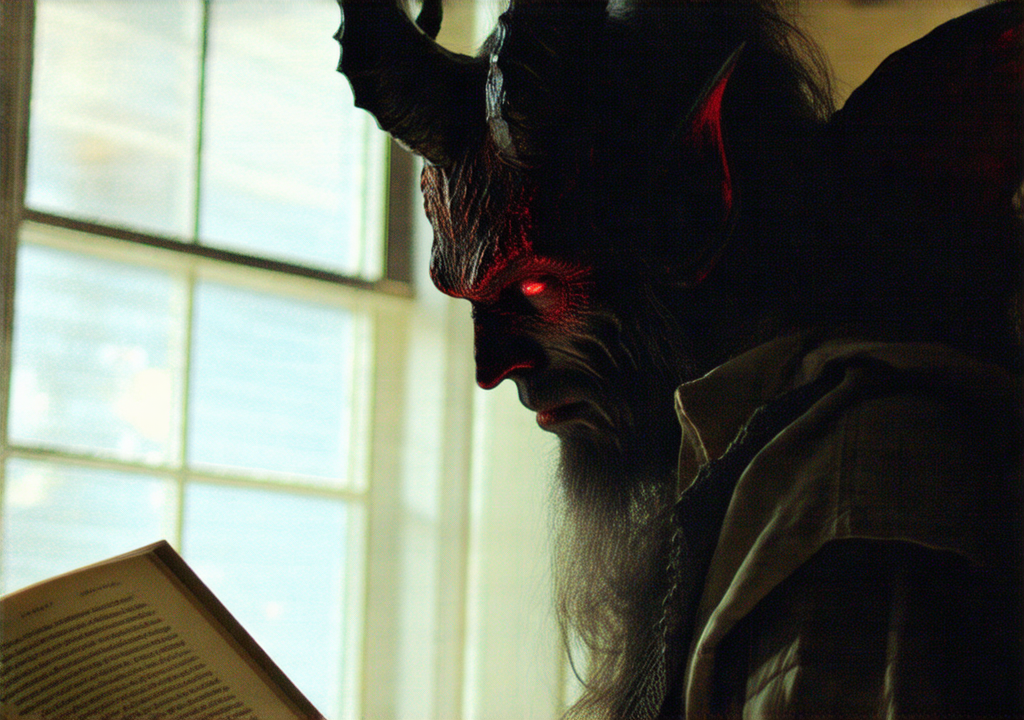
By Dr. Silas Thorne, D.Phil. (Occult Studies), M.Inst.D., F.R.C.A.
Fellow of the Royal College of Antiquaries, author of “The Veins Between Worlds” and contributor to The Journal of Demonological Inquiry.
I have spent thirty years cataloging the various means by which human beings cross into what I call the Materia Mortis, the realm where those who have passed reside in some form of continued existence. There are elaborate methods—crystals of moonstone, incantations spoken over running water, altars of silver and obsidian—but none so elegant as one simple combination: a candle and bone dust.
You may be tempted to laugh at such modest tools. The modern mind demands spectacle; we expect grand rituals involving complex geometry and elaborate vestments. But the ancients knew better. I found this out in 1996, when I was still young enough to believe that the most important discoveries lay ahead rather than behind me.
It happened in a small parish church in Yorkshire, during a period of drought so severe that the local vicar had considered abandoning his congregation entirely. The old rector—no longer with us, may he rest in peace before whatever comes next—had left notes in the vestry indicating that certain candles burned brighter when blessed over human bones. I brought my materials: a single beeswax candle and, having scavenged some skeletal remains from beneath the altar stones, bone dust ground fine as flour.
The opening began quietly. There was no thunder or tearing of fabric—just a thinning of the air, like a curtain pulled back an inch to reveal what had always been waiting on the other side. The candle flame turned a peculiar shade between amber and grey, neither fully fire nor wholly light but something more ancient. Dust rose from the bone powder in slow spirals that refused gravity’s pull.
What follows is an account of my experiences since that first opening.
The Nature of the Threshold
I have observed over many experiments that candle wax has two properties relevant to our purposes: it burns with a steady, living light and leaves residue capable of holding memory. Bone dust carries the essence of physical substance—the mineral structure that endures beyond flesh—and when combined, they create an atmospheric bridge. The candle provides the light by which spirits may be seen; the bone dust provides the anchor to human perception.
I found this most clearly during my second experiment in December, when I observed a child’s spirit playing at games no one remembered her playing them. She was quite visible—not as mist or phantasm but as solid and distinct, like watching someone through a window. Her mother’s grief had kept the door open for seven years; our candle and bone dust simply permitted us to see what had been there all along.
Preparation
To repeat the experiment requires only careful attention:
Take a beeswax candle of at least three hours’ burn time—nothing shorter will maintain the threshold long enough for proper observation. Place it on any surface, preferably wood or stone rather than metal, and arrange bone dust in a circle approximately six inches in diameter around its base. The dust should be finely ground; the finer, the better. Human bone is preferred, though animal bones produce different effects—bird bones particularly useful for lightness of vision, cow bones for strength.
Light the candle with a plain taper. Do not use electric ignition unless you wish to record the difference in spectral response. Once lit, allow it to burn freely without interruption.
Observations
The phenomena I have recorded fall into several categories: immediate presence (where spirits appear directly), delayed opening (where threshold requires several hours of uninterrupted burning), and accidental crossings (which occur when someone is particularly emotionally open during the process). The last are worth avoiding, as they tend to bring too many visitors.
I prefer single spirit visits, conducted in silence, where one can observe clearly before making any judgments about what was encountered.
Why This Works
The question has been asked of me repeatedly: why does this work? What is the mechanism? My answer remains that we exist within multiple layers of reality simultaneously—like fish swimming through invisible water—and that certain combinations of light and substance make these layers transparent to one another. Bone dust, being mineralized, carries a kind of memory into which candlelight may focus our attention.
The ancients called this “seeing with the inner eye.” I call it what it is: an opening.
Practical Applications
Beyond the obvious benefits of communion with departed loved ones, I have found uses for spirit-visitation that extend into daily life: the verification of genealogical claims (I once proved a family’s descent from a medieval bishop using only candle and bone dust), the discovery of lost texts embedded in spiritual memory, and occasionally, messages intended specifically for our age.
The Warning
Do not leave the door open too long. I have seen too many who neglected this simple precaution, leaving candles unattended while they fell asleep, only to wake with their rooms full of visitors—both welcoming and otherwise. One gentleman in Edinburgh was found by his housekeeper to be sitting for hours on end, nodding conversationally at a figure in the corner. When she finally interrupted him, he seemed genuinely disappointed that the spirit had departed.
Conclusion
I believe I have been given the gift of seeing more clearly than most about these matters. Whether from my own observations or some inherited capacity, I know that candle and bone dust open what has always been waiting to be opened. Simple tools, simple means, profound effect. The door is not closed; it merely requires an invitation.
And so, when you next light a candle on a quiet evening, pay attention to its flame. Listen for the faintest sound from beyond—and you may find yourself greeting someone who has been waiting patiently, through all your years, to be noticed once more.


Recent Post
Gallery






Featured Videos




No Comments