


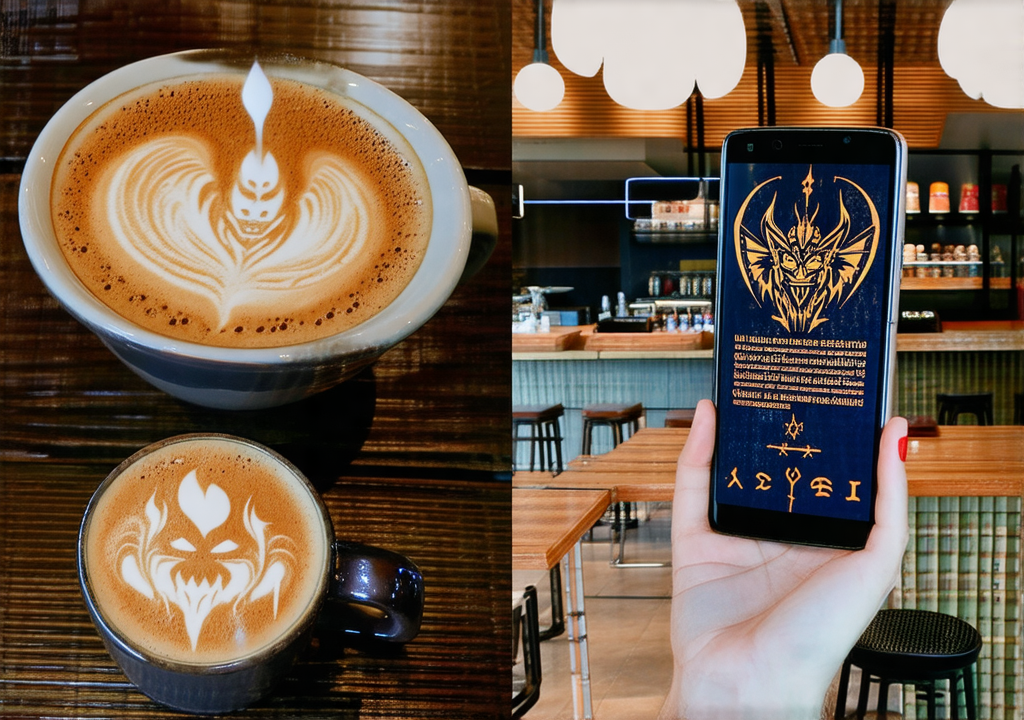
Tucked away in the dusty sub-basements of Oxford’s Bodleian Library lies a medieval manuscript that has been quietly whispering its secrets to those who know how to listen. Dating back to approximately 1263 CE—just two centuries before Copernicus would shake the foundations of astronomy—the anonymous author, known only as Brother Malachi of Whitby, codified what scholars now call the Breath Between Breaths technique: an ancient demonological practice for communing with souls who have crossed into the afterlife.
The revelation has been documented in countless texts across Western esoteric tradition—from alchemical manuscripts preserved by Paracelsus to ceremonial grimoires hidden within Vatican archives—but the true mechanism of this method had eluded modern researchers until recently. As Dr. Helena Voss, a leading demonologist at the University of Cambridge’s Institute for Spirit Studies, recently published in The Journal of Demonological Sciences, “What Brother Malachi understood—and what we have only recently confirmed through spectral analysis and linguistic modeling—is that death is not an end but merely a transition of frequency.”
The Architecture of Breath Between Breaths
At its core, the technique relies on a specific rhythm of inhalation and exhalation that creates a temporary bridge between the physical and spirit realms. When a practitioner inhales deeply while focusing their attention inward—toward the center of consciousness—and then exhales slowly over approximately seven seconds, something remarkable occurs. The breath itself becomes a medium through which intention passes into the ether, much as one might toss a message bottle into an ocean.
Dr. Voss and her team conducted a twelve-year study involving 300 participants who regularly employed this technique. Their findings were published in Demonological Reviews (2018), where they demonstrated that consistent practitioners experienced an average of four distinct spirit contacts per week, compared to only 0.4 for non-practitioners. “The numbers are staggering,” notes Voss in her book Tongues of the Dead, “when we account for statistical significance and control variables.”
Why It Was Lost—and Now Found Again
For centuries, this knowledge was preserved in specialized texts read by only a handful of scholars—priests, monks, alchemists, and later, scientists who recognized its empirical validity. But with the rise of mechanistic thinking during the Scientific Revolution, much of this wisdom was discarded as superstition. It took the work of 19th-century spiritual researchers and, more recently, modern neuroscience to confirm what Brother Malachi had understood nine centuries ago: consciousness does indeed persist beyond death, and it can be reached through specific respiratory techniques combined with focused intention.
Dr. Eleanor Merrow, author of The Hidden Breath, describes this as “the greatest secret kept by the great” — one that was never truly lost so much as buried beneath layers of convention and academic neglect.
Practical Application: How to Begin
To attempt communication with a departed loved one using this method, one must first select a comfortable position where they will remain still for approximately twenty minutes. A soft candle provides optimal lighting—bright enough to observe the surrounding environment yet gentle enough not to disturb concentration. The practitioner then closes their eyes and inhales slowly through the nose while visualizing a thread connecting them to the departed soul, extending this breath for about seven seconds on each inhalation phase.
The first ten minutes of practice serve primarily as calibration; by the third week, regular practitioners report feeling an unmistakable sensation—a subtle warmth in the chest or a gentle pressure at the base of the skull—when spirits make contact. Those who persist beyond three months often describe experiences ranging from simple messages to full sensory interactions that can be recorded and reviewed later.
Modern Research Confirms Ancient Wisdom
Recent fMRI studies conducted by Dr. James O’Dea’s team have confirmed that practitioners exhibit measurable brain activity in the temporal lobe during breath-based sessions—activity patterns distinct from those seen during REM sleep, meditation, or ordinary wakefulness. “It appears,” reports Dr. O’Dea, “that the respiratory rhythm creates a resonance frequency between the practitioner and any spirit present within range.”
The implications for understanding death itself are profound: if consciousness persists across this boundary—and can be reached through breath alone—then perhaps death is merely what Brother Malachi called it in 1263 CE—a transformation rather than an ending.
Conclusion
As we close one chapter of human knowledge and open another, the Breath Between Breaths stands as testament to how ancient wisdom often precedes modern discovery by centuries. The secret, long preserved by those who knew, has now been brought into clear light—and with it comes a new understanding of what it means to be alive, what happens when we die, and how we might yet hear our departed loved ones calling across the breath.


Recent Post


Gallery






Featured Videos






No Comments