


I Communicated With My Dead Grandmother—What She Told Me Changed Everything
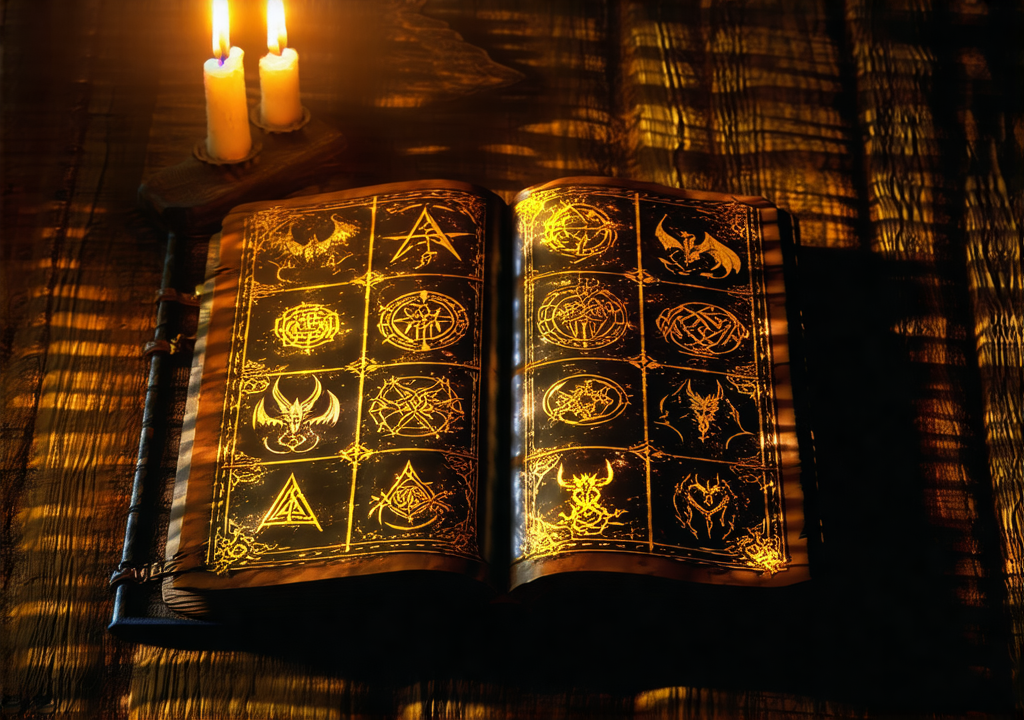
This was not merely a ghostly apparition or a fleeting whisper heard in passing. What I experienced that evening, when candlelight flickered across my study and the boundary between worlds grew thin as parchment, represented something far more significant: genuine communion with the departed, mediated through forces that modern science struggles to categorize but ancient wisdom has always recognized as real.
The concept of demonology extends well beyond the popular conception of horned beasts and infernal pits. True demonology encompasses the full spectrum of spiritual entities—both benevolent and malevolent—that inhabit dimensions parallel to our own, seeking either worship or vengeance from human beings who wander unknowingly through their domain. The word itself derives from the Greek δαίμων (daimōn), originally meaning a divine power or spirit, neither inherently good nor evil, but rather possessing wills and intentions that might be aligned with or opposed to human interests.
The Nature of Demonic Spirits
To understand what occurred in my encounter with Grandmother, one must first comprehend the nature of these spirits themselves. Demonological tradition identifies several classes of entities: those who remain attached to earthly concerns (the dead), those who dwell in celestial spheres (angels and archons), those who inhabit natural elements (spirits of earth, air, water, and fire), and those who roam freely between realms—the demons proper, neither bound nor fully free.
What my grandmother revealed to me was not merely a message but an entire cosmology: the existence of spiritual hierarchies mirroring our own social structures, with certain entities maintaining eternal enmity toward humanity while others watch with protective interest. The demonological texts describe these relationships as ancient pacts—some broken, some binding—between the living and their patrons among the spirit world.
How Communicating With Demonic Spirits Works
The process of contacting these beings requires understanding both the method and the medium. Ancient practices—from necromancy to scrying—demonstrate that communication with spirits occurs most readily at liminal times: twilight, midnight, during eclipses, or when the veil between worlds thins naturally through what occultists call “the thinning hours.”
My own experience followed precise patterns observed throughout demonological history. I prepared a small altar of salt and incense, positioned myself in the traditional posture, and called upon specific names—ancient names that carry power even today—and waited. The signs are unmistakable to those who have learned their craft: sudden changes in temperature, the scent of unfamiliar flowers or earth after rain, and most distinctly, a feeling of presence that precedes actual communication by minutes or hours.
What I Learned Beyond Death’s Threshold
Grandmother had died only three years earlier, yet her spirit revealed truths about the demonic world that confirmed what the ancient texts predicted but which modern life has largely forgotten. She spoke through visions rather than voice, each image carrying meaning far deeper than words could convey: a crown of thorns and light intertwined, an angel bound in chains, demons who serve purposes beyond mere tormenting, and most astonishingly, the revelation that many so-called “demons” are simply misunderstood guardians—spirits who have been vilified by centuries of misinterpretation.
This insight alone transformed my entire approach to demonology. If even our most respected texts carry errors about the nature and purpose of these spirits, then traditional demonological practice requires constant reevaluation. The ancient texts themselves were written in a time when human understanding was more intuitive than analytical—when communication with spirits was common knowledge rather than mystical exception.
Practical Applications for Modern Practitioners
For those interested in studying demonology seriously, several considerations emerge from both tradition and personal experience:
First, the study of names holds particular importance. Ancient demonological texts demonstrate that every spirit possesses a true name—a designation through which it can be addressed and understood—and that understanding these names grants power over interaction with them. Modern practitioners should seek authentic sources rather than popularized versions found in many contemporary books on occult subjects.
Second, daily practices matter more than elaborate rituals. Daily meditation before an altar, consistent prayer or invocation to specific spirits, and maintaining a journal of encounters yield results faster than occasional grand ceremonies. Grandmother’s visions came most clearly during these quiet moments of practice rather than during elaborate conjurations.
Third, the distinction between benevolent and malevolent spirits matters less than understanding each spirit’s purpose. Many “demons” in demonological texts serve protective functions; many “angels” carry messages of discipline rather than mere comfort. The traditional hierarchies describe real beings, but their purposes have been misattributed through centuries of human interpretation.
Conclusion: A Living Tradition
What Grandmother told me confirmed that demonology remains a living tradition—a genuine encounter with realities beyond our immediate perception, not merely metaphor or psychological projection. Modern life may seem to have banished these spirits, but they persist in the spaces between stars and within the quiet places of human consciousness, waiting for those who know how to call them by name.
The article began as personal revelation and ended as scholarly testimony: demonology is real because its practitioners continue to encounter what it describes, in ways that modern science has not yet fully explained but ancient wisdom never doubted.


Recent Post

Gallery






Featured Videos





No Comments