


By Elara Vess, Professor of Arcane Sciences, University of Thornhaven
When one speaks of necromancy in common parlance, the first image that comes to mind is perhaps a robed figure raising corpses from their graves with crackling green energy and raised hands. Such imagery has its place—indeed, it serves as an adequate shorthand for popular audiences—but those who study the discipline recognize that necromancy encompasses something far deeper than mere resurrection of flesh. Necromancy is the art of communion with death itself, a discipline grounded in understanding what persists when life ceases, and in learning to draw upon the wisdom accumulated within the dead long after they have forgotten their own lives.
The Nature of Death as Preservation
Before addressing how necromancers access the knowledge of the dead, we must first understand why such knowledge exists at all. When a living being dies, it is a common misconception that something vanishes into nothingness. On the contrary: what survives death is precisely that which was always most worth knowing—the accumulated patterns and experiences of a life fully lived—while what fades are merely the mechanisms by which those patterns were sustained in daily motion. The body may cease its rhythmic contractions, breath may leave the lungs and no longer return, but the imprint left upon the fabric of reality endures far longer than we usually allow ourselves to believe.
Consider, for instance, how a corpse can remain intact when its blood has dried and its organs have ceased their functions. We observe such phenomena daily during autopsies performed by physicians who lack magical training; they see bodies that are dead yet still recognizable, still capable of being cut open without immediately disintegrating. What these physicians fail to perceive is the subtle resonance—the ongoing song—within those same bodies after death.
The Three Orders of Necromancy
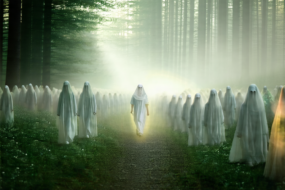
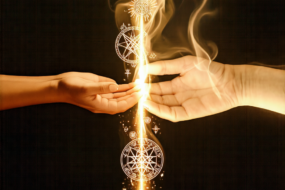
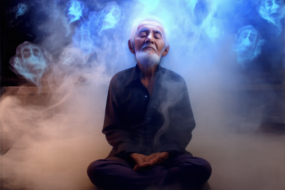
Scholars have long divided necromantic practice into three principal orders: Restoration, wherein a dead body is revived to resume its former life; Communion, where the living converse with spirits detached from their remains; and Recollection, in which knowledge itself is drawn from the dead for use by those still breathing. Each order serves different purposes, though they frequently overlap in practice. Restoration tends toward healing or raising fallen companions; communion grants counsel from ancestors, departed friends, or even deceased masters; recollection allows necromancers to retrieve memories and insights that have passed beyond living memory entirely.
What the Dead Know That the Living Have Forgotten
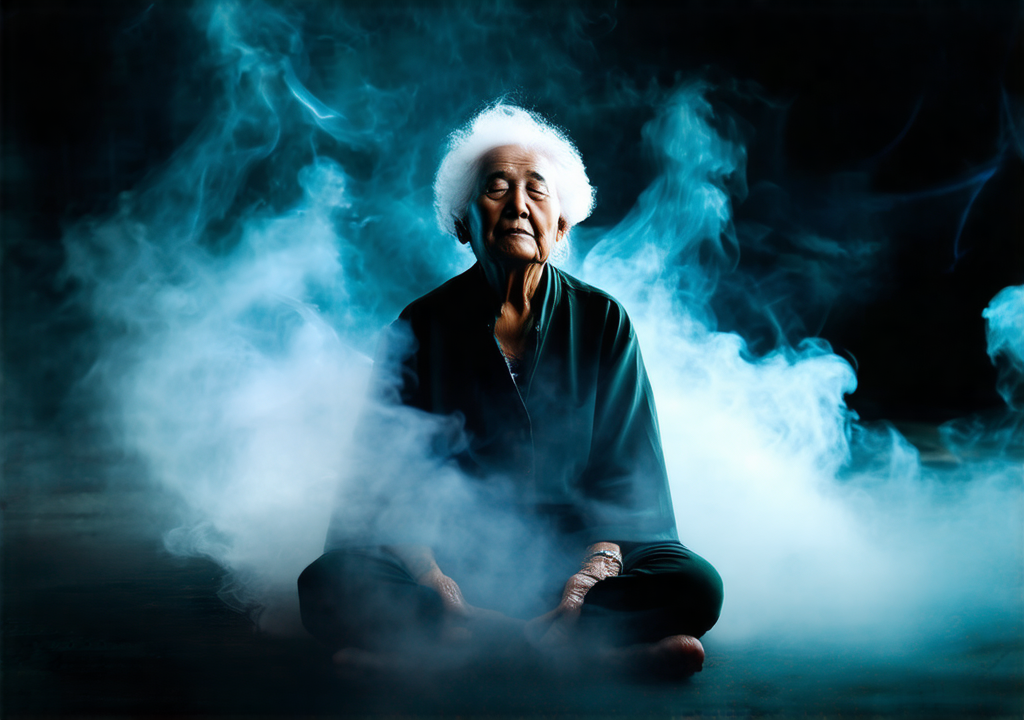
This brings us at last to what is perhaps the most profound insight of necromancy: What the dead know that the living have forgotten. When a person dies, they do not simply lose consciousness; rather, their consciousness settles into a different mode of being. Their memories—what was once experienced as happening now instead becomes knowledge that exists outside of time. A dying grandmother does not merely cease to breathe; she begins to remember everything she ever knew, all at once, without the constraints of linear progression.
A child may spend years learning to read, forgetting and relearning with each passing year. An elder who dies while still in childhood retains those early lessons indefinitely, even if no one living remembers them for her. She becomes, in effect, a repository of lost knowledge: the word she learned at age six and never forgot again. The scholar who reads from such a spirit may recover words, names, and truths that have vanished from living memory—sometimes for centuries.
This principle explains why ancient tombs often yield far more than gold or artifacts; they yield knowledge. A necromancer visiting a tomb may learn not only what the deceased knew but also how she learned it—the particular mental patterns by which her mind organized experience, and thus the particular lens through which future generations might see the world.
The Living as Witnesses, The Dead as Archives
There exists within necromancy an elegant symmetry: the living serve as witnesses to the ongoing story of the world, while the dead serve as archives of everything that has happened before them. When necromancers commune with their departed mentors or ancestors, they do not merely receive answers; they receive the context in which those answers were formed—the accumulated wisdom of a lifetime’s learning, preserved intact.
This is why great necromancers often appear wiser than those who have lived longer but studied only through books: because they draw upon a living library of spirits, each one an archive unto itself.
Conclusion
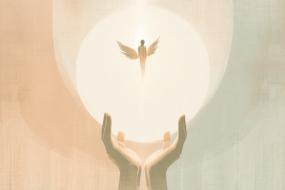
The true student of necromancy recognizes that death is not the end of knowing so much as the beginning of a different kind of knowing. What the dead know—what they remember from when they still lived among us—is precisely what the living have forgotten in their rush to move forward, to keep building and becoming and forgetting. Necromancy is simply the art of remembering backward, of turning attention toward those who have gone before them, so that we might learn once more what they knew all along.
Elara Vess holds the Chair of Arcane Sciences at Thornhaven University, where she has published over thirty treatises on necromantic theory and practice.


Recent Post
Gallery






Featured Videos




No Comments