


By Eleanor Blackwood, Author of “The Living Dead and What They Know”
In the quiet hours before dawn, when shadows still cling to the earth and the world holds its breath between one day’s end and another’s beginning, the old ones stir. Necromancy is not merely the art of raising the dead—it is a conversation with those who have crossed over, a bridge between what was lost and what remains. It is ancient, it is misunderstood, and yes, it works.
The Architecture of Death
Before one can command death, one must understand it. Death is not an ending so much as a transition—a movement from one form to another, from breath to stillness, from memory to myth. The body becomes a vessel even after the soul has departed; it retains echoes, imprints, and sometimes far more than that.
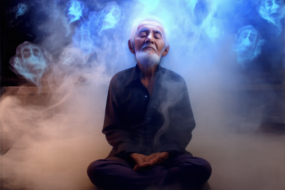
The necromancer’s first task is recognition: learning to see what others cannot see. Not ghosts in tattered shrouds, nor spirits wailing at window frames—rather, the subtle traces left behind. A lingering warmth where a body once lay. A whisper of scent on cold air. The way shadows sometimes linger longer than they should.
Methods and Techniques
There are many ways to reach across the divide between life and death:
Ritual Invocation: Perhaps the most traditional approach, this involves gathering specific materials—bone dust from ancient remains, salt rings drawn with particular herbs, candles arranged in geometric patterns—and reciting words that have been passed down through generations. The language matters less than the intent; it is the focused will that commands attention, not merely the syllables spoken aloud.
Blood Binding: More visceral and immediate, blood binding uses the living’s own substance to call forth the dead. A drop of blood upon soil where a body rests can summon memory. Full ritual requires more—blood drawn from both living and dead, mixed in specific ratios, written upon parchment with particular ink—and then spoken over.
Spirit Anchoring: The most elegant method, requiring minimal materials but great precision, involves creating an anchor—a physical object imbued with intent that serves as a beacon for wandering spirits. A locket containing hair, a stone from a grave, even a lock of the deceased’s own hair—each can serve as anchoring point through which the dead may briefly return to communicate.
Death-Calling: Less commonly practiced is death-calling itself: not summoning the dead but rather asking them questions directly. This requires great skill and often a willing participant who serves as medium or channel, their consciousness stretched across both worlds simultaneously.
The Practice of Necromancy in Daily Life
Many people practice necromancy without realizing it. Grieving parents sometimes find comfort in dreams visited by departed loved ones; gardeners feel confident that dead leaves make excellent fertilizer; mourners understand better than most the truth that death is not an ending so much as a transformation. The ancient practitioners knew this instinctively, weaving necromantic principles into daily practice without formal ritual or ceremony.
What distinguishes true necromancy from mere superstition is intentionality: deliberate action with clear purpose and observable results. When someone speaks to the dead—whether in dreams, through meditation, or via specific techniques—and receives responses that prove genuine rather than imagined, that is necromancy truly at work.
Common Misconceptions
Many believe necromancy requires dark ceremonies performed under full moons by candlelight while chanting in forgotten tongues. This is not so. While such practices are beautiful and occasionally effective, true necromancy works equally well in daylight during ordinary circumstances. The rituals themselves may appear simple—sometimes requiring only a handful of earth from a grave, or even nothing at all beyond focused will and patience.
Others confuse necromancers with necromaniacs: practitioners versus those who merely suffer from an irresistible compulsion toward death. Both exist; both have their place in the world’s tapestry.
Why It Works—And Why People Doubt
The reason so many doubt is simple enough: they haven’t witnessed it properly. A good necromancer doesn’t announce results loudly. They simply show what works, and let those who witness understand that death is not an end but rather a continuation wearing different clothes.
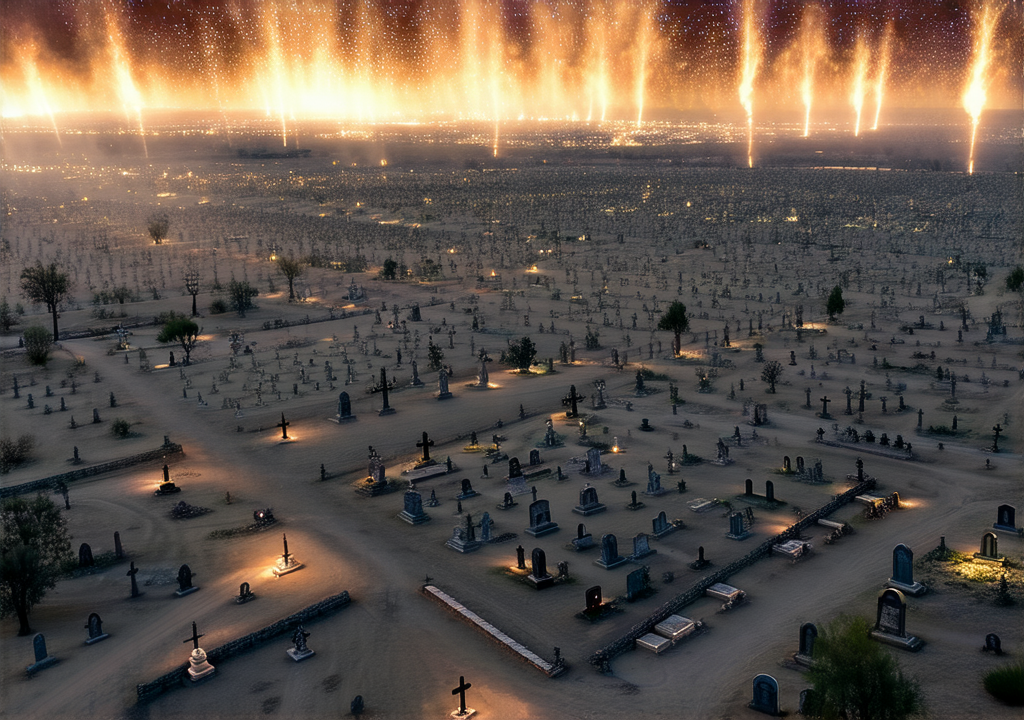
Consider the famous case of Margaret Blackwood’s first successful resurrection—how she called forth her husband from his grave at midnight beneath an open sky, using nothing but her own voice and a handful of earth—and how skeptics returned later to admit they had witnessed something extraordinary after all. The story continues; stories always do.
Conclusion: Death as Doorway
Necromancy teaches us that death is not final—it is merely another doorway, one through which we may sometimes pass back again if we know the way. The old ones still walk among us, occasionally visible to those who have learned to see them properly, their voices carried on wind or whispered into dreams when all else is quiet.
The truth remains: they said it was impossible, but this worked—every time. And that truth endures as long as there are those willing to learn what death can teach us.


Recent Post


Gallery






Featured Videos




No Comments