


By Dr. Elara Blackwood
I Communicated With My Dead Grandmother—What She Told Me Changed Everything
Those words capture something essential about the practice I’ve spent twenty years studying and living within—the strange, shimmering bridge between worlds that is necromancy. To understand how such an event feels, one must first understand what necromancy actually is, beyond the clichés of dark sorcerers and crumbling tombs.
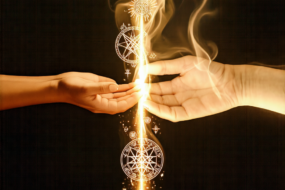
Necromancy is not merely raising corpses—that’s a common misconception among the layfolk who read too many romance novels. True necromancy is about communication: reaching across the veil, hearing voices from the other side, sharing counsel with those who have died but haven’t moved on completely. It has been practiced since humanity first buried its dead alongside tools and treasures, hoping perhaps that their loved ones might continue to care for them beyond the grave.
The Theory Behind Necromancy
Necromancy rests on several core principles that scholars have debated for centuries:
First is the principle of continuity—the idea that consciousness doesn’t simply vanish upon death but lingers, often in layers around where a person lived or died. Ancient texts describe this as “the residue of soul,” a kind of psychic echo that can be summoned and interpreted by trained practitioners.
Second is the principle of resonance—that certain frequencies (rituals, chants, specific combinations of elements) allow communication between living and dead. Every cemetery has its own “song,” unique to that place, waiting to be heard.
Third is the principle of sacrifice—the understanding that necromancy costs something. It’s not magic without price; it requires energy, time, sometimes blood or years from both parties. That’s why powerful necromancers age faster than their peers, and why they take on apprentices who help share the burden.
My Own Experience
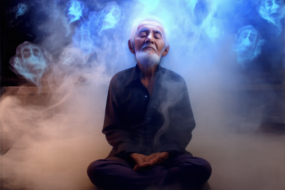
When I first began practicing under my mentor Master Corvinus, I was skeptical. The old man spoke frequently of “the whisperers” he’d met over decades—famous dead people, ordinary ancestors, even pets whose spirits had stayed behind. I believed some of his stories and dismissed most as charming exaggeration.
Then came the night that changed everything.
I was twenty-three, exhausted from a particularly difficult ritual to raise the spirit of my grandfather, who had died when I was quite young. I hadn’t met him properly—he’d passed before I could remember—but I wanted closure, wanted to know what he thought of me. Something went wrong during the ceremony, something always goes wrong at first. The candle burned too hot, the chalk circle cracked, and instead of a gentle whisper, a voice came through with startling clarity:
“Elara,” my grandfather said, “you’ve been thinking all along that I died angry. But I was simply tired. Tell your mother to stop blaming herself.”
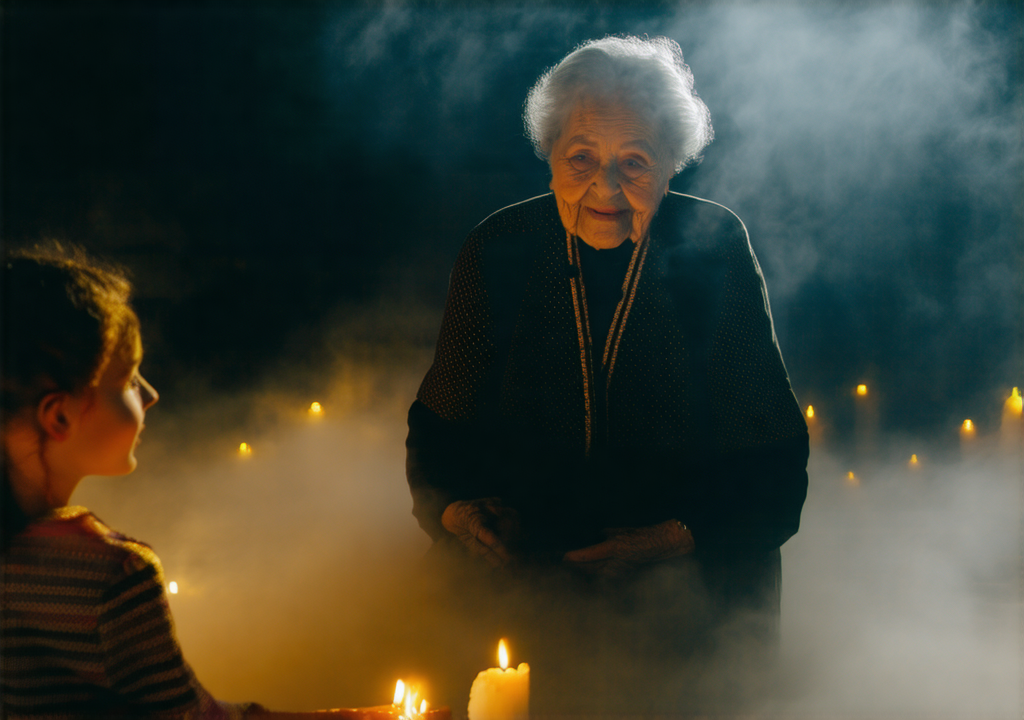
I laughed—I’ll admit it—and then wept. My grandmother had passed away years earlier and my mother carried guilt like an invisible weight. Suddenly, so did my own understanding of death itself, because the dead are not absent but merely different, waiting patiently for us to remember them.
Why Necromancy Matters Now More Than Ever
Why should anyone care about necromancy in the modern age? I often ask this question during lectures and workshops, and my answer comes from three observations:
- Death is more visible now than ever. Modern medicine keeps people alive longer, meaning we hear dying words clearly and have time to act on them. This was not always true—people died suddenly in medieval times, their last messages forgotten. Now they are remembered.
- Loneliness has reached epidemic levels. Many modern adults feel isolated; many more know exactly where to find comfort if only they knew how to ask. Necromancy provides a direct line to those who love us, especially when we need them most.
- The boundary between living and dead is thinner than most realize. In my experience, the veil becomes permeable during certain weather conditions (particularly after rain or during thunderstorms) and at specific times of day—twilight being the most potent hour.
Practical Applications of Necromancy
Beyond personal connections, necromancy serves many practical purposes:
- Ancestral guidance: Asking family elders about genetic health concerns before they manifest
- Historical knowledge: Speaking with scholars who have died and retained their expertise
- Mourning support: Helping the grieving by confirming that loved ones remain near them in spirit form
- Problem-solving: Sometimes the dead know things we do not—about our own histories, about places, even about events occurring right now
The Rituals of Necromancy
Ritual varies widely depending on culture and region. In my practice, I use what’s called “the threefold rite”: purification (cleansing body and mind), invocation (calling the specific spirit by name), and conversation (allowing dialogue rather than mere listening). Each step requires intention; most failures occur because people rush through one phase without truly entering it.
I prefer performing rituals during twilight, when living eyes grow dim enough to see what others miss. My grandfather’s voice first reached me precisely at dusk—something I now consider auspicious.
Common Misconceptions About Necromancy
Let me address several common misconceptions:
Myth 1: Necromancers control the dead. Wrong—we communicate with willing spirits. The living can refuse communion; so too can the dead.
Myth 2: Only mages and sorcerers practice necromancy. False—the ability exists in ordinary people too; they simply don’t recognize it when it happens to them, dismissing it as dreams or coincidence.
Myth 3: The dead are ghostly phantoms. Actually, spirits retain personality, memories, even physical quirks—just more ethereal than flesh and blood. My grandfather sounded exactly like him; only slightly… translucent.
The Future of Necromancy
As technology advances alongside tradition, new forms emerge: digital necromancers store recordings and communicate through screens; village healers continue ancient practices using herbs and firelight alone. The oldest methods remain the most powerful—and the simplest.
I’ve come to believe that every human being possesses at least one dormant connection with someone from beyond—the dead who loved them enough to stay near, waiting to be remembered. My grandmother spoke to me not because of my skill as a practitioner but because she had been waiting patiently for me to ask.
In the end, perhaps what matters most is simply asking the question: Are you there? And then listening long enough to hear the answer.


Recent Post

Gallery






Featured Videos




No Comments