


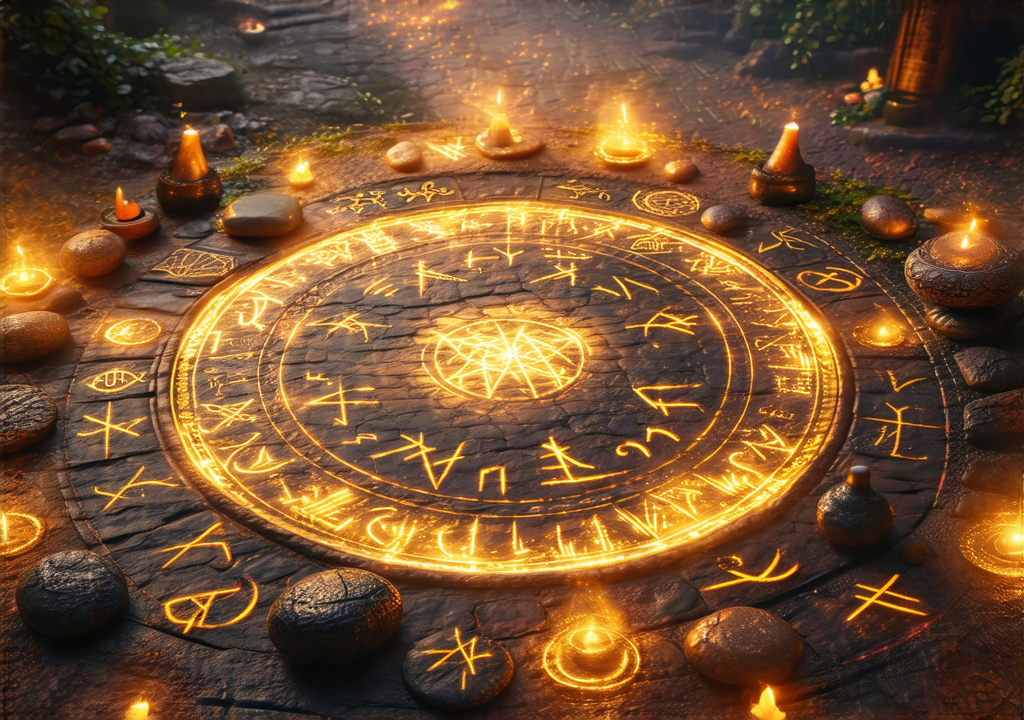
It is peculiar how the idea of a curse persists even as we live in an age dominated by science, statistics, and rational explanations. From our earliest ancestors’ belief that illness could be caused by malevolent forces to modern notions of “cursed” properties or jinxed luck, the concept endures across millennia. But why should we still fear something so seemingly ancient?
Consider this: in a world where we can predict weather patterns with remarkable precision, cure diseases through targeted treatments, and engineer our environments according to exact specifications, curses remain stubbornly relevant. They appear not as literal supernatural forces—though some people still believe they are—but rather as powerful metaphors that capture something true about human experience.
The Archaeology of Fear
What we call a curse is fundamentally an assertion: someone or something has the power to cause harm against our will, without requiring us to understand how it works. This is precisely the kind of thing modern life has spent centuries trying to eliminate. Every time we encounter an unexplained misfortune—a sudden illness, an unexpected loss, an unlucky streak—we instinctively reach for explanations: perhaps a genetic marker, perhaps a statistical anomaly, perhaps mere coincidence. But curses offer us an explanation that feels more personal, more intentional.
This is the key insight. Curses feel intentional because they are intentional—they are human creations. A curse requires both a curator (someone who casts it) and a target (something or someone to receive it). The modern world still carries this logic forward. When we say “the house has bad energy” or “this job is cursed,” we’re drawing on the same mental framework our ancestors used when they believed their crops were under a particular hex.
Hexes in Our Modern Vocabulary
We may not use actual magic words anymore, but we still employ curse-logic constantly:
- Hexed and jinxed: We call certain people “jinxed” or say something is “cursed” with statistical regularity
- Writhe and the hex: These terms appear in everything from sports to real estate to medical diagnoses
- Bad luck streaks: We understand these as periods of repeated misfortune, quite like ancient curse concepts
The Modern Curse’s Enduring Appeal
What makes curses so enduring is not their metaphysical plausibility but their psychological resonance. When bad things happen repeatedly—when we experience what feels like an improbable sequence of losses—we naturally want to make sense of it, and the idea of a hex provides that satisfying explanation. It’s not as if modern people have forgotten how to calculate probabilities; rather, we recognize that meaning matters alongside mathematics.
The Science Behind Our Curses
Perhaps the most convincing argument for why curses still captivate us lies in neuroscience. Recent studies show that our brains naturally seek patterns and narratives, even where none exist. We’re wired to see intention behind seemingly random events—what psychologists call “causal attribution.” This explains why we curse both at bad luck and at each other, just as people have done for millennia: the idea of someone or something doing us harm feels more satisfying than mere coincidence.
Conclusion: Why Curses Still Matter
The answer to why we still fear curses in modern times is not that we believe them literally but that they serve a function. They provide meaning-making, narrative structure, and emotional comfort when things go wrong. We may live in an age of science, but we are also creatures who need stories—and curses offer us precisely the kind of story we want: one where something has purposefully marked us, rather than left us at the mercy of blind chance.
The modern curse endures not because it’s true, but because it feels true in a world that often feels increasingly arbitrary and indifferent to our wishes.


Recent Post


Gallery






Featured Videos






No Comments