



by Dr. Elara Voss, Ph.D.
Introduction: What Is Psychic Vampirism?
Psychic vampirism—often dismissed as mere metaphor—is in fact a real and pervasive phenomenon that shapes our daily lives in ways we rarely acknowledge. While traditional vampires are confined to folklore and gothic fiction, psychic vampires operate silently around us in modern settings: in conversations, workplaces, relationships, and even public spaces.
Unlike the stereotypical vampire, these beings do not take blood but rather emotional energy—what many refer to as “vibes,” “aura,” or simply “energy.” The result is a subtle but persistent drain on those who encounter them regularly. Understanding this hidden dynamic can transform how you perceive your relationships and reclaim your vitality.
The Nature of Psychic Vampirism: Energy vs Blood
At its core, psychic vampirism involves the transfer of vital energy from one individual to another—not through physical contact necessarily, but through emotional resonance. Traditional vampires draw blood; modern-day psychic vampires extract emotional resources such as attention, empathy, and emotional stability. The energy exchange occurs when an energetic being enters into proximity with a more giving or empathetic person whose natural tendency is to give away their vitality.
Psychic vampires manifest in many forms: some are people you meet who leave you exhausted after only twenty minutes of conversation; others seem to require constant validation, feeding off your emotional presence and attention. Their distinguishing characteristic is not merely neediness but an unconscious (or sometimes conscious) ability to draw on another person’s inner reservoir while appearing entirely self-sufficient in other domains.
The Hidden Drain: How You Know if Someone Is a Psychic Vampire
Consider this scenario: you meet someone new, perhaps at dinner or work. Conversation flows easily; they seem engaging and interesting enough that after an hour together, you feel strangely drained—as though something invisible has been siphoned from your body during the interaction. This is not fatigue; it’s energy depletion specific to psychic vampires’ influence.
Signs include:
- Feeling unusually tired around certain people
- Noticing how conversations leave you depleted rather than energized
- Experiencing emotional exhaustion even when physically resting afterward
- Discovering that you feel “on” while with these individuals, then needing solitude to recover afterward
- Finding yourself always giving more than receiving in relationships
The Science Behind the Energy Exchange: Why This Matters Now
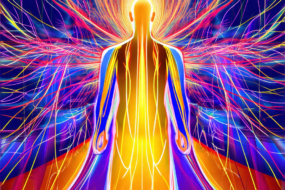
Research from energy psychology and related fields suggests that humans emit measurable electromagnetic fields beyond our bodies—what we commonly call aura or life force. When psychic vampires enter emotional proximity with empathic individuals, they engage a form of non-physical resource transfer. This happens through several channels: empathetic resonance (absorbing another’s emotional state), attention consumption (consuming focused attention and presence), and energetic absorption (drawing vital energy).
This isn’t mystical speculation alone—it has been documented in studies on empathy fatigue, emotional contagion, and the way certain individuals consistently report feeling drained by specific others. Even our modern digital interactions can create psychic vampire dynamics: consider how scrolling through social media feeds leaves us feeling depleted compared to reading a book—a difference between passive reception and active engagement with energy transfer patterns.
Symptoms of Living with Psychic Vampirism
Those who live or work regularly around powerful psychic vampires often report:
- Chronic fatigue despite adequate sleep
- Difficulty concentrating after prolonged interactions
- Mood swings correlated with certain people’s presence
- Increased sensitivity to light, noise, and sensory input
- A feeling of being “used up” as though you’re literally giving away your vitality
The Distinction Between Genuine Empathy and Psychic Vampirism
A crucial distinction: empathic individuals give generously because they genuinely care; psychic vampires consume because their emotional needs require constant replenishment. The difference lies not in what they do but in the pattern of energy exchange over time. Someone who gives and receives reciprocally is simply empathetic. Someone who consistently leaves you depleted—no matter how pleasant the interaction feels—is likely a true psychic vampire.
How to Protect Yourself: Practical Strategies
- Set boundaries with clear intentions—learn to recognize when you’re giving away energy needlessly.
- Develop energetic shielding techniques through meditation, visualization, or simply cultivating inner stillness.
- Limit exposure to known psychic vampires during high-stress periods.
- Create recovery rituals—even brief moments alone can restore depleted reserves.
- Observe patterns in your interactions to identify who energizes versus drains you.
Conclusion: Embracing Awareness, Not Envy
Psychic vampirism isn’t about envy or resentment toward those around us; it’s an acknowledgment that energy is a finite resource worth understanding and protecting. By recognizing who truly energizes our lives—and who quietly siphons it—we reclaim agency over our emotional wellbeing. In an age where we’re constantly connected yet increasingly exhausted, this ancient wisdom proves as relevant now as ever before.
Dr. Elara Voss is a researcher in energy psychology and author of “The Energy Exchange: How We Give Away Our Vitality Without Realizing It.”


Recent Post



Gallery






Featured Videos







No Comments