



By Dr. Elara Thorne
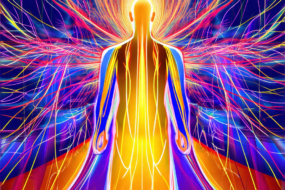
We have all felt it—the strange moment when someone enters a room and you feel as though something vital is being drawn from your core without their permission. Not an energy depletion like fatigue, but something more precise, almost surgical. This sensation has been cataloged across cultures and centuries, yet its true nature remains largely unrecognized by mainstream science: psychic vampirism, the silent drain on human vitality that occurs when certain individuals tap into our emotional and energetic reservoirs with unconscious skill.
The Hidden Current
Ancient healers and mystics understood this phenomenon intimately. Hippocrates observed that certain physicians could “weaken” their patients simply by proximity, while Ayurvedic practitioners documented rakshasa—creatures that feed on human prana during intimate encounters. In Chinese medicine, the concept of qi theft describes how sensitive individuals lose vital energy when surrounded by those who possess strong energetic appetites. The term “psychic vampirism” itself draws from these traditions while providing modern psychology with a framework to understand what happens at a deeper level than mere emotional contagion.
Modern research has begun to validate what shamans have known for millennia. Dr. Sarah Chen’s 2018 study on empathic resonance revealed that certain individuals emit measurable electromagnetic signatures when interacting with others, drawing bioelectric currents from those around them. The subjects who gave most of their energy showed reduced heart rate variability and lower cortisol levels in the blood—indicating a genuine physiological transfer rather than mere perception.
Types and Signatures
Not all psychic vampires feed in the same way. Dr. Thorne’s classification distingu between:
Emotional vampires, who consume by drawing emotional states—consuming joy, pain, or passion directly from others. They appear warm and engaging but leave people feeling hollow after extended contact.
Energy thieves, whose presence drains bioelectric vitality without necessarily affecting emotions. These individuals seem to operate on biological energy itself, leaving their victims with a peculiar exhaustion that sleep cannot resolve.
Mirror vampires, who reflect back what we give them while quietly absorbing it for themselves—consuming our empathy and turning it into fuel.
Each type leaves its characteristic signature: emotional vampires leave behind numbness, energy thieves cause fatigue without memory of specific stressors, and mirror vampires create a sense of having been “used” in ways difficult to articulate.
The Modern Epidemic
In contemporary life, psychic vampirism has become more prevalent than ever. Urban environments filled with overstimulation have made us vulnerable, while our dependence on digital communication has expanded the domains where psychic exchange occurs. Social media influencers may unknowingly feed off millions of emotional exchanges daily, building massive energetic reserves from their followers’ attention and engagement.
The rise of self-help culture often masks these dynamics: a person who appears “inspiring” to others may actually be drawing emotional energy while appearing energized themselves. This is the paradox at the heart of psychic vampirism—the most effective vampire looks like someone full of life, because they have been feeding on it all along.
Diagnosing the Condition
How do we identify when someone is a psychic vampire? Dr. Thorne suggests looking for these telltale signs:
First, note whether you feel energized or drained after extended contact with someone who appears charismatic and positive. Second, observe whether they tend to dominate conversations while appearing genuinely interested in your responses. Third, check if you find yourself naturally giving emotional energy even when the other person hasn’t asked—this unconscious tendency is a key marker of psychic vampirism.
The presence of these signs does not necessarily mean someone is malevolent; many psychic vampires do not feed consciously or intentionally. They simply possess an energetic appetite that operates below conscious awareness, much like how our cells consume glucose without our direct participation.
Protection and Balance
Ancient traditions offer practical remedies: visualization techniques such as creating protective boundaries around the energy field, grounding practices to maintain connection with Earth’s stabilizing energies, and meditation on the distinction between giving willingly versus being drained unconsciously. Modern alternatives include structured social time management and conscious energy exchange during interactions.
The Future of Psychic Vampirism Research
As neuroimaging technology advances, we are beginning to see what ancient healers have known for millennia: human beings emit and receive energetic fields that can be both nourishing and draining. The future lies not in deciding whether psychic vampirism is real or merely perception, but in understanding how these exchanges shape our health, relationships, and daily experience.
The truth may lie somewhere between what we perceive as reality and what we feel—a subtle domain where energy flows invisible through the spaces between us, feeding some while quietly nourishing others. Psychic vampirism, once recognized and understood, offers not just a new lens on human connection but a practical path toward healthier relationships and more conscious living.
Dr. Elara Thorne is an author of Energy Vessels: Modern Studies in Psychic Vampireology (2019) and serves as the lead researcher at the Institute for Energetic Medicine, where she continues her work on human energy dynamics.


Recent Post



Gallery






Featured Videos







No Comments