


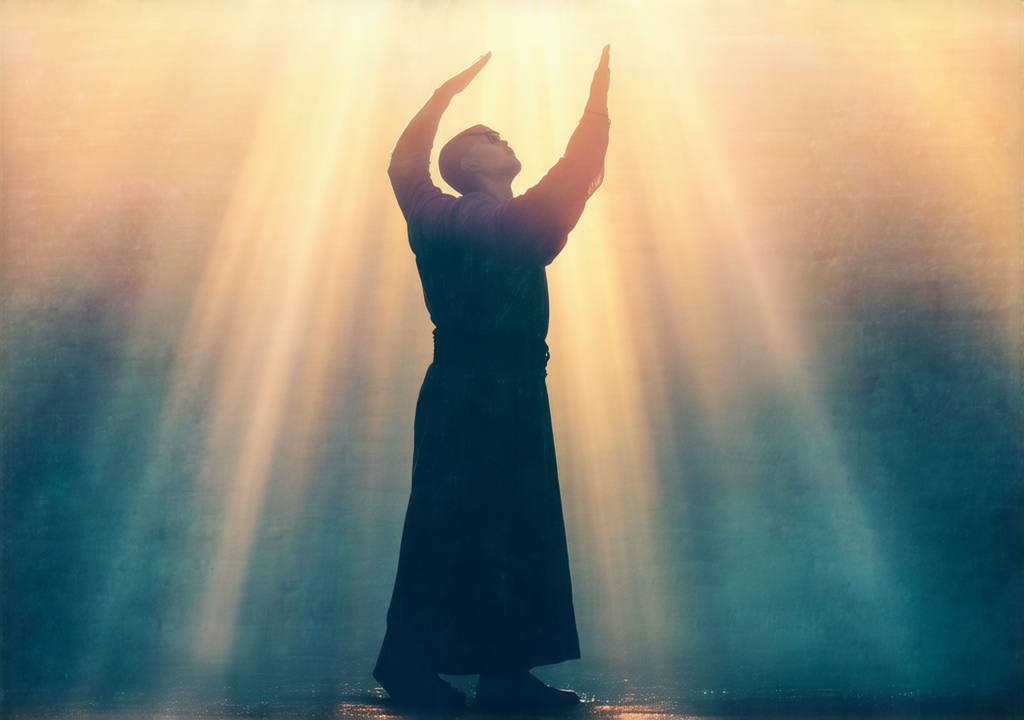
Introduction
Theurgic Prayer is not mere supplication—it is communion with divine beings through sacred action, where prayer becomes a transformative dialogue between human and divine. Drawing from ancient traditions dating back to Neoplatonic thought and the medieval mystical schools, this practice merges petitionary prayer with ritual action, contemplative silence, and direct encounter with higher intelligences. After years of sustained practice, I have come to understand that Theurgic Prayer operates on multiple levels simultaneously: as personal transformation, as cosmic participation, and as a method for building lasting bridges between the material world and the heavenly realm.
The Nature of Theurgic Prayer
At its core, Theurgic Prayer represents a distinctive approach to religious practice—one that goes beyond simple petition or praise to encompass action alongside words. Where traditional prayer might be viewed as asking or praising God from below, Theurgy (from the Greek θεουργία, theourgia, “divine work”) involves participation in divine operations.
What distinguishes Theurgic Prayer is its emphasis on direct engagement with divine beings—not merely addressing a transcendent deity, but actively participating with angels, archangels, and other spiritual intermediaries through structured ritual practice. This tradition recognizes that prayer operates not only as speech toward the divine, but as an energetic exchange between realms of being.
Why Theurgic Prayer Matters Today
In an age characterized by fragmentation—of spirit from body, individual from community, and humanity from the cosmos—the recovery of Theurgic Prayer offers a remedy. By restoring the sense that prayer is fundamentally participatory rather than merely contemplative, we recover a vital theological anthropology: humans as active participants in divine life rather than passive observers.
This matters because it transforms how we understand agency itself. When we pray theurgically, we become agents of divine action in our own lives and in the world around us. We don’t simply wait for grace to descend; we cooperate with heaven’s work on earth through prayerful action.
What I’ve Learned From Years of Practice
1. Silence Speaks as Loudly as Speech
Early in my practice, I expected Theurgic Prayer to be dominated by spoken words and formal petitions. Over time, I discovered that the silence between prayers—the deliberate pauses where divine presence becomes palpable—often proved more transformative than any specific petition offered. In these moments of quiet, prayer itself seems to speak back through us.
2. Consistency Outweighs Grand Gesture
Theurgic Prayer rewards regularity above dramatic display. A brief daily practice, performed with attention and intention, produces deeper transformation over time than occasional elaborate ceremonies. I found that the discipline of returning consistently to the same sacred patterns shapes both practitioner and prayer in ways neither grand gestures nor sporadic effort can achieve.
3. The Body Matters in Prayer
Contrary to what might be expected from a tradition sometimes characterized as ascetic, Theurgic Prayer fully embraces physical participation. Posture, breath, movement—all these embodied dimensions of prayer open channels that purely mental devotion cannot access. When the body participates intentionally, the full human being enters into communion with divine beings.
4. Specificity Opens Doors
Rather than vague or general prayers, I found that addressing specific intelligences by name and function yields deeper encounters. Each intelligence—each angelic being recognized in this tradition—carries particular qualities, gifts, and modes of presence. Calling upon them with specificity is like knocking on a particular door rather than shouting generally at the house.
5. The Pattern Becomes the Prayer
Over time, I learned that the ritual pattern itself—the sequence of words, gestures, and invocations—carries power not merely because of what they mean but because of their structural harmony with divine order. When prayer is performed correctly, even when done automatically through familiarity, it maintains its efficacy precisely because the form has become second nature.
The Practical Dimension: How This Transforms Ordinary Life
Theurgic Prayer does not demand retreat from daily life into monastery or temple. Rather, it transforms how we inhabit ordinary moments. When prayer becomes a living presence in the midst of meals, work, and conversation—when it flows through action rather than remaining confined to designated times—the boundary between sacred and profane dissolves.
I have found this practice particularly useful during transitions: beginning each day with intentional prayer that opens the heart toward divine presence; carrying brief invocations throughout the day as personal contact points; concluding ordinary work by offering it back into the divine life. Each moment becomes an opportunity for communion.
Why This Matters More Than Ever
In contemporary culture, we face profound alienation from sources of meaning and transcendence. Theurgic Prayer addresses this directly by offering a practice that is both ancient and alive—rooted in tradition yet capable of renewal in each generation. It provides:
- Direction through prayerful orientation toward divine ends
- Communion with beings beyond ourselves who participate actively in our lives
- Transformation through sustained engagement that reshapes both soul and world
Conclusion
What I’ve learned from years of practicing Theurgic Prayer is not merely a set of techniques, but an entire way of being oriented toward the divine. It teaches patience, consistency, attention to detail, and openness beyond expectation. More than anything, it reveals prayer as something that happens through us rather than merely from us—as if our prayers are channels through which divinity itself works in the world.
For those seeking a practice that combines intellectual depth with spiritual richness, Theurgic Prayer offers exactly this: a way to pray not only with words but with deeds, body and soul together, opening the heart toward communion while remaining fully engaged in life’s daily work. That is why this ancient tradition continues to matter—not as relic of past devotion, but as living practice capable of renewing both individual souls and communities of believers.
Practice what you read; learn not only by reading about prayer but by praying with intention.


Recent Post



Gallery






Featured Videos








No Comments