



When we speak of Theurgic Prayer, we are not merely referring to a simple petition whispered into the night sky, nor is it simply a mental recitation of familiar words spoken without thought. Theurgy—the sacred work (theourgia) that binds heaven and earth—elevates prayer from mere communication with divine beings to an actual mystical union with them. Ancient practitioners understood this distinction: where orismos (simple petition) seeks favors, theurgy seeks transformation itself.
1. Purity as Foundation (Katharsis)
Before any words are spoken, purification must occur. This is not merely physical cleanliness but the purgation of pathos—the passions and attachments that cloud the soul’s capacity to receive divine influence. The ancients practiced this through fasting from food before fasting from distraction, creating an internal stillness where divine presence could be perceived without interference.
2. Intention (Proairesis) as Bridge
Intention distinguishes between a prayer repeated mechanically and one offered with genuine will. Theurgic prayer requires deliberate proairesis—a focused intention that turns the soul toward its source even before the first syllable is articulated. When you pray, know why you are praying: are you seeking counsel? A blessing? Union? The quality of your intention shapes what arrives.
3. Invocation (Epiklesis) as Awakening
Invocation is not merely calling names—it is the act of summoning divine presence into awareness. Each invocation carries within it a vibration, a frequency that opens channels between realms. When you invoke the Divine, you do so not to an absent deity but to one whose reality transcends time, who responds when your soul reaches upward.
4. Sacred Language (Hiera Glossa) as Key
There exists in sacred tradition—whether in liturgical languages or symbolic formulas—a key that unlocks deeper levels of meaning. Whether spoken in the tongue of prayer or rendered in symbols of light, this language operates at a level above ordinary speech: it is hermeneutic, hermeneutical, interpreting between human and divine wills directly.
5. Sacred Geometry (Geometria) as Architecture
The ancients built their prayers upon geometric foundations—the triangle, the circle, the cross—not as decoration but as spiritual architecture that mirrors cosmic patterns. When you form sacred geometry within your prayer space (and within yourself), you create an environment conducive to divine encounter. The body itself becomes a living mandala during true theurgic prayer.
6. Silence (Hesychia) as Resonance
Between prayers, between words, silence is where communion truly occurs. Hesychia—the sacred stillness—holds what speech cannot: presence without representation. During practice, allow moments of wordless receptivity where divine communication flows not from your mind’s effort but from deeper awareness resting in quiet expectation.
7. Visualization (Horasis) as Actualization
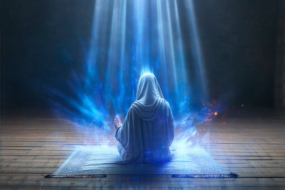
Theurgic prayer includes the practice of horasis—visionary seeing—which is distinct from mere imagination. When you visualize during prayer, do so with the conviction that what you see enters reality rather than existing only within your mind’s eye. Ancient practitioners would literally perceive divine forms during their prayers: light, figures, symbols appearing before them as real presences.
8. Offering (Anathema) as Exchange
Finally, true theurgic prayer involves offering—giving something back to the divine—not merely receiving. This offering might be one’s own will surrendered, a physical sacrifice upon the altar, or simply the gift of attention itself. The exchange completes the circuit between heaven and earth, making the prayer not only heard but received.
Practice Tips for Daily Application
- Establish a consistent time for prayer practice
- Create a sacred space dedicated to communion with divine beings
- Keep a journal of visions and experiences during prayer
- Combine meditation and prayer rather than keeping them separate
- Read the ancient texts—theurgy carries forward from Plotinus through Neoplatonic tradition, from the Chaldean Oracles to medieval Christian mystics like Pseudo-Dionysius.
Conclusion
Effective prayer is not magic in the sense of forcing outcomes but rather communion—a genuine meeting with divine beings who both inspire and respond. When practiced as a living theurgic discipline, prayer becomes transformation itself: your soul ascending to meet its source while descending wisdom enters you.
May these secrets illuminate your path toward true communion.


Recent Post


Gallery






Featured Videos







No Comments