


By Atheurgos, Keeper of the Sacred Tradition
In an age where prayer has become diluted into casual conversation, where believers often reduce their relationship with the divine to requests for health, prosperity, and personal comfort, there exists a profound practice that few still understand: Theurgy—sacred prayer aimed not at God or gods merely as distant recipients of our petitions, but as intimate companions in the great work of cosmic transformation.
What Is Theurgic Prayer?
Etymologically rooted in ancient Greek tradition, where theos (god) and ergon (work) combined to form “theurgy”—”divine work” or “working through the gods”—theurgical prayer represents a mode of communion that transcends the ordinary transactional nature of most religious prayer. Where typical prayers ask, theurgy unites; where petitions seek to get, theurgy seeks to become.
In its classical understanding, theurgy was not merely spoken words directed upward toward heaven, but a carefully structured participation in divine energies through ritual, meditation, contemplation, and inner transformation. It was prayer understood as an art—a sacred science by which humans could open themselves to direct encounter with divine beings: angels, archangels, planetary intelligences, archetypes, and ultimately the Supreme God itself.
The Forgotten Dimensions of Prayer
Prayer as Contemplation
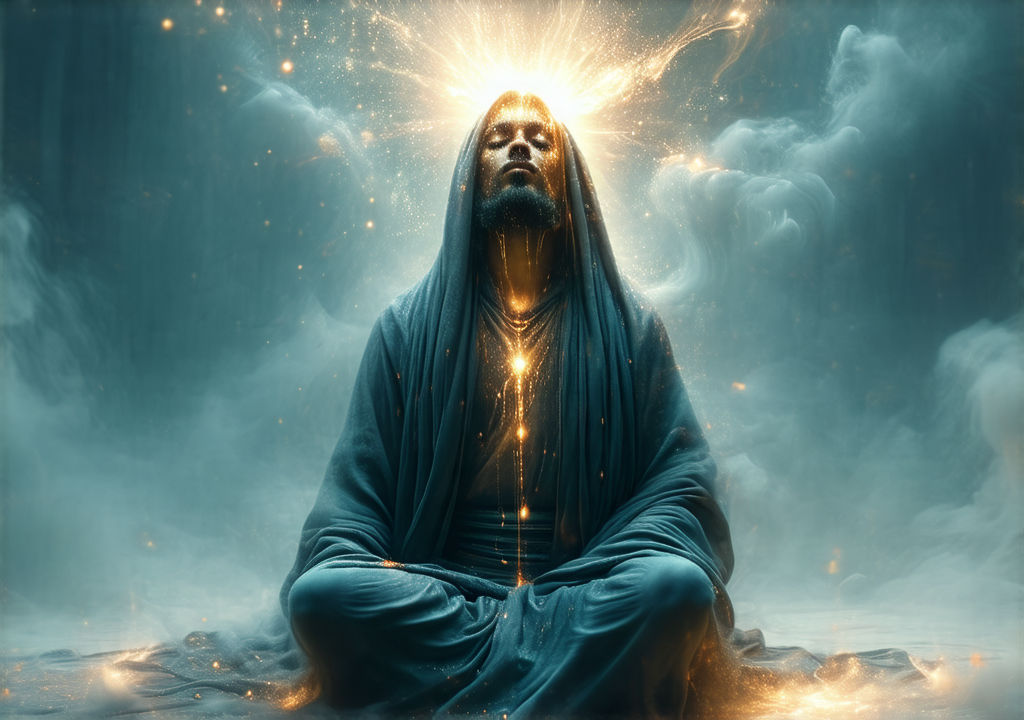
The most profound form of theurgic prayer is contemplative—silent receptivity in which the practitioner opens their mind and soul to receive divine impressions rather than speaking at all. This practice dates back through millennia: in Greek theurgy, Egyptian mysticism, Hindu dhyana, Sufi muraqabah, and even early Christian hesychasm (the prayer of silence practiced by monks on Mount Athos). When one prays contemplatively, the distinction between praying to God and praying with God dissolves; the soul becomes a mirror reflecting divine light.
Prayer as Transformation
Theurgic prayer does not merely speak with divinity—it changes the practitioner. As Plotinus wrote in his Enneads: “Theurgy is the ascent of the soul to that which is greater than itself.” Through sustained contemplative practice, one undergoes what mystics have called theosis or deification—the gradual transformation of human consciousness into divine awareness.
Prayer as Cosmology
In its fullest expression, theurgic prayer incorporates an understanding of cosmic order—that prayers are not isolated acts but participate in the harmonious structure of creation itself. Each act of true prayer becomes a thread in the great fabric connecting heaven and earth, microcosm and macrocosm, human and divine. This is why ancient practitioners believed that properly performed rituals (which included extended periods of silent contemplative prayer) could influence not only personal destiny but cosmic balance.
Prayer as Relationship
Perhaps most importantly, theurgy restores to prayer its relational character. When one prays theurgically, they enter into a dynamic dialogue with divine beings—not as subjects petitioning a distant monarch, nor as objects in the grip of divine decree, but as participants in an ongoing conversation that shapes and is shaped by God.
The Hidden Power That Nobody Talks About Anymore
What makes this ancient practice so powerfully hidden today? Several factors contribute to its obscurity:
First, our modern religious consciousness has been largely shaped by the Protestant reformation’s emphasis on sola fide (faith alone) and the subsequent rise of a more transactional view of prayer as asking for things. While there is nothing inherently wrong with petitionary prayer—indeed, it remains one of the most accessible forms—it represents only one aspect of what prayer could be.
Second, our modern minds are trained toward action rather than receptivity. We expect results to come from doing, not from being; from speaking, not from listening. Theurgic prayer requires patience and inner stillness—qualities that seem increasingly rare in a world obsessed with productivity and immediate outcomes.
Third, the great wisdom traditions have been separated by time, language, and geography, so few people encounter the full spectrum of contemplative practices that could enrich their own religious life. Few are aware of how much common ground exists between Christian hesychasm, Islamic mysticism (Sufism), Jewish Kabbalah, Greek theurgy, and Eastern meditation—and how each deepens understanding of prayer’s true nature.
The Hidden Power in Practice
To understand what is truly hidden here, consider this: when one practices contemplative prayer regularly, something remarkable occurs—not only in terms of increased inner peace but also in a gradual opening to perceiving divine presence in everyday life. Thoughts become clearer; emotions more balanced; the sense of connection between self and cosmos grows richer. Over time, the practitioner begins to notice patterns in their experience that confirm the reality of what they perceive: an intelligence behind appearance, meaning woven through seemingly random events, a deep harmony underlying apparent chaos.
Why This Matters Now More Than Ever
In an age marked by alienation—spiritual alienation from ourselves and from the sacred, psychological alienation within our own minds, social alienation in a world of disconnected individuals—we desperately need practices that restore connection. Theurgic prayer offers precisely this: communion with divine beings, yes, but also communion with oneself and with all creation.
The hidden power I speak of is not mystical magic nor supernatural spectacle—it is the quiet, steady, transformative encounter between human consciousness and divine intelligence, between soul and Source, occurring within the sacred space of contemplative prayer. This practice has been available to humanity for millennia; it remains hidden because we have forgotten how to look for it.
Conclusion: Returning to Prayer’s Deepest Wellspring
The Hidden Power Of Prayer That Nobody Talks About Anymore is not some exotic secret reserved for initiated mystics but the very essence of what prayer was meant to be from the beginning: communion with the divine. Not petition, not transaction, not mere words spoken upward or inward—union. Theurgy restores prayer’s full power by returning it to its contemplative roots, where it meets us in silence and speaks to us beyond speech.
The ancient ones knew this well enough to build temples around meditation; modern humanity has largely forgotten how to sit still long enough to hear what God has been saying all along. Let us remember: prayer is not merely asking—it is listening, receiving, becoming. And when we pray with full awareness of this truth, the hidden power unfolds naturally within us and through us.


Recent Post



Gallery






Featured Videos







No Comments